Quickly Align Form Fields with SignNow

Easily align form fields you've added to your document by dragging them to the indicated position. Produce well-structured and professional-looking documents.

Award-winning eSignature solution

What quickly align form fields means and why it matters

Quickly align form fields refers to tools and workflows that let users place, space, and size interactive fields consistently across a document with minimal manual adjustment. In signNow this typically includes snap-to-grid alignment, edge and center guides, auto-distribution, and batch alignment for repeated field groups. Consistent field alignment reduces signer confusion, decreases errors in data capture, and speeds document preparation for high-volume processes. Proper alignment also supports accessibility and review workflows by making the document layout predictable for reviewers and automated validation routines.

Practical advantages of aligning fields quickly

Efficient field alignment shortens document setup time, improves signer clarity, and reduces signature or data placement errors, which lowers rework and improves overall process consistency for teams handling recurring forms.

Practical advantages of aligning fields quickly

Common obstacles when aligning form fields

  • Inconsistent source documents cause misaligned fields and require manual fixes across pages.
  • Small or dense layouts make automatic snapping less accurate without fine-grain settings.
  • Multiple signers and conditional fields add complexity to alignment and placement rules.
  • Different device viewports can shift perceived alignment between desktop and mobile.

Typical user profiles for alignment workflows

Office Administrator

Handles daily document preparation, template maintenance, and batch sending. Uses alignment tools to standardize fields across HR and procurement forms and reduces corrections from signers, ensuring consistent data capture across high-volume workflows.

Sales Manager

Creates and updates contract templates, configures signer roles, and uses batch alignment to speed quote assembly. Focuses on reducing time-to-sign and maintaining uniform appearance across client-facing documents.

Teams and roles that benefit most from fast field alignment

Organizations that prepare recurring agreements or intake forms rely on quick alignment to maintain accuracy and speed in document production.

  • HR and recruiting teams that assemble offer letters and onboarding packets.
  • Sales operations preparing contracts and quote documents for frequent sending.
  • Administrative staff and legal teams managing templates and compliance forms.

Consistent alignment reduces manual review time across departments and supports scaling templates for higher-volume workflows.

Core alignment features to look for

These six features address most needs when preparing documents that require precise field placement and efficient template reuse.

Snap-to-grid

Allows fields to automatically latch to an invisible grid, making edge and baseline alignment consistent across pages without manual nudging.

Alignment guides

Visual guides show center and edge alignment relative to other fields to help maintain symmetry and readable layout for signers.

Distribute spacing

Evenly spaces selected fields horizontally or vertically, preventing uneven gaps and improving visual flow across repeating form elements.

Batch alignment

Apply the same alignment and spacing rules to multiple pages or grouped fields, saving time when preparing multi-page templates.

Template locking

Lock aligned fields within templates to prevent accidental repositioning and ensure consistent placement across sends.

Mobile-aware layout

Adjust field sizes and alignment behavior to preserve usability on small screens when signers complete documents from mobile devices.

be ready to get more

Choose a better solution

Integrations and tools that complement field alignment

Integration points let you prepare source documents and synchronize aligned fields across storage, CRM systems, and document editors for streamlined workflows.

Google Docs integration

Import documents from Google Docs, maintain layout fidelity where possible, and apply alignment rules in signNow after import to ensure fields sit correctly on converted PDFs.

CRM connectivity

Link templates to CRM records to prefill aligned fields, ensuring consistent data mapping and reducing manual entry across sales and support workflows.

Cloud storage

Sync aligned templates with Dropbox or Google Drive to centralize approved layouts and reduce version drift across teams.

REST API

Use API calls to create templates programmatically and apply alignment parameters for automated document generation at scale.

How automated alignment features operate

Automated alignment applies consistent placement and spacing rules across selected fields, using built-in heuristics or explicit grid settings to enforce uniform layout.

  • Snap-to-grid: Fields lock to nearest grid lines for consistency.
  • Align to object: Match left, right, center edges with selected fields.
  • Distribute spacing: Evenly spaces fields across a row or column.
  • Batch apply: Apply alignment to multiple pages or templates.
Collect signatures
24x
faster
Reduce costs by
$30
per document
Save up to
40h
per employee / month

Quick step-by-step: Align fields in a document

Follow these four basic steps to align fields efficiently in a signNow document editor.

  • 01
    Upload document: Open the PDF or Word file in the editor.
  • 02
    Add fields: Place required fields roughly where needed.
  • 03
    Use alignment tools: Enable snap, guides, or distribute commands.
  • 04
    Save template: Store as a template for reuse and batch sends.
be ready to get more

Why choose airSlate SignNow

  • Free 7-day trial. Choose the plan you need and try it risk-free.
  • Honest pricing for full-featured plans. airSlate SignNow offers subscription plans with no overages or hidden fees at renewal.
  • Enterprise-grade security. airSlate SignNow helps you comply with global security standards.
illustrations signature

Configuring alignment behavior in workflows

Set alignment defaults and automation options to ensure consistent behavior when templates are applied or documents are generated through integrations.

Feature Configuration
Field alignment mode Snap grid
Auto-align tolerance 3 pixels
Template locking level Locked fields
Reminder Frequency 48 hours
Batch apply settings Per template

Supported platforms and minimum requirements

Alignment tools work across modern browsers and official mobile apps; check platform compatibility before implementing templates at scale.

  • Desktop browsers: Chrome, Edge, Safari
  • Mobile apps: iOS and Android
  • API usage: REST endpoints

For consistent results use up-to-date browser versions or the signNow mobile app, and validate API-driven document generation in a test environment before deploying to production.

Security and compliance controls relevant to field alignment

TLS encryption: In-transit protection
Encryption at rest: Stored document security
Role-based access: Granular permission control
Audit logging: Complete action records
Two-factor authentication: Strong signer verification
HIPAA support: Healthcare compliance options

Industry use cases showing value from fast alignment

Real-world examples highlight how alignment tools reduce time and errors across sectors that rely on standardized forms.

Healthcare intake forms

A regional clinic standardized new patient forms to a template with snap-to-grid alignment and batch application of fields

  • Auto-apply field groups on intake pages
  • Reduced completion errors and staff corrections

Resulting in faster check-in and cleaner EHR imports.

Sales contract bundles

A sales operations team used templates with aligned signer and date fields across multi-page proposals

  • Reused field groups for pricing and approval blocks
  • Shortened document assembly and signer confusion

Leading to quicker signings and fewer post-signature amendments.

Best practices for secure, accurate alignment

Follow these practical recommendations to maintain consistent, secure alignment across templates and sending workflows.

Use snap and grid controls consistently
Set standard grid sizes and snap tolerances at the account or team level so all templates inherit consistent alignment behavior and reduce manual adjustments across creators.
Lock finalized templates
Once a template is validated, lock field positions to prevent accidental edits and ensure subsequent sends use identical layouts and data mappings.
Test on representative devices
Preview templates on desktop, tablet, and phone to confirm alignment and touch target sizes; adjust mobile-aware settings where fields overlap or become too small for touch.
Document alignment standards
Establish internal style rules for margins, field sizes, and spacing, and include them in template maintenance procedures to avoid drift as multiple authors edit forms.

FAQs and troubleshooting for aligning form fields

Answers to common questions and practical fixes for alignment issues when preparing documents or using templates across devices.

Comparison: field alignment features across providers

A concise feature comparison shows which providers include alignment tools natively and how advanced those tools are.

Criteria signNow (Recommended) DocuSign Adobe Sign
Availability of field alignment tool Partial
Support for batch field alignment
API access for field alignment
Mobile app field alignment support Limited
be ready to get more

Get legally-binding signatures now!

Retention, backups, and document lifecycle timelines

Define retention and backup policies to protect aligned templates and signed documents while meeting legal and operational needs.

Short-term retention policy:

30 to 90 days for active workflow copies

Long-term archival retention:

7 years or per legal requirements

Automatic backups frequency:

Daily snapshot of templates and documents

Template version retention:

Keep last 10 versions for rollback

Destruction schedule:

Secure deletion per policy after retention period

Risks from improper alignment and poor field management

Unreadable fields: Lost data
Misplaced signatures: Invalid acceptance
Data capture errors: Incorrect records
Compliance exposure: Regulatory fines
Audit failures: Legal challenges
Increased rework: Higher operational cost

Pricing context for alignment-capable plans

Pricing varies by provider and plan; the following table gives starting points and feature availability for alignment-related capabilities.

Pricing Plans signNow (Featured) DocuSign Adobe Sign HelloSign PandaDoc
Starting monthly price From $8/user/mo From $10/user/mo From $9.99/user/mo From $15/user/mo From $19/user/mo
Free tier available No Yes (trial) No Yes (trial) Yes (limited)
Support for bulk sending Yes Yes Yes Yes Yes
API access included Yes Yes Yes Yes Yes
Primary use case SMBs and teams Enterprise workflows Creative teams SMEs Sales teams

How to align fillable fields in airSlate SignNow

Before sending a document for eSigning, one needs to make sure this document looks not only neat but impeccable. For this, try airSlate SignNow’s field alignment feature.

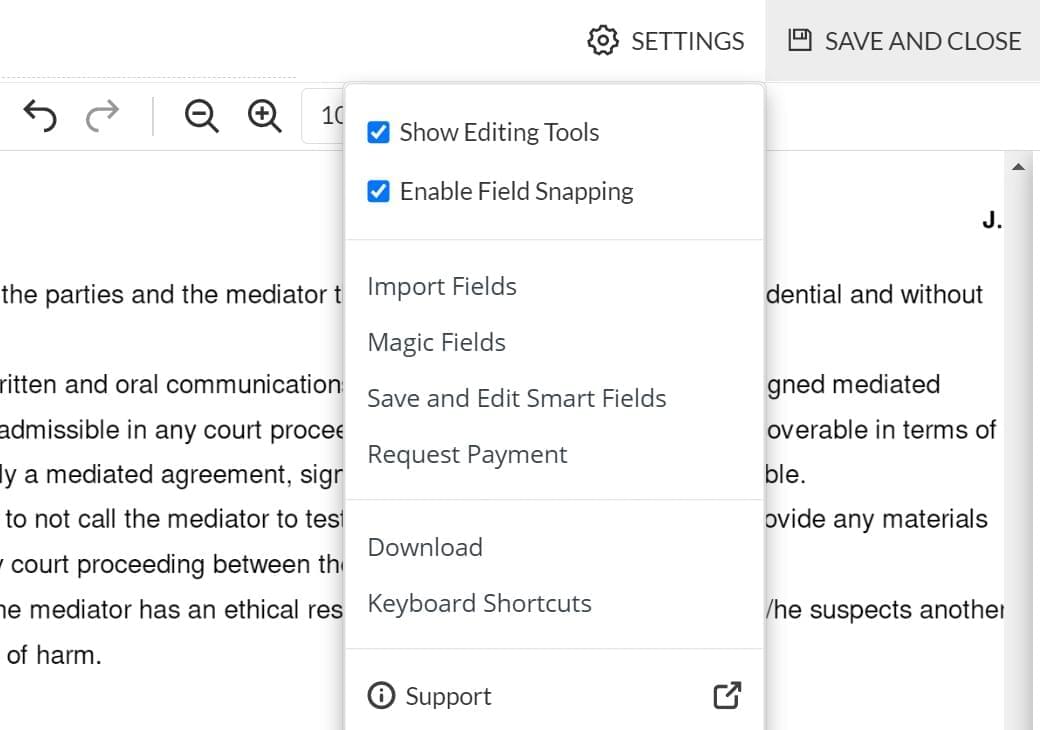
Enable field snapping

For starters, make sure you have field snapping enabled. Once a document is opened in the airSlate SignNow editor, click SETTINGS and make sure Field Snapping is ticked.
fill-guide-illustration

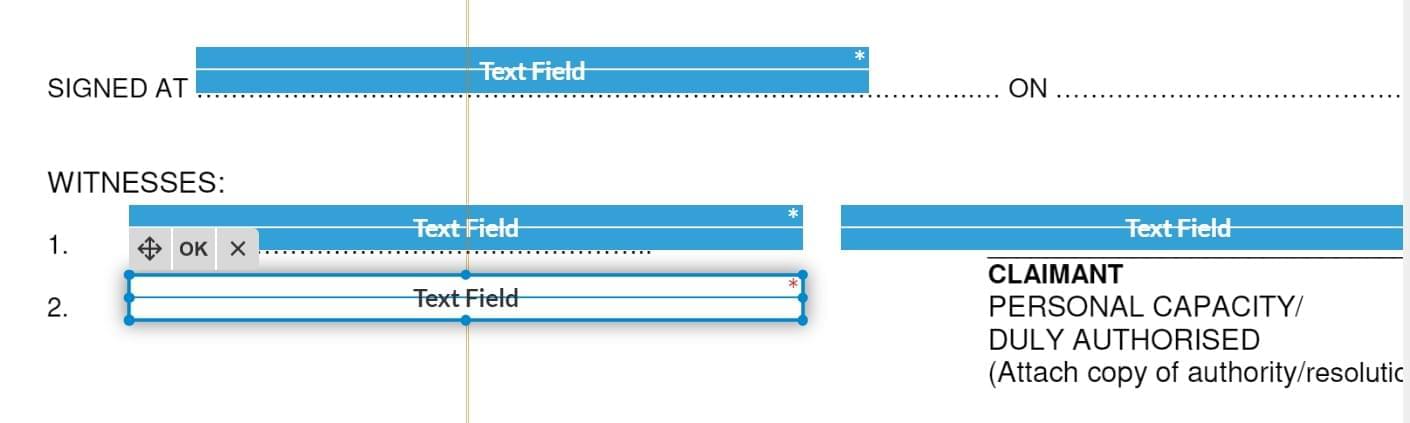
Visually clear

Once you start dropping fillable fields into your document, the automated alignment device will appear on the screen (horizontal and vertical yellow lines). This will help you align every fillable field with one another.
fill-guide-illustration

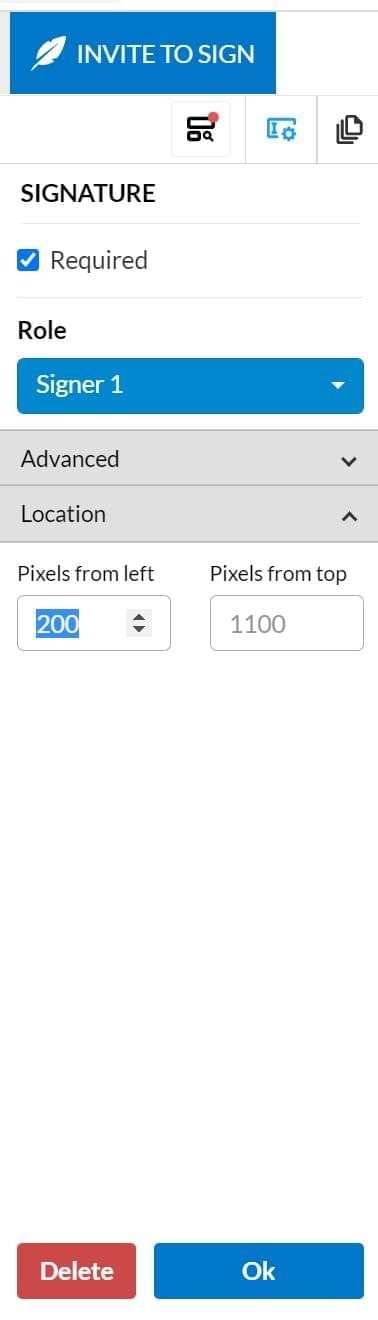
Pixel-level precision

If you need absolute precision when placing fillable fields, you can also adjust the placement of each field in the Settings. Click on Location, adjust the numbers, then press Enter.

fill-guide-illustration
walmart logo
exonMobil logo
apple logo
comcast logo
facebook logo
FedEx logo
be ready to get more

Get legally-binding signatures now!









