Establishing secure connection…Loading editor…Preparing document…

Contribution Agreement

This template is fully customizable. Edit the text, fill out the fields, and send it for signature. Give it a try!
Contribution Agreement

What a Contribution Agreement Is and When It’s Used

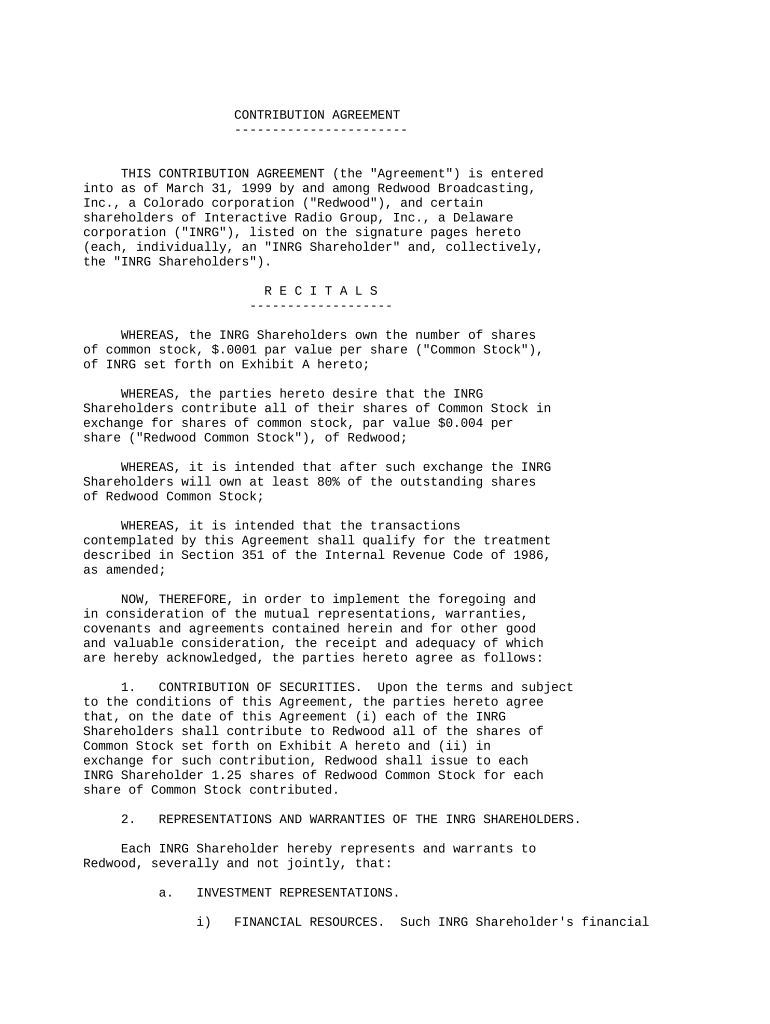
A Contribution Agreement documents the transfer of capital, assets, services, or other consideration from one party to an entity or joint venture in exchange for ownership interest, membership units, or other rights. It sets out the asset description, value or consideration, representations and warranties, conditions precedent, closing mechanics, and remedies for breach to create a clear record of the contribution and the parties’ obligations.

Why a Clear Contribution Agreement Matters

A written Contribution Agreement reduces ambiguity about what was transferred, memorializes valuation and tax treatment, assigns risk and indemnities, and creates enforceable obligations between contributors and the recipient entity.

Why a Clear Contribution Agreement Matters

Typical Parties Involved and Their Roles

Contribution Agreements are used by contributors, business owners, company managers, and legal or finance teams to document investments or asset transfers.

  • Individual contributors: investors or founders contributing cash, property, or services; need accurate names and taxpayer identification for reporting.
  • Recipient entity leaders: managers, directors, or officers who confirm acceptance and set post-contribution capital accounts and voting rights.
  • Advisors and compliance teams: accountants and attorneys who review valuation, tax treatment, and any required state filings or recordings.

Core Sections to Include in a Professional Contribution Agreement

A thorough Contribution Agreement organizes the transaction so each party’s delivery, conditions, and remedies are clear. The following six components are essential for enforceability and operational clarity.

Recitals

Context for the transfer, identifying parties, background facts, and the business purpose of the contribution to frame obligations and interpretation.
Description of Contribution

Precise identification of contributed assets or services, including serial numbers, IP identifiers, contracts assigned, or scope of services to avoid later disputes.

Consideration

Exact allocation of membership units, shares, or other consideration, with formulas for price, valuation method, and adjustments for tax or accounting purposes.

Representations and Warranties

Statements each party makes about authority, title, condition of assets, and absence of liens; carveouts for known exceptions and disclosure schedules.

Conditions and Closing Mechanics

Clear closing triggers, required approvals, third-party consents, escrow instructions, delivery of documents, and effective date for the transfer.

Indemnities and Remedies

Allocation of loss, procedures for making claims, caps or baskets, and termination rights for breach, misrepresentation, or failure to satisfy conditions.

Key Data Points to Capture

Contributor Name: Full legal name
Recipient Entity: Legal entity name
Asset Type: Cash, IP, real estate
Consideration: Units or dollar amount
Effective Date: MM/DD/YYYY format
Authorized Signer: Officer or manager

Step-by-Step: How to Complete a Contribution Agreement

Follow these practical steps to prepare, review, and finalize a Contribution Agreement with fewer errors and clear documentation.

  • 01
    Gather Documents: Collect deeds, IP assignments, valuation reports, and corporate formation documents.
  • 02
    Draft Terms: Specify contribution details, consideration, and any conditional language.
  • 03
    Review Tax Effects: Confirm tax treatment with accountant and include necessary tax reporting clauses.
  • 04
    Execute and Archive: Obtain signatures, notarize if required, and store executed copies with retention metadata.

How to Customize and Complete the Agreement Online

Configure an online workflow to collect signatures, attach supporting docs, and enforce signing order for a smooth electronic closing.

Field Configuration
Signer Order Set sequential or parallel signing as required
Authentication Choose email, SMS code, or stronger KBA
Conditional Fields Show or hide sections by contribution type
Attachments Require valuation or assignment documents before signing

Where to Send and How to Route the Agreement

A simple routing pattern reduces back-and-forth: sender prepares, designated signers execute, and copies file to records and advisors.

  • Upload: Sender uploads final draft and supporting exhibits
  • Place Fields: Add signature, date, and initial fields where required
  • Add Signers: Assign signer roles, email addresses, and signing order
  • Archive: Distribute executed copies to all parties and legal counsel

Distribution Options and eSignature Considerations

Choose distribution channels and authentication levels based on risk, regulatory needs, and recipient capabilities.

  • Email and Signing Link: Low-friction delivery; suitable for low-risk contributions with basic authentication
  • Secure Portal or SSO: Use SSO for enterprise users or when controlling access to supporting documents
  • Remote Notarization: Required when contribution transfers real property in jurisdictions permitting RON

Ensure chosen channels support audit trails, tamper-evidence, and export formats needed for recordkeeping and potential regulatory review.

Typical Timelines and Deadlines to Expect

Contribution transactions follow predictable stages; build a timeline that aligns due diligence, closing, recording, and tax reporting steps.

Negotiation Period:

1–4 weeks depending on complexity and number of parties

Due Diligence Window:

2–6 weeks for asset reviews and consents

Signing Date:

Mutually agreed effective date entered as MM/DD/YYYY

Asset Transfer / Funding:

Typically within 3–10 business days after signing

Recording or Filing:

Record deeds or file amendments within county or state timeframes

Common Preparation Mistakes to Avoid

  • Vague descriptions: Using imprecise asset language leads to later disputes over scope and title.
  • Mismatched names: Contributor or entity names that differ from formation documents cause filing and tax reporting issues.
  • Missing consents: Failing to obtain third-party consent for assigned contracts or leased assets can void the transfer.
  • Unclear consideration: Ambiguous valuation or payment terms create disagreement about ownership percentages and tax liabilities.

Key Risks and Consequences of an Incorrect Agreement

Enforceability Risk: Transfer may be void
Tax Exposure: Unintended taxable event
Liability Shift: Assumed liens or debts
Recording Issues: County may reject deed
Lost Rights: IP or contract rights not assigned
Regulatory Penalties: Fines or administrative actions

eSignature Vendor Pricing and Feature Comparison

Compare common commercial plans and feature signals relevant to signing Contribution Agreements. Pricing shown is plan-level starting information and typical feature indicators.

signNow DocuSign Adobe Sign PandaDoc HelloSign
Starting Price $8/user/mo $15/user/mo $14/user/mo $19/user/mo $15/user/mo
Free Trial 7-day free trial Varies by plan Varies by plan Varies by plan Varies by plan
Bulk Send Yes Yes Yes Yes Varies by plan
Audit Trail Yes Yes Yes Yes Yes
HIPAA Compliant Yes Yes Yes No No

Real-World Examples of Contribution Agreements in Use

These examples show how organizations used Contribution Agreements to document transfers and streamline execution with electronic tools.

Optica Ventures

Optica adopted an online signing flow to collect capital contributions quickly and transparently.

  • The interface emphasized simplicity and customer ease.
  • Brian Fitzgibbons, COO, noted the solution was easy for both internal teams and customers and reduced execution friction while maintaining clear records.

Martin Properties

A property firm used an e-signed contribution agreement to accept a deed and capital infusion.

  • The workflow included notarization and recording exhibits.
  • Tim Martin, Founder, reported being able to process and execute documents online with compliance and security across devices, improving turnaround.

Frequently Asked Questions About Contribution Agreements

Answers to common legal, procedural, and eSignature questions to help avoid delays and ensure enforceable documents.


Need help? Contact support

be ready to get more
Join over 28 million airSlate SignNow users