Establishing secure connection…Loading editor…Preparing document…

Letter of Apology for Tardiness

This template is fully customizable. Edit the text, fill out the fields, and send it for signature. Give it a try!
Letter of Apology for Tardiness

What a Letter of Apology for Tardiness Is and Why It Matters

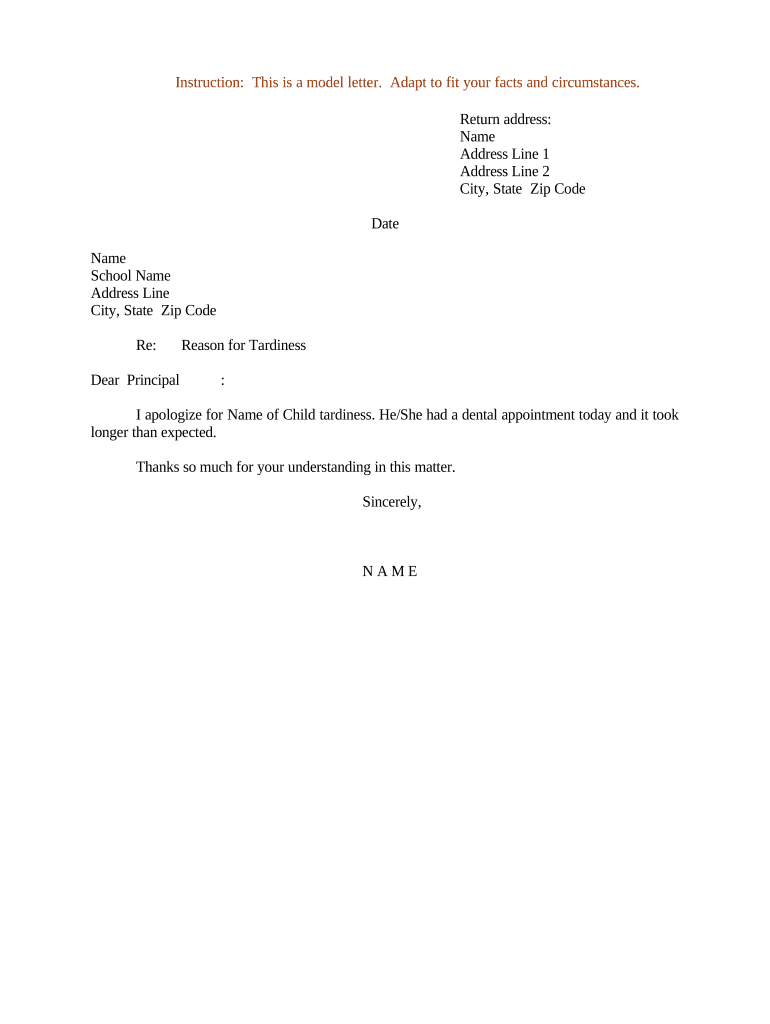
Letter of Apology for Tardiness is a concise written statement used to acknowledge a late arrival to work, school, appointment, or contracted service. It explains the reason for the delay, accepts responsibility, and sets out corrective steps or a proposed timeline. The document creates a dated record for personnel, academic, or project files and helps supervisors, administrators, or clients assess whether remediation or discipline is necessary. Keeping the letter factual and timely preserves professional relationships and supports consistent application of attendance or contract policies.

When a Formal Apology Letter Helps

A Letter of Apology for Tardiness documents accountability, clarifies the cause of the delay, and shows intent to prevent a repeat incident. It serves personnel, academic, and contractual recordkeeping needs while helping to maintain professional trust.

When a Formal Apology Letter Helps

Who Typically Prepares or Receives This Letter

Typical users of a Letter of Apology for Tardiness include supervisors, employees, educators, and students who need to document late arrival and corrective plans.

  • Managers and HR professionals documenting attendance incidents and corrective action plans for personnel records.
  • Teachers and school administrators recording student tardiness and notifying guardians per school policy.
  • Contractors and service providers explaining delays to clients and preserving project timelines and invoices.

Core Parts of a Professional Letter of Apology for Tardiness

A clear Letter of Apology for Tardiness follows a predictable structure so readers can quickly verify facts and next steps. Include identity, incident details, responsibility, explanation, remediation, and signature.

Header

Date, recipient name and job title, and sender contact information placed at the top for immediate record association and retrieval.
Opening

A brief statement acknowledging the tardiness and identifying the specific date and scheduled time that was missed.

Explanation

A factual, concise description of circumstances causing lateness; avoid speculation and preserve privacy for sensitive medical issues.

Responsibility

A direct sentence accepting responsibility where appropriate; avoid shifting blame and state any mitigating context.

Corrective Steps

Specific actions the sender will take to prevent recurrence, with dates or milestones if applicable to show commitment.

Signature

Typed or handwritten signature with printed name and date; include job title or student ID where relevant.

Step-by-Step: How to Complete the Letter

Follow these steps to prepare a concise, professional Letter of Apology for Tardiness that administrators can accept without extra clarification.

  • 01
    Step 1: Record the date and scheduled time of the missed appointment or shift.
  • 02
    Step 2: Write a factual one- or two-sentence explanation of the cause of lateness.
  • 03
    Step 3: State responsibility and list specific corrective steps to prevent recurrence.
  • 04
    Step 4: Sign and date the letter; deliver it promptly and retain a copy for records.

Where to Send and How the Letter Is Used

Knowing the destination and purpose ensures timely handling and correct placement in administrative or personnel files.

  • Direct Supervisor: Provide the letter to the immediate manager for personnel or project records.
  • Human Resources: HR may add the document to the employee file and apply attendance policies.
  • School Office: School administrators record student tardiness and notify guardians when policy requires.
  • Client or Contractor: Send to the contract manager when service delays affect deliverables or invoices.

Customizing the Letter for Online Completion

Set up a digital workflow so the Letter of Apology for Tardiness can be completed, signed, and archived without paper.

Form Template Create a repeatable template with required fields marked.
Signature Field Add an eSign field and date field for completion.
Authentication Require email or SMS code to attribute the signer.
Audit Trail Enable timestamps and IP capture for the record.
Storage Route completed letters to HR or document repository automatically.

Technical Options for Delivery and Signing

Choose a delivery and signature method that matches organizational policy and recordkeeping requirements.

  • Email Link: Quick, account optional signing.
  • Authenticated Sign: SMS or KBA adds signer verification.
  • PDF Output: Preserves formatting and audit trail.

Timing: When to Send a Letter of Apology for Tardiness

Timely delivery strengthens credibility; retain copies according to applicable retention rules and organizational policy.

Send Promptly:

Deliver the letter within 24–72 hours of the incident when feasible.

Personnel Records Retention:

Keep relevant records at least 3 years; longer per state or policy.

School Reporting:

Follow district rules for tardy reports — often same day.

Contract Notices:

Provide notice per contract milestones when delays affect deliverables.

Legal Holds:

Preserve letters subject to litigation or formal investigations indefinitely.

Real-World Scenarios Where the Letter Is Used

Two common examples show how a concise Letter of Apology for Tardiness resolves issues and documents remedial steps.

Office Attendance Record

An office manager requested a formal Letter of Apology for Tardiness after repeated late arrivals to morning shift

  • The employee explained a recurring transit delay and proposed earlier departure times to fix it
  • The signed letter documented responsibility, outlined the corrective plan, and was filed with HR to support consistent application of attendance policy and future reviews.

School Tardiness Notice

A school required written explanation for multiple late arrivals to first period

  • A parent submitted a short Letter of Apology for Tardiness explaining childcare changes and planned schedule adjustments
  • The school accepted the explanation, noted the accommodation in the student record, and used the letter to avoid escalated disciplinary steps.

Common Mistakes to Avoid

  • Over-explaining private medical details; stick to necessary facts to maintain privacy and avoid oversharing.
  • Misspelling names, dates, or times, which can create record mismatches and cause administrative delays.
  • Using vague corrective actions like 'will try harder' instead of specific, date-based steps or schedule changes.
  • Delaying submission beyond company or school policy windows, which reduces credibility and may trigger formal discipline.

Possible Consequences of a Deficient Letter

Disciplinary Action: Written reprimand or progressive discipline
Loss of Pay: Docked hours or missed shift pay
Negative Record: Document placed in personnel or academic file
Contract Impact: Project delays or invoice disputes
Evidentiary Weakness: Letter inadmissible without proper attribution
Termination Risk: Repeated violations may lead to dismissal

Key Data Elements to Capture Securely

Full Legal Name: Exact name as on file
Incident Date: MM/DD/YYYY format
Scheduled Time: Exact start time
Reason Summary: One- or two-sentence fact
Corrective Plan: Specific actions and dates
Signature: Signed and dated by sender

Roles That May Sign or Acknowledge the Letter

John Miller, Manager

Managers frequently receive Letters of Apology for Tardiness, review the facts, and place the document in personnel files. They use the letter to determine whether the incident warrants counseling, corrective action, or a record of an accommodated scheduling change.

Emily Carter, Employee

Employees submit the letter to acknowledge responsibility, offer an explanation, and propose steps to avoid recurrence. A clear, timely letter can reduce misunderstandings and support cooperative resolution with supervisors or HR.

Key Milestones in Handling an Apology Letter

Track milestones from creation through filing so the letter supports administrative actions or dispute resolution when needed.

01

Draft and Sign

Prepare and sign the letter within 24–72 hours of the incident.

02

Deliver to Recipient

Provide the letter to the supervisor, school office, or client promptly.

03

Record Filing

File the signed letter in the appropriate personnel, academic, or project folder.

04

Follow Up

Implement corrective steps and document any subsequent incidents or improvements.

eSignature Vendor Pricing and Feature Snapshot

A concise vendor comparison is useful when deciding how to collect digital signatures for Letters of Apology for Tardiness. signNow is listed first per vendor comparison guidance.

signNow DocuSign Adobe Sign PandaDoc HelloSign
Starting Price $8/user/mo $15/user/mo $14/user/mo $19/user/mo $15/user/mo
Free Trial Yes, 7-day free trial Varies by vendor Varies by vendor Varies by vendor Varies by vendor
Bulk Send Yes Yes Yes Yes No
Audit Trail Yes Yes Yes Yes Yes
HIPAA Compliant Yes Yes Yes No No

Practical Tips for a Clear and Useful Letter

Follow these best practices to make your Letter of Apology for Tardiness effective, professional, and easy to file.

Be Concise
Use plain language and limit the explanation to relevant facts to avoid confusion or unnecessary disclosure.
State Responsibility
Acknowledge responsibility where appropriate; clarity reduces escalation and supports fair outcomes.
Offer a Plan
List practical, measurable corrective steps with start dates to demonstrate commitment.
Keep Records
Retain a signed copy in the appropriate file with the incident date and any related communications.

Frequently Asked Questions About Letters of Apology for Tardiness

Answers to common questions about drafting, submitting, and preserving a Letter of Apology for Tardiness in workplace and academic settings.


Need help? Contact support

be ready to get more
Join over 28 million airSlate SignNow users