Establishing secure connection…Loading editor…Preparing document…

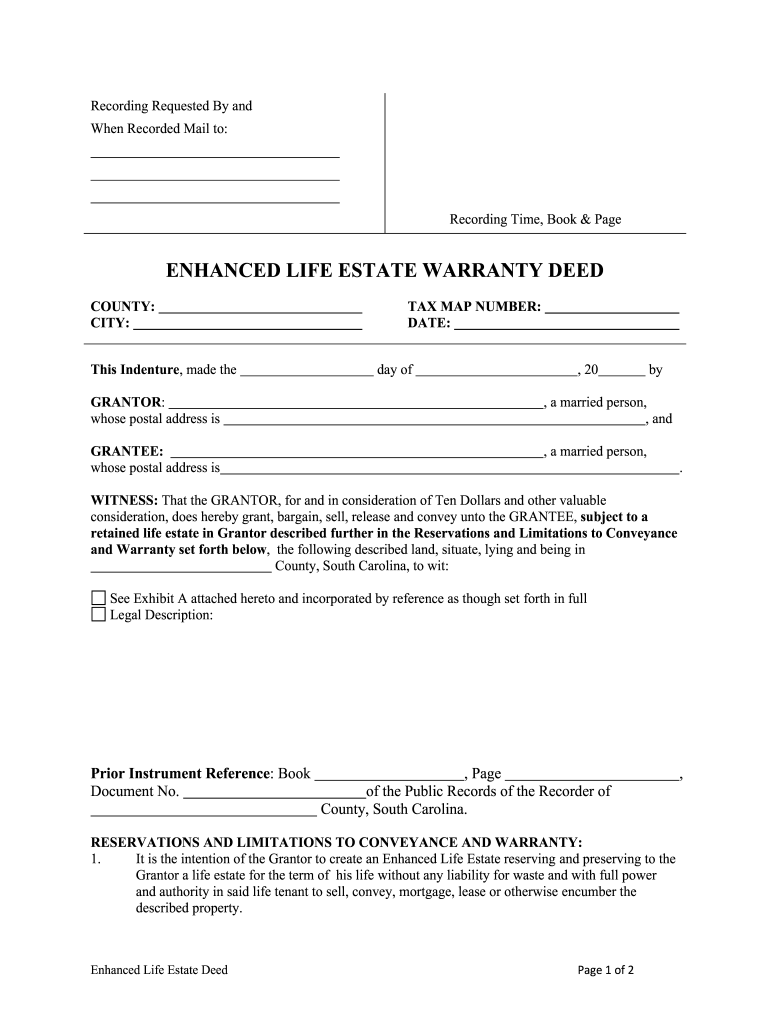
South Carolina Enhanced Life Estate Warranty Deed

This template is fully customizable. Edit the text, fill out the fields, and send it for signature. Give it a try!
South Carolina Enhanced Life Estate Warranty Deed

What the South Carolina Enhanced Life Estate Warranty Deed Is

The South Carolina Enhanced Life Estate Warranty Deed is a deed form that allows a property owner (the grantor) to retain a life estate while transferring a remainder interest to one or more named beneficiaries. The grantor keeps use and possession for life, and at the grantor's death the property passes to the remaindermen without probate for that interest. The "enhanced" warranty element provides limited title assurances to the remainder beneficiaries, and the deed is typically recorded in the county where the property is located to protect the remainder interest.

Why this Deed Is Used in Estate Planning and Property Transfers

An enhanced life estate warranty deed clarifies lifetime possession and a postmortem transfer to named remainder beneficiaries, reduces probate for that remainder interest, and can provide warranty protections to the beneficiaries while preserving the grantor's lifetime rights.

Why this Deed Is Used in Estate Planning and Property Transfers

Who Commonly Prepares or Signs This Deed

Typical users include property owners planning for succession, estate attorneys preparing nonprobate transfers, and family members receiving remainder interests.

  • Elder homeowners arranging a survivorship transfer while keeping lifetime residency and control.
  • Estate planning attorneys drafting clear remainder interests to avoid probate disputes.
  • Real estate closing agents preparing recordings and ensuring marketable title after transfer.

Professionals and affected family members should confirm county recording rules, signature and witness requirements, and tax consequences before executing and recording the deed.

Step-by-Step: How to Complete the Deed

Follow these steps to prepare, sign, and record an Enhanced Life Estate Warranty Deed in South Carolina.

  • 01
    Gather documents: Obtain the current recorded deed and legal property description.
  • 02
    Draft deed: Fill grantor, grantee, legal description, life estate language, and warranties.
  • 03
    Execute: Sign before required witnesses and a notary public.
  • 04
    Record: File the executed deed with the county register of deeds.

Key Elements Included in a Professional Enhanced Life Estate Warranty Deed

A complete deed includes specific clauses and data that protect the grantor’s life use while creating a durable remainder interest and conveying limited warranties to remaindermen.

Granting Clause

Clear language transferring a present life estate to the grantor and conveying the remainder interest to named beneficiaries with the scope of the warranty stated.
Habendum Clause

Defines the extent and duration of the estate — confirms the grantor’s lifetime possession and the remaindermen’s future interest.

Legal Description

Exact metes and bounds or plat reference copied from recorded instruments; essential for successful county recording and title search accuracy.

Warranty Language

Specifies the nature of title assurances provided to the remainder beneficiaries; 'enhanced' often extends limited covenants against grantor defects.

Consideration Statement

Records monetary or nonmonetary consideration; required in many counties to determine transfer tax or recording fee applicability.

Execution Block

Space for grantor signature(s), witness lines if required, and a notary acknowledgment formatted to county specifications.

Essential Administrative and Recording Data

Grantor: Full legal name
Remaindermen: Full legal names
Property: Legal description
Consideration: Amount or recital
Execution Date: MM/DD/YYYY
Notary: Acknowledgment block

Consequences of Errors or Improper Execution

Recording Rejection: County may refuse to accept the deed
Title Cloud: Incorrect language can create clouds on title
Probate Exposure: Improper drafting may force remainder into probate
Tax Impacts: Transfer may trigger reassessment or reporting
Liability Claims: Disputes among heirs may lead to litigation
Notary Defects: Missing notary or witnesses void recording

Common Preparation and Recording Pitfalls to Watch For

  • Using a street address instead of the recorded legal description, which can cause the register of deeds to reject or misfile the instrument.
  • Failing to match grantor names exactly to the recorded title, producing a name mismatch that delays recording or requires a corrective deed.
  • Omitting required witness signatures or an improperly formatted notary acknowledgment, both of which commonly result in the document being rejected for recording.
  • Neglecting to consider mortgage or lien clauses; outstanding liens may require lender consent or lead to covenant limitations and title defects.

How Execution, Notarization, and Recording Flow

A clear process helps ensure enforceability and successful county recording; follow the sequence below before distributing copies.

  • Prepare Deed: Draft using exact recorded legal description.
  • Sign and Notarize: Grantor signs before notary and witnesses.
  • Record Instrument: Submit to county register of deeds with fee.
  • Retain Copies: Provide recorded copy to remaindermen and grantor.

Digital Workflows, eSign, and Platform Compatibility

Electronic preparation and limited eSigning can streamline execution, but confirm South Carolina electronic acceptance and local recording rules before relying on e-signatures.

  • File Formats: PDF or DOCX accepted by most platforms
  • Authenticator: Use two-factor or identity verification
  • Integrations: Supports CRMs and cloud storage

When using an eSignature provider, verify the vendor supports a notarization workflow or produces a notarizable printed acknowledgment and that county recording offices accept electronically prepared documents.

Configuring an Online Signing Workflow for the Deed

Set signed fields and signer order to match legal execution sequence; include witness and notary fields where required by South Carolina practice.

Field Configuration
Grantor Signature Primary signer; date field required
Witness Signature Place witness fields adjacent to signature
Notary Acknowledgment Include notary block for printed acknowledgment
Recorded Copy Add recipient for county recording copies

Comparing eSignature Vendors for Deed Preparation and Signing

Vendor choice affects authentication, bulk workflows, HIPAA/industry compliance, and per-user pricing; signNow is listed first for comparison per platform data.

signNow DocuSign Adobe Sign PandaDoc HelloSign
Starting Price $8/user/mo $15/user/mo $14/user/mo $19/user/mo $15/user/mo
Free Trial 7-day free trial Varies by plan Varies by plan Varies by plan Varies by plan
Bulk Send Yes Yes Yes Yes No
Audit Trail Yes Yes Yes Yes Yes
Envelope Cap No cap 100 envelopes/user/year Varies by plan Varies by plan Varies by plan

Timing and Recommended Deadlines for Execution and Recording

There are no uniform federal deadlines for recording a deed, but prompt recording protects interests and reduces risk of competing claims.

Record Promptly:

Record the deed as soon as practicable after execution to protect priority.

Notary Timing:

Ensure notarization occurs at the time of signature; delayed notarization can be rejected.

Provide Copies:

Deliver a recorded copy to remaindermen and lenders within 30 days.

Tax Filings:

Report any transfer-required notices or reassessment forms per county rules.

Corrective Action:

File corrective deeds promptly if errors are discovered after recording.

Milestones from Draft to Recorded Deed

This sequence shows key stages; completing each step reduces the chance of rejection or dispute.

01

Draft Completion

Confirm legal description, parties, and warranty language are accurate prior to signing.

02

Execution and Notarization

Sign before the notary and required witnesses in a single session when possible.

03

County Recording

Submit executed deed with payment to the register of deeds for filing and indexing.

04

Post-Record Distribution

Obtain the recorded instrument and distribute certified copies to interested parties.

How an Enhanced Life Estate Warranty Deed Compares to a Standard Warranty Deed

Compare the scope and timing of interests to decide which instrument fits your transfer or estate planning goals.

Criteria Enhanced Life Estate Warranty Deed Standard Warranty Deed
Transfer Timing immediate remainder conveyed immediate full title conveyed
Grantor Possession grantor retains lifetime possession grantor may no longer possess
Probate Avoidance remainder often avoids probate typically requires probate for subsequent transfers
Warranty Scope limited warranties to remaindermen full covenants of title

Two Typical Use Scenarios

Practical scenarios show how the deed works for homeowners and estate planners in South Carolina.

Homeowner Planning

An elderly homeowner creates an enhanced life estate to remain in the home for life

  • preserves occupancy and simplifies title transfer
  • recorded deed ensures the named children receive the remainder interest without separate probate for that portion.

Attorney Drafting

An estate attorney uses the deed to split a present life estate and a remainder to grandchildren

  • includes enhanced warranty clauses for title protection
  • provides clear postmortem ownership and reduces administrative estate costs.

Practical Tips for Accurate and Efficient Completion

Follow these practical checks to reduce recording risk and downstream disputes.

Verify Legal Description
Always copy the legal description exactly from the currently recorded deed or plat and confirm page and book references to avoid misfiling at the register of deeds.
Match Names
Ensure the grantor and remaindermen names match other estate documents and identification to prevent title examiner challenges and potential corrective instrument needs.
Confirm Mortgage Status
Check for outstanding mortgages and obtain lender consent if required; recording without addressing liens can create unexpected title encumbrances.
Use Correct Notary Language
Provide the notary with the county-specific acknowledgment block and witness lines if required by local practice to avoid rejection by the register of deeds.

Frequently Asked Questions and Practical Answers

Answers to common questions about execution, recording, and enforceability for an Enhanced Life Estate Warranty Deed in South Carolina.


Need help? Contact support

be ready to get more
Join over 28 million airSlate SignNow users