Display Title Certificate with SignNow

Award-winning eSignature solution

What a display title certificate is and why it matters

A display title certificate is a digital document element that clearly identifies the signer, the role of the signer, and the context of a signed record within an electronic signing transaction. In eSignature platforms the certificate often appears as metadata or a separate PDF page summarizing parties, timestamps, authentication methods, and signature validity. For organizations subject to U.S. laws such as ESIGN and UETA, a clear display title certificate supports evidentiary value by recording signer identity, signature intent, and technical provenance without altering the underlying agreement.

Why include a display title certificate with signed documents

Including a display title certificate increases clarity around who signed, when, and how, which helps preserve evidentiary detail for audits and regulatory reviews under ESIGN and UETA in the United States.

Why include a display title certificate with signed documents

Common challenges when managing display title certificates

  • Inconsistent certificate placement can obscure signer context and complicate audits for legal teams.
  • Missing authentication details make it harder to demonstrate compliance with HIPAA or FERPA where applicable.
  • Automated workflows that omit certificate generation break downstream archival and retention practices.
  • PDF flattening or redaction may remove certificate metadata needed for forensic verification.

Representative roles that work with display title certificates

Compliance Officer

Responsible for defining certificate content and retention rules, the Compliance Officer maps legal requirements like ESIGN and UETA to platform settings and ensures certificates include required authentication and timestamp metadata.

Records Manager

Manages archival and retrieval procedures, ensuring display title certificates are stored with signed documents and that retention schedules and eDiscovery exports include full certificate pages and audit logs.

Typical users and teams that rely on display title certificates

Legal, compliance, and records teams use display title certificates to preserve transaction context and support retention requirements.

  • Corporate legal departments ensuring contract enforceability and audit trails.
  • Healthcare administrators tracking consent and HIPAA-related authorization records.
  • Education records officers managing FERPA-sensitive consent and acknowledgements.

These certificates also help operations and IT teams standardize records retention and evidence packages for potential audits or disputes.

Key features that enhance display title certificate utility

Select features that improve certificate accuracy, accessibility, and integration with compliance and records workflows.

Automated generation

Automatic creation of a certificate after every completed signing session reduces manual errors and ensures consistent inclusion with all signed documents.


Custom templates

Template support lets organizations tailor certificate fields, language, and visual layout to meet internal policy and regulatory formatting needs.

Audit trail

A detailed, immutable audit log captures every signing event and ties actions to the certificate for legal verification.

Embedded metadata

Embedding signer and session metadata in PDF properties supports searchability and automated indexing in document management systems.

Configurable retention

Retention policies applied to certificate files help meet recordkeeping obligations and streamline deletion when retention expires.

Export bundles

Export options that produce a single package including the signed document, certificate, and audit log simplify evidence transfer.

be ready to get more

Choose a better solution

Integrations and tools that support display title certificates

Integration with common productivity and storage tools ensures certificate data travels with documents and can be included in exports or archival copies for compliance purposes.

Google Docs

Integration allows documents drafted in Google Docs to preserve signing metadata and to include display title certificates when finalized and exported from the eSignature platform to cloud storage.

CRM systems

CRM integration ties signed agreements and certificates to customer records, enabling sales and account teams to view certificate summaries without accessing raw PDF bundles.

Dropbox and Drive

Cloud storage connectors ensure that the certificate PDF or appended certificate page is saved alongside the signed document in enterprise folders with consistent naming and retention tags.

Document management

DMS connectors support automated indexing of certificate metadata for search, eDiscovery exports, and retention enforcement across archived agreements.
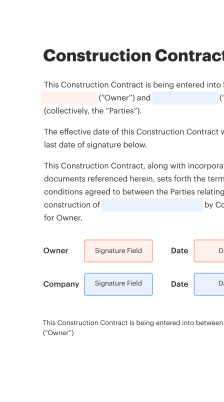
How a display title certificate is created during signing

A display title certificate is generated automatically when the signing session completes, gathering metadata and producing an embedded or separate certificate page.

  • Session capture: Platform logs signer actions and timestamps.
  • Metadata assembly: System collects identity and auth data.
  • Certificate generation: A formatted certificate is produced.
  • Export package: Certificate joins the signed document bundle.
Collect signatures
24x
faster
Reduce costs by
$30
per document
Save up to
40h
per employee / month

Step-by-step: Generate a display title certificate

Follow these basic steps to include a display title certificate with a signed document in an eSignature workflow.

  • 01
    Upload document: Add the file to the signing platform.
  • 02
    Configure fields: Place signature and role fields.
  • 03
    Enable certificate: Turn on certificate generation.
  • 04
    Finalize: Complete signing and export package.

Audit trail steps for validating a display title certificate

Use these verification steps when reviewing certificates to confirm signer identity, document integrity, and compliance with recordkeeping rules.

01

Check signer details:

Confirm name and email
02

Verify timestamps:

Match UTC times
03

Review auth method:

Confirm OTP or ID check
04

Compare document hash:

Ensure integrity match
05

Inspect IP logs:

Confirm access origin
06

Confirm export bundle:

Audit log present
be ready to get more

Why choose airSlate SignNow

  • Free 7-day trial. Choose the plan you need and try it risk-free.
  • Honest pricing for full-featured plans. airSlate SignNow offers subscription plans with no overages or hidden fees at renewal.
  • Enterprise-grade security. airSlate SignNow helps you comply with global security standards.
illustrations signature

Workflow settings to automate certificate generation

Configure these workflow settings to ensure display title certificates are created consistently and attached to every completed signing package.

Feature Configuration
Reminder Frequency 48 hours
Signing Order Sequential
Authentication Method Email OTP
Retention Policy 7 years
Export Format PDF bundle

Supported devices and platform requirements for creating certificates

Display title certificates are generated server-side and are accessible across common desktop and mobile platforms when using a compliant eSignature service.

  • Desktop browsers: Chrome, Edge, Safari compatible
  • Mobile devices: iOS and Android supported
  • APIs available: REST endpoints enabled

Ensure your organization keeps browsers and mobile apps up to date and that API integrations use secure authentication so generated certificates remain complete and retrievable across platforms.

Security details typically included in a display title certificate

Signer identity: Name and email
Timestamp: UTC date/time
Auth method: Email or SMS
IP address: Network origin
Signature type: eSignature method
Document hash: Integrity value

Practical examples that show how display title certificates are used

Two concise case examples illustrate common scenarios where certificates support compliance, audit, and operational needs.

Healthcare consent record

A hospital captures patient consent for treatment and attaches a display title certificate that records signer name and authentication method

  • Certificate highlights SMS two-factor authentication
  • Certificate clarifies HIPAA-compliant chain of custody for the signed form

Resulting in clearer patient records and stronger audit evidence for regulatory reviews.

Vendor agreement signing

A procurement team signs a vendor contract and generates a display title certificate that lists approvers and timestamps

  • Certificate notes signer roles and signing order
  • Certificate provides contract managers with a quick compliance summary

Leading to faster dispute resolution and consistent archival across the organization.

Best practices for preparing display title certificates

Adopt consistent, documented rules for certificate content, placement, and retention to preserve legal value and simplify audits.

Standardize certificate fields and placement
Define a fixed certificate template that includes signer identity, role, timestamp, authentication method, IP address, and a document hash so every signed record presents the same evidentiary information.
Retain certificate with signed bundle
Store the certificate PDF together with the signed document in the same retention container and apply consistent metadata tags to ensure discoverability during audits or eDiscovery requests.
Include authentication details relevant to compliance
Capture and display the method of identity verification used—such as email verification, SMS OTP, or ID check—especially when records are subject to HIPAA or industry-specific regulations.
Review certificate content during onboarding
During platform setup, review the certificate template with legal and records teams to confirm it meets internal policy and regulatory requirements before wide release.

FAQs about display title certificates

Common questions and straightforward answers to help administrators and users resolve certificate-related issues efficiently.

Feature availability comparison for display title certificates

Compare certificate-related capabilities across leading eSignature providers to evaluate which platforms meet your compliance and integration needs.

Feature signNow (Recommended) DocuSign Adobe Sign
Google Docs integration availability
Bulk Send support
HIPAA compliance options
Advanced audit trail detail Detailed Detailed Detailed
be ready to get more

Get legally-binding signatures now!

Retention and archive timelines for display title certificates

Retention schedules should align with legal obligations, industry practice, and internal policy to determine how long certificates remain accessible alongside signed agreements.

Standard contract retention period:

7 years

Healthcare consent retention policy:

Minimum 6 years

Education records retention policy:

As required by FERPA

Tax and financial records:

7 years recommended

Litigation hold procedures:

Indefinite while active

Risks when display title certificates are incomplete

Evidence gaps: Weakened legal standing
Regulatory exposure: Compliance fines
Data disputes: Longer resolution time
Audit failures: Operational penalties
Breach risk: Incomplete logs
Retention errors: Noncompliant storage

Pricing and plan comparison related to certificate and archival features

Pricing and plan structure affect certificate retention, API access, and enterprise export features; compare how vendors package these capabilities.

Feature signNow (Recommended) DocuSign Adobe Sign HelloSign PandaDoc
Starting plan Entry-level plans available for individuals and small teams Personal and Standard plans Individual and Small Business plans Essentials plan Essentials plan
API access Available on business plans and above Available with paid plans Available for enterprise customers Available with upgraded plans Available on Business plans
Certificate export options PDF bundle with certificate included Certificate and audit exports Certificate included in final PDF Audit logs with export Full export bundle
Enterprise support Dedicated support available Enterprise support tiers Enterprise SLAs offered Enterprise options available Enterprise plans available
Compliance offerings HIPAA and UETA/ESIGN support Broad compliance features Enterprise compliance controls SOC and GDPR features SOC 2 and GDPR controls

How to Display title certificate For Free

Display title certificate feature gets easily available when you make use of airSlate SignNow's complete eSignature platform. Use this solution for your business irrespective of the sector you’re doing work in. The set of features presented by airSlate SignNow perfectly suits for people who attempt to make their enterprise strategies more productive and streamline their workflow.

Be assured that your contracts will always be organized properly, filled out by the appropriate parties and signed digitally using the digital signature that complies with the ESIGN Act and also other governmental requirements. Integrate fillable fields to make any document interactive, collect signatures from many persons and apply receiver authentication to make sure that the document was received by the appropriate individual. All this you are able to do when working either from the desktop computer or from the mobile gadget to save lots of time and close essential deals on-the-go.


walmart logo
exonMobil logo
apple logo
comcast logo
facebook logo
FedEx logo
be ready to get more

Get legally-binding signatures now!