Electronic Signature Business Requirements Document Template

Eliminate paper and automate digital document management for increased productivity and limitless opportunities. Experience a better way of running your business with airSlate SignNow.

Award-winning eSignature solution

What an electronic signature BRD is and why it matters

An electronic signature business requirements document template (BRD) defines the functional and non-functional needs for implementing eSignature workflows within an organization. It captures stakeholder roles, authentication levels, audit and retention requirements, integrations, and compliance obligations under U.S. law such as ESIGN and UETA. A well-constructed BRD clarifies acceptance criteria, measurable success metrics, and technical constraints for vendors or internal development teams. Including standardized fields for signature capture, certificate handling, and API endpoints ensures consistent procurement and deployment across departments while reducing rework during implementation planning.

Why use a BRD for electronic signatures

A BRD aligns legal, technical, and business stakeholders on scope, compliance, and operational needs so implementations meet regulatory and audit demands. It reduces ambiguity and speeds vendor selection and integration planning.

Why use a BRD for electronic signatures

Typical user roles referenced in the BRD

Signer

Individuals who receive documents to sign. The BRD should describe authentication requirements, identity attributes captured, and any additional verification steps required for high-risk documents.

Administrator

Users who manage templates, permissions, and system settings. Specify segregation of duties, audit access, and the process for granting and revoking administrative privileges.

Core features to include in an eSignature BRD

Specify functional and operational features that meet your security and workflow needs; include expected behaviors and integration touchpoints so vendors can provide clear implementation plans.

Signature capture

Support typed, drawn, and uploaded signatures with clear metadata about signer intent and time of execution to meet audit requirements.


Audit trail

Immutable logs that record each action, IP address, and timestamp for every signer and viewer to satisfy internal and regulatory audits.

Authentication

Configurable authentication levels including email OTP, SMS OTP, and third-party identity verification to match document sensitivity.

Templates

Reusable document templates with role-based fields and merge capabilities to accelerate repetitive agreements and reduce manual errors.

Integrations

Prebuilt connectors and APIs for CRM, document storage, and workflow automation to reduce custom development and speed deployment.

Compliance controls

Configurable retention, legal disclaimers, and optional encryption-at-rest to align with ESIGN, UETA, and sector-specific obligations.

be ready to get more

Choose a better solution

Integration and template capabilities to document

Define required integrations and template behaviors in the BRD to ensure documents flow between systems and maintain data integrity during signing.

CRM integration

Specify field mappings, trigger points, and expected data synchronization cadence to ensure signed documents update customer records without manual steps.

Cloud storage

State destinations, folder rules, and retention labels for signed assets to support backup and eDiscovery requirements.

Google Docs connector

Describe the template import/export behavior, merge field syntax, and permission expectations for collaborative document preparation.

API-driven templates

Require REST API endpoints to create, prefill, and send templates programmatically for automated, high-volume workflows.
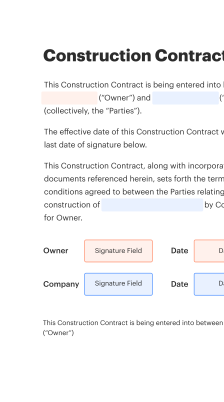
How to create and use the BRD online

Use a shared document or template repository to iterate with stakeholders, collect requirements, and version control the BRD during vendor evaluation and implementation.

  • Collaborate: Share draft with legal, IT, and operations for input.
  • Record changes: Use versioning and comments to track rationale.
  • Export: Provide finalized BRD to procurement and technical teams.
  • Validate: Confirm vendors meet stated compliance and feature needs.
Collect signatures
24x
faster
Reduce costs by
$30
per document
Save up to
40h
per employee / month

Quick setup steps for the eSignature BRD

Follow these concise steps to draft and validate an electronic signature BRD that supports secure, auditable signing workflows.

  • 01
    Define scope: List documents, departments, and expected transaction volumes.
  • 02
    Map roles: Specify signers, approvers, and administrators and their permissions.
  • 03
    Specify security: State authentication methods, encryption, and retention policies.
  • 04
    Finalize acceptance: Agree on tests, audit requirements, and vendor SLAs.

Audit trail and records checklist

Ensure the BRD lists required audit data points and the retention format so signed transactions meet internal and external verification needs.

01

Timestamping:

Record UTC timestamps for each action
02

Signer identity:

Capture authentication method and identity attributes
03

IP address:

Log originating IP for each event
04

Document hash:

Store cryptographic digest for integrity checks
05

Events history:

Preserve sequence of uploads, views, and signatures
06

Export formats:

Provide PDF/A and native formats
be ready to get more

Why choose airSlate SignNow

  • Free 7-day trial. Choose the plan you need and try it risk-free.
  • Honest pricing for full-featured plans. airSlate SignNow offers subscription plans with no overages or hidden fees at renewal.
  • Enterprise-grade security. airSlate SignNow helps you comply with global security standards.
illustrations signature

Workflow and automation settings to specify

List the workflow controls and automation parameters the implementation must support, with default values where appropriate to guide vendor configuration.

Setting Name Configuration
Reminder Frequency 48 hours
Signature Order Sequential
Expiration Period 30 days
Notification Channels Email and SMS
Auto-archival 30 days after complete

Platform and device requirements for BRD-driven deployments

Identify supported platforms and minimum device specifications to ensure consistent signer experience across web, mobile, and tablet clients.

  • Web browsers: Chrome, Edge, Safari supported
  • Mobile platforms: iOS and Android apps available
  • API access: REST API compatibility required

Document fallback options for unsupported environments, offline signing expectations, and any browser plugins or mobile OS minimums to avoid deployment surprises and support requests.

Security and authentication elements for the BRD

Encryption at rest: AES-256
Encryption in transit: TLS 1.2+
Multi-factor options: Email OTP, SMS OTP
Access controls: Role-based
BAA availability: Required for HIPAA
Audit logging: Immutable records

Industry examples for the eSignature BRD

Two concise case examples show how BRD requirements translate into real workflows for regulated and high-volume use cases.

Healthcare consent forms

A hospital required signed consent forms with strict retention rules and HIPAA protections

  • Use case required BAA, role-based access, and encrypted storage
  • This reduced paper handling and ensured secure remote signing

Resulting in auditable, compliant consent capture and faster patient throughput.

Sales contract automation

A sales organization needed automated quote-to-sign workflows integrated with CRM

  • Requirements included template merging, Bulk Send, and API callbacks
  • This minimized manual preparation and shortened deal cycles

Leading to faster contract turnaround and consistent post-signing recordkeeping.

Best practices to include in the BRD

Capture practical rules for secure, compliant, and maintainable eSignature workflows so implementation teams and administrators have consistent guidance during deployment and operation.

Define minimal authentication by document sensitivity
Classify documents by risk and require stronger authentication for high-risk agreements, documenting accepted methods and fallback procedures to balance usability and security.
Standardize template fields and naming conventions
Use consistent field labels, role names, and template IDs to reduce mapping errors in integrations and simplify audit trails and reporting across business units.
Require explicit audit and retention policies
Specify retention durations, export formats, and deletion procedures to meet legal holds, eDiscovery, and regulatory retention obligations without manual intervention.
Plan for disaster recovery and backups
Document backup frequency, recovery time objectives, and responsibilities to ensure signed records remain available and verifiable after outages.

FAQs and troubleshooting for the BRD and eSignature setup

Common implementation and operational questions with concise answers to help teams anticipate issues during deployment and operation.

Quick feature comparison: digital signing vs. paper-based controls

Compare essential availability and security attributes across leading eSignature providers to inform vendor selection based on BRD requirements.

Feature / Provider signNow (Recommended) DocuSign Adobe Sign
Legally enforceable (U.S.)
BAA for HIPAA
Bulk Send capability
REST API access
be ready to get more

Get legally-binding signatures now!

Document retention and archival timelines to define

Specify retention deadlines and archival actions in the BRD to satisfy legal holds, audits, and operational needs.

Short-term active retention:

90 days in active system

Standard archival period:

7 years compressed archive

Legal hold procedure:

Retain until hold removed

Deletion policy:

Secure delete after retention

Export cadence:

Monthly exports to long-term store

Common legal risks and penalties to address in the BRD

Noncompliance fines: Regulatory penalties possible
Data breach exposure: Liability and remediation costs
Invalid contracts: Contracts challenged legally
Audit findings: Remediation mandates
Operational downtime: Service interruptions impact
Reputational harm: Loss of trust

Pricing and plan comparison across providers

High-level pricing and capability comparison to help estimate cost and identify feature availability when drafting budget and ROI sections of the BRD.

Plan / Vendor signNow (Recommended) DocuSign Adobe Sign HelloSign PandaDoc
Starting price (per user) From $8/mo From $10/mo From $14.99/mo From $15/mo From $19/mo
API access included Yes, available Yes, available Yes, available Yes, limited Yes, available
HIPAA support BAA available Business plan BAA available Enterprise BAA available Enterprise BAA on request Enterprise BAA available Enterprise
Bulk Send support Yes Bulk Send Yes Bulk Send Yes Bulk Send Yes Bulk Send Yes Bulk Send
Mobile signing apps iOS and Android supported iOS and Android supported iOS and Android supported iOS and Android supported iOS and Android supported

Streamline complicated workflows

Create, deliver, and manage workflows of any complexness, digitally from virtually anywhere. Scalable eSignature functionality ensure you can share papers with the right people in the right way and define roles for every recipient. Stream document workflows faster and easier than ever before.

Automate document managing

Optimize intricate signing tasks with airSlate SignNow�s effective features to improve your business. Take control of your automatic eSignature workflows to guarantee they're operating at maximum performance with fast notices and reminders.

Optimize in team collaboration

Join teams together in a secure, shared workplace. Manage documents, use form templates and notifications to produce better cross-company interaction. Relieve your employees from having to spend time on repeating routines to enable them to concentrate on valuable, business-essential activities.

Integrate into your current network

Run your tasks with market-leading integration. Capture Salesforce, Microsoft Teams, and SharePoint all in one business stream. Hook up your software to a single system for limitless possibilities and more productiveness.

Remain compliant with best-in-class data security

Feel confident understanding that your information is protected by the most recent in encryption security. airSlate SignNow is GDPR and eIDAS compliant and gives you exposure into your signing process with court-admissible audit trails. Set up user authorization and rights to manage who has access to what.


walmart logo
exonMobil logo
apple logo
comcast logo
facebook logo
FedEx logo
be ready to get more

Get legally-binding signatures now!