Electronic Signature Certificate for Secure Transactions

Remove paperwork and optimize document management for increased productivity and unlimited opportunities. Explore the best manner of running your business with airSlate SignNow.

Award-winning eSignature solution

What an electronic signature certificate is and how it works

An electronic signature certificate is a digital credential that cryptographically links a signer’s identity to a signed record. Typically issued by a certificate authority (CA) or generated within a secure trust framework, the certificate binds a public key to a subject and is used to create verifiable signatures. In many applications an X.509-style certificate supports signature validation, integrity checks, and non-repudiation. In the United States, electronic signature certificates operate alongside ESIGN and UETA requirements and are often integrated into eSignature platforms such as signNow to support auditable, compliant transactions.

Why use an electronic signature certificate for agreements

Using a certificate-backed electronic signature improves authentication, strengthens tamper evidence, and supports detailed audit records, which helps meet legal and regulatory needs for many U.S.-based transactions.

Why use an electronic signature certificate for agreements

Common challenges when deploying electronic signature certificates

  • Managing certificate lifecycle and timely renewals across many users can be administratively heavy and error-prone.
  • Integrating certificate issuance with existing identity stores and SSO requires coordination between IT and legal teams.
  • Ensuring recipients can validate certificates in different environments or countries can complicate cross-border agreements.
  • Protecting private keys while enabling convenient signing often requires hardware or secure key management solutions.

Representative user profiles for electronic signature certificate workflows

Contracts Manager

Responsible for preparing, routing, and storing executed agreements, a Contracts Manager relies on certificate-backed signatures to verify signer identity, produce an immutable audit trail, and demonstrate compliance during audits or disputes. They coordinate template standardization and manage signer authentication settings across teams.

Health Admin

A healthcare administrator uses certificate-based signatures to control access to protected health records and consent forms, ensuring signatures meet HIPAA expectations. They balance security controls with patient access, configure authentication steps, and maintain retention schedules for medical documentation.

Who typically uses certificate-backed electronic signatures

Organizations that require strong signer identity, detailed auditability, and regulatory traceability most often deploy certificate-backed electronic signatures.

  • Legal and compliance teams managing contracts and regulatory filings with strict evidence requirements.
  • Financial services firms needing strong authentication for loan documents and customer onboarding.
  • Healthcare and education administrators handling protected records under HIPAA or FERPA.

Certificate-backed signatures are also used by technology and enterprise procurement teams where system integrations and API access streamline high-volume signing.

Essential features that support electronic signature certificates

A modern eSignature solution typically provides several capabilities that together enable certificate-backed signing at scale and with auditability.

Bulk Send

Send a single certificate-backed document to many recipients with individualized signing flows and batched tracking.


Reusable Templates

Predefined documents that include certificate signing fields, role assignments, and authentication requirements to speed repeat transactions.

Audit Trail

Comprehensive, timestamped logs recording certificate details, authentication events, and document changes for compliance.

Multi-Factor Auth

Layered verification options before certificate use, such as SMS OTP or SSO integration for higher assurance.

Mobile Signing

Enable certificate-backed signatures on mobile devices while preserving cryptographic proof and audit data.

Compliance Controls

Configurable retention, consent capture, and policies to help meet ESIGN, UETA, and sector-specific requirements.

be ready to get more

Choose a better solution

Common integrations that support certificate-based signing

Integrations streamline certificate issuance, document transfer, and signature workflows across common business tools used in the United States.

Google Workspace

Integrates with document editors to import files and apply certificate-backed signatures directly from cloud documents, reducing manual downloads and re-uploads while keeping version history intact.

CRM Platforms

Connects with sales and customer systems so contract records and certificate metadata flow into contact timelines, improving traceability and reducing duplicate data entry for contract lifecycle management.

Cloud Storage

Works with providers like Dropbox to sign files stored in cloud folders and keep signed copies synchronized, enabling secure retention without local downloads.

Platform API

Provides programmatic access to apply certificates, validate signatures, and retrieve audit logs so developers can automate certificate-backed workflows within internal systems.
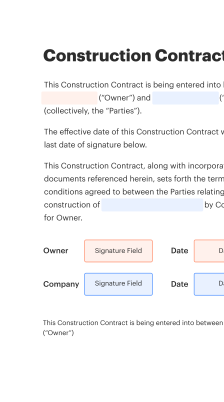
How an electronic signature certificate is applied during signing

A concise flow of how certificates interact with documents during the signing process.

  • Identity Binding: Associate signer with a certificate
  • Signature Creation: Use private key to sign digest
  • Embedding Proof: Include certificate and hash in record
  • Validation: Verify certificate chain and integrity
Collect signatures
24x
faster
Reduce costs by
$30
per document
Save up to
40h
per employee / month

Quick steps to create and apply an electronic signature certificate

Follow these four practical steps to obtain, apply, and verify an electronic signature certificate in a signing workflow.

  • 01
    Request Certificate: Obtain from CA or internal issuer
  • 02
    Install Key: Secure private key in HSM or device
  • 03
    Attach to Document: Sign with certificate-bound signature
  • 04
    Verify: Validate chain and signature integrity

Managing audit trails for certificate-backed transactions

A robust audit trail records certificate details, signer actions, and validation steps to support compliance and dispute resolution.

01

Capture Timestamps:

Record sign and validation times
02

Log Certificate Chain:

Store issuer and serial data
03

Record Auth Events:

MFA and identity proofs
04

Store Hashes:

Document digests for integrity
05

Retain Receipts:

Signature validation records
06

Export Options:

Provide downloadable evidence
be ready to get more

Why choose airSlate SignNow

  • Free 7-day trial. Choose the plan you need and try it risk-free.
  • Honest pricing for full-featured plans. airSlate SignNow offers subscription plans with no overages or hidden fees at renewal.
  • Enterprise-grade security. airSlate SignNow helps you comply with global security standards.
illustrations signature

Typical workflow settings for certificate-backed signing

Set these configuration items to align certificate behavior with organizational policies and transaction needs.

Feature Configuration
Reminder Frequency 48 hours
Expiration Window 30 days
Authentication Method MFA or SSO
Audit Retention 7 years
Certificate Format X.509

Supported platforms and basic requirements for signing

Certificate-backed signing works across modern desktop browsers, mobile apps, and tablet devices when the environment supports secure key storage and HTTPS transport.

  • Desktop: Modern Chrome, Edge, Safari
  • Mobile: iOS and Android apps
  • Browser Extensions: Optional for key management

For constrained environments, ensure latest OS and browser updates, and verify private key access methods (HSM, secure element, or app-based keystore) to maintain signature validity and verification capability across recipient systems.

Key security components of electronic signature certificates

Certificate Authority: Trusted issuer of digital credentials
Private Key Storage: Protected on device or HSM
Public Key Infrastructure: Enables signature verification
X.509 Standard: Common certificate format
Signature Hashing: Ensures document integrity
Revocation Lists: Tracks invalidated certificates

Industry examples using electronic signature certificates

These two examples illustrate how certificate-backed signatures are applied in common U.S. industry workflows to improve identity assurance and auditability.

Mortgage Closing

A lender issues loan documents with certificate-backed signatures to confirm borrower identity and secure document integrity

  • Certificate authentication during signing
  • Immediate creation of an auditable trail

Resulting in faster compliance reviews and reduced chargeback risk.

Patient Consent

A healthcare provider collects procedure consent forms using certificate-backed electronic signatures to meet provider authentication policies

  • Multi-factor certificate verification at signing
  • Tamper-evident record stored with the medical file

Ensures access controls and auditability for HIPAA compliance.

Best practices for secure, compliant electronic signature certificate use

Follow these operational and technical practices to reduce risk and maintain trustworthy certificate-backed signing workflows.

Establish certificate lifecycle policies
Define issuance, renewal, and revocation procedures with clear owner responsibilities, automated reminders, and documentation to prevent expired or compromised certificates from being used in production workflows.
Restrict private key access and storage
Store private keys in hardware security modules or protected device stores, and limit administrative access to reduce the chance of key compromise and unauthorized signing.
Enable multi-factor authentication
Combine certificate use with additional authentication factors such as SMS OTP or SAML-based SSO to increase signer assurance and reduce fraud risk during certificate-based signing.
Archive verifiable audit records
Retain signature artifacts, certificate chains, and validation receipts in immutable storage with retention schedules aligned to legal and industry requirements to support future dispute resolution.

FAQs About electronic signature certificates

Common questions about certificate-backed signatures, validation, and compliance in U.S. workflows.

Comparing certificate-backed electronic signing with paper signatures

A concise comparison of certificate-backed eSignatures, other major eSignature platforms, and traditional paper signing for common criteria.

Criteria signNow (Recommended) Adobe Sign Paper
Legally Valid Sometimes
Remote Signing
Audit Trail Included
Tamper Detection
be ready to get more

Get legally-binding signatures now!

Operational and compliance risks tied to certificates

Regulatory fines: Monetary penalties
Legal disputes: Contract challenges
Data breaches: Exposure of sensitive data
Service disruption: Signing outages
Certificate expiry: Failed validations
Key compromise: Fraud risk

Feature and pricing-related comparison across major eSignature platforms

Feature availability and pricing-related characteristics across signNow and other leading eSignature providers to help assess fit for different organizational needs.

Pricing Element signNow (Recommended) DocuSign Adobe Sign HelloSign PandaDoc
Free Trial Yes Yes Yes Yes Yes
Entry Plan Available Low-cost monthly plan Individual plan tiers Business starter tiers Individual and team plans Sales-oriented plans
API Access Available (plans vary) Available (paid plans) Available (paid plans) Available (higher tiers) Available (paid tiers)
Bulk Send Included or add-on Available Available Limited tiers Available
Enterprise Support Yes (featured) Yes Yes Available Yes

Make simpler challenging workflows

Prepare, deliver, and manage workflows of any difficulty, digitally from virtually anywhere. Scalable eSignature capabilities allow you to share contracts with the right people in the correct sequence and assign roles for each signee. Perform document workflows faster and easier than ever before.

Automate document flow

Enhance sophisticated signing processes with airSlate SignNow�s effective features to enhance your company. Control your automated signature workflows to guarantee they're running at peak functionality with instant notices and alerts.

Optimize in team collaboration

Get teammates together in a protected, shared workspace. Manage documents, use form templates and notifications to create better cross-company collaboration. Relieve your staff from having to hang out on repetitive actions to enable them to center on valuable, business-essential tasks.

Integrate into your current systems

Manage your projects with best-in-class integration. Capture Salesforce, Microsoft Teams, and SharePoint all in one business flow. Connect your applications to a single environment for endless possibilities and more performance.

Remain compliant with market-leading data safety

Feel safe with the knowledge that your information remains secure by the newest in encryption security. airSlate SignNow is GDPR and eIDAS certified and provides you transparence into your signing procedure with court-admissible audit trails. Configure user authorization and roles to manage who has access to what.


walmart logo
exonMobil logo
apple logo
comcast logo
facebook logo
FedEx logo
be ready to get more

Get legally-binding signatures now!