Electronically Signed Affidavit with SignNow

Get rid of paper and improve document management for more productivity and limitless opportunities. Enjoy the best way of running your business with airSlate SignNow.

Award-winning eSignature solution

What an electronically signed affidavit is and why it matters

An electronically signed affidavit is a sworn statement executed and authenticated using electronic signature technology rather than ink on paper. It combines the traditional affidavit structure—an attested factual statement made under penalty of perjury—with digital processes that capture signer intent, identity, and consent. In the United States, platforms document signing events with time stamps, audit trails, and authentication to support admissibility in court and administrative proceedings when ESIGN and UETA requirements are satisfied.

Practical benefits of using an electronically signed affidavit

Switching to electronically signed affidavits reduces turnaround time, centralizes records, and preserves signer authentication details required for legal reliability. It also lowers costs associated with printing, shipping, and manual storage while improving access and traceability for audits.

Practical benefits of using an electronically signed affidavit

Common challenges when adopting electronically signed affidavits

  • Ensuring signer identity meets court expectations can require multi-factor authentication or verified credentials.
  • Formatting affidavits for clarity and legal sufficiency demands attention to jurat wording and signature blocks.
  • Managing state-specific notarization or witness requirements may add procedural steps or remote notarization needs.
  • Preserving admissibility in litigation requires unbroken audit trails and defensible authentication records.

Typical users and roles for electronically signed affidavits

Attorney

Attorneys prepare affidavit language, ensure jurat and signature blocks meet jurisdictional standards, and rely on electronic signing records to support filings or objections. They require secure audit trails and clear signer authentication details for court admissibility.

Court Clerk

Court clerks receive, verify, and archive sworn affidavits. They need consistent metadata, tamper-evident storage, and standardized document formats to accept electronic affidavits under local e-filing and records policies.

Who typically relies on electronically signed affidavits

Public sector offices, law firms, real estate professionals, and compliance teams commonly adopt electronically signed affidavits to speed case workflows and centralize storage.

  • State and local government agencies handling permits and enforcement documentation.
  • Legal teams preparing sworn statements for filings and discovery processes.
  • Real estate and mortgage professionals completing closing-related affidavits and seller attestations.

Organizations choose electronic affidavits when they need consistent signature evidence, faster processing, and better document lifecycle controls.

Essential features for effective electronically signed affidavits

Certain platform capabilities directly impact the legal defensibility and operational efficiency of electronically signed affidavits; these features merit focused attention during selection and setup.

Templates

Reusable affidavit templates preserve jurat wording, required fields, and signature blocks so teams maintain consistent legal language and reduce drafting errors across repeated filings.


Bulk Send

Bulk Send lets administrators distribute identical affidavit forms to many recipients while tracking individual completions and consolidating audit data for group submissions or mass attestations.

Audit Trail

Comprehensive audit trails record each action, timestamp, IP, and authentication event to produce defensible evidence of execution and signer intent for court or regulatory review.

Mobile Signing

Fully functional mobile signing supports affidavits executed on phones or tablets, maintaining authentication and audit details while increasing signer convenience and response rates.

Advanced Authentication

Options like SMS OTP, knowledge-based verification, or third-party ID verification increase confidence in signer identity where higher evidentiary standards are required.

APIs

APIs enable integration of affidavit workflows into case management systems, automating document generation, signature requests, and archival with consistent metadata.

be ready to get more

Choose a better solution

Integrations that simplify electronically signed affidavit workflows

Integrating eSignature with document and business tools reduces manual steps and ensures affidavit data remains in synchronized systems for records and approvals.

Google Docs

Connects affidavit templates directly to Google Docs so users can compose or update sworn statements collaboratively and then send them for electronic signature without downloading or reformatting files.

CRM Integration

Links affidavit templates and signed records to customer and case profiles in CRM systems, automating storage, associating signed affidavits with the correct records, and improving auditability across client interactions.

Dropbox

Automatically archives executed affidavits into Dropbox folders with metadata and timestamps, supporting centralized backups and secure team access under existing document retention policies.

Cloud Storage

Offers direct export to enterprise cloud repositories so signed affidavits are preserved with version history and access controls consistent with organizational recordkeeping procedures.
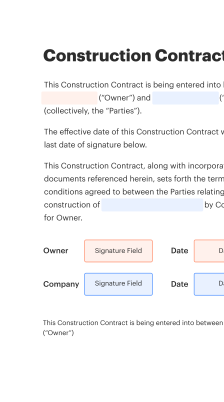
How electronically signed affidavits flow through a typical digital process

A standard workflow moves a drafted affidavit through authentication, signing, notarization if required, and secure archiving with audit evidence at each stage.

  • Prepare Document: Upload or create affidavit template
  • Authenticate Signer: Apply chosen verification method
  • Collect Signatures: Signers apply electronic signatures
  • Archive Evidence: Store signed file with audit log
Collect signatures
24x
faster
Reduce costs by
$30
per document
Save up to
40h
per employee / month

Step-by-step: Create and finalize an electronically signed affidavit

Follow these four core steps to prepare, authenticate, and store an electronically signed affidavit while preserving legal and audit requirements.

  • 01
    Draft Jurat: Include sworn language and signature block
  • 02
    Assign Signers: Add signer emails and roles
  • 03
    Set Authentication: Choose MFA or knowledge-based checks
  • 04
    Execute and Store: Capture audit trail and archive securely
be ready to get more

Why choose airSlate SignNow

  • Free 7-day trial. Choose the plan you need and try it risk-free.
  • Honest pricing for full-featured plans. airSlate SignNow offers subscription plans with no overages or hidden fees at renewal.
  • Enterprise-grade security. airSlate SignNow helps you comply with global security standards.
illustrations signature

Typical workflow settings to configure for electronically signed affidavits

Below are common configuration options and recommended default values to standardize affidavit processing and evidence capture across teams.

Setting Name Default Configuration
Reminder Frequency 48 hours
Signing Order Sequential
Authentication Method MFA (SMS OTP)
Template Library Access Team-level
Auto-Archive on Completion Enabled

Supported platforms and minimum requirements for signing affidavits

Electronically signed affidavits are compatible with modern desktops, tablets, and mobile devices using current browsers or native apps.

  • Desktop Browsers: Chrome, Edge, Safari
  • Mobile Devices: iOS and Android supported
  • Native Apps: Optional for offline signing

Ensure devices run supported OS versions, browsers are up to date, and any required security settings or app permissions are enabled to maintain authentication workflows and secure connections.

Security and authentication features supporting electronically signed affidavits

AES-256 Encryption: Encrypts data at rest
TLS Transport: Secures data in transit
Multi-factor Authentication: Adds signer verification
Audit Trail: Records signer actions
Tamper-evident Seals: Detects post-signing changes
Access Controls: Restricts document access

Real-world use cases for electronically signed affidavits

Two concise scenarios illustrate how electronically signed affidavits streamline processes for different sectors while maintaining legal integrity.

Real Estate Closing

A seller completes an affidavit of title using an eSignature platform to confirm no undisclosed liens or encumbrances.

  • Platform captures signer identity and timestamp.
  • Document integrates with closing package for lenders.

Resulting in a faster remote closing and auditable evidence for loan underwriting.

Administrative Hearings

A regulatory investigator prepares sworn statements from witnesses and sends them electronically for signature.

  • Signers authenticate with two-factor methods.
  • Signed affidavits are stored centrally for case folders.

Leading to clearer case records and reduced physical file handling during hearing preparation.

Best practices for secure and legally reliable electronically signed affidavits

Adopt consistent controls and procedural checks to ensure electronically signed affidavits meet jurisdictional standards and retain evidentiary value during disputes or audits.

Preserve jurat and signature formatting
Maintain the precise jurat language and signature blocks used in your jurisdiction, ensuring the affidavit clearly indicates the signer swore to its truth under penalty of perjury and includes required dates and locations.
Use appropriate signer authentication
Select authentication levels that match the affidavit's legal sensitivity; for higher-risk affidavits, implement multi-factor or identity verification to reduce challenges to signer identity and intent.
Maintain tamper-evident records
Store signed affidavits with cryptographic seals and unalterable audit logs so any subsequent modifications become evident and can be explained during evidentiary review.
Document retention and access controls
Define retention periods consistent with legal and organizational requirements and apply role-based access to affidavit records to prevent unauthorized disclosure or deletion.

FAQs and troubleshooting for electronically signed affidavits

Answers to common questions about execution, admissibility, authentication, and technical issues related to electronically signed affidavits.

Feature comparison: signNow versus DocuSign for affidavits

This concise comparison highlights essential capabilities affecting affidavit workflow and evidentiary support across two widely used eSignature platforms.

Capability signNow (Recommended) DocuSign
Legally binding in US
Audit trail completeness Comprehensive Comprehensive
Native mobile apps
Bulk distribution Available Available
be ready to get more

Get legally-binding signatures now!

Legal risks when affidavits are mishandled electronically

Perjury Exposure: False statements risk
Chain-of-custody Gaps: Admissibility problems
Authentication Failures: Evidence challenges
Data Breach: Confidentiality loss
Regulatory Noncompliance: Penalties possible
Retention Violations: Recordkeeping fines

Pricing snapshot for affidavit workflows across vendors

High-level pricing and plan characteristics vary by vendor and influence total cost of ownership for affidavit processing; figures indicate entry-level positioning and common enterprise capabilities.

Plan/Price signNow (Recommended) DocuSign Adobe Sign HelloSign PandaDoc
Entry-level price Starting around $8/user/month Starting around $10/user/month Starting around $9.99/user/month Starting around $15/user/month Starting around $19/user/month
Free trial available Yes Yes Yes Yes Yes
Per-user billing model Monthly or annual Monthly or annual Monthly or annual Monthly or annual Monthly or annual
Enterprise features SAML SSO, API access SSO, advanced integrations Enterprise admin controls Team management features CRM-native workflows
HIPAA-support options Available under BAAs Available under BAAs Available under BAAs Available under BAAs Available under BAAs

Simplify complex workflows

Prepare, perform, and maintain workflows of any intricacy, electronically from almost anywhere. Scalable eSignature functionality let you exchange contracts with the right people in the right way and set up roles for each recipient. Complete document workflows faster and easier than ever before.

Automate document management

Optimize complex signing tasks with airSlate SignNow�s powerful capabilities to improve your operation. Take control of your automated signature workflows to ensure they're running at maximum performance with immediate notices and alerts.

Optimize in team collaboration

Get teammates together in a safe, shared workplace. Manage paperwork, use form templates and notifications to produce more efficient cross-organization collaboration. Relieve your staff from having to spend time on repetitive actions so that they can concentrate on valuable, business-crucial tasks.

Integrate into your existing framework

Run your jobs with industry-leading integration. Collect Salesforce, Microsoft Teams, and SharePoint in one business stream. Connect your software to a single system for unlimited opportunities and more performance.

Stay compliant with market-leading data safety

Feel safe knowing that your information is protected by the newest in encryption security. airSlate SignNow is GDPR and eIDAS compliant and gives you visibility into your eSigning procedure with court-admissible audit trails. Configure user authorization and rights to control who has access to what.


walmart logo
exonMobil logo
apple logo
comcast logo
facebook logo
FedEx logo
be ready to get more

Get legally-binding signatures now!