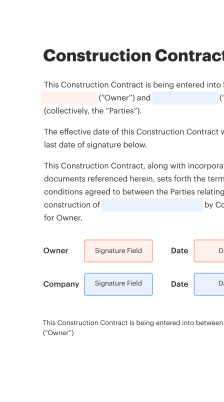
Freight Bill Format for Support

See your invoicing process become quick and effortless. With just a few clicks, you can complete all the required steps on your freight bill format for Support and other crucial documents from any device with internet access.

Award-winning eSignature solution

Legal standing of electronically signed freight bills

Electronic signatures for freight bills are enforceable under U.S. law when they meet ESIGN and UETA requirements, providing the same legal effect as handwritten signatures in most commercial contexts.

Legal standing of electronically signed freight bills

Common challenges when implementing freight bill format for support

  • Inconsistent templates across partners cause missing fields and delays in support processes.
  • Manual data entry increases risk of transcription errors and slows dispute resolution.
  • Lack of integrations forces duplicate uploads and complicates access to signed freight bills.
  • Unclear signer roles lead to incomplete signatures and legal ambiguity during claims.

Typical user roles for freight bill format for support

Logistics manager

Responsible for template approval, routing rules, and retention policies. Ensures freight bill templates align with carrier and consignee requirements and configures workflow automation to maintain SLA adherence.

Customer support

Handles dispute resolution and claims using signed freight bills and attached documentation. Uses search and audit logs to validate deliveries and accelerate settlements with carriers and clients.

Who benefits from freight bill format for support

Freight bill digital formats serve multiple roles across the shipping lifecycle, from operations to customer service and compliance teams.

  • Operations teams use electronic freight bills to confirm deliveries and update freight status quickly.
  • Customer support accesses signed records to resolve billing disputes and track claims efficiently.
  • Compliance and audit teams rely on audit trails and retention policies for regulatory reviews.

When responsibilities are clearly assigned, digital freight bills reduce friction between teams and improve traceability for support and dispute resolution.

Core features to streamline freight bill format for support

Effective freight bill workflows combine templates, automation, secure signing, and storage to reduce disputes and accelerate settlement cycles for logistics teams.

Templates

Reusable freight bill templates let teams standardize fields, reduce errors, and ensure every support interaction uses the correct data layout for legal and operational consistency.

Bulk Send

Bulk Send supports sending hundreds of freight bills at once with personalized fields per recipient, saving time during mass dispatch or invoicing cycles.

API access

APIs enable automated generation and submission of freight bills from TMS or ERP systems without manual uploading, supporting real-time processing and integrations.

Audit Trail

Comprehensive audit trails capture signer identity, timestamps, and IP details to support dispute resolution and regulatory requirements in carrier-support workflows.

Role permissions

Granular user roles limit who can create, edit, send, or view freight bills, helping teams maintain separation of duties and protect sensitive shipment data.

Cloud storage

Secure cloud retention with access controls and retention policies keeps signed freight bills searchable and available for support and compliance audits.

be ready to get more

Choose a better solution

Integrations and template features for freight bill format for support

Integrations connect freight bill templates to downstream systems and data sources, reducing manual entry and accelerating support resolution.

Google Workspace

Two-way integration with Google Docs lets teams draft freight bills in Docs and push finalized documents to the eSignature platform for signing and storage, preserving version history and collaborators' comments for auditability.

CRM sync

CRM integrations populate customer and shipment fields directly into freight bill templates and attach signed documents to contact records, enabling support reps to review history alongside client communication.

Cloud storage

Native connectors to Dropbox, Box, or Google Drive automatically save signed freight bills to designated folders with metadata tags for quick retrieval during support inquiries or audits.

API webhooks

Webhooks notify support systems when a freight bill is signed or updated, enabling automated ticket creation or status updates without manual polling.

Creating and using the freight bill format for support online

An online workflow centralizes creation, signing, and storage so support teams can access completed freight bills quickly without paper handling, improving response times and record accuracy.

  • Template creation: Build a reusable freight bill template with required fields.
  • Data population: Auto-fill shipment data via CSV import or integrations.
  • Signature capture: Capture signatures using web or mobile signing interfaces.
  • Storage: Save final documents to cloud storage with versioning.
Collect signatures
24x
faster
Reduce costs by
$30
per document
Save up to
40h
per employee / month

Quick setup for freight bill format for support

Start with a clear freight bill template and a verified eSignature provider to reduce manual processing and ensure accurate support documentation across shippers, carriers, and receivers.

  • 01
    Prepare template: Gather shipper, consignee, carrier, and item details.
  • 02
    Upload document: Upload PDF or DOCX to the eSignature platform.
  • 03
    Assign fields: Place signature, date, and data fields on the form.
  • 04
    Send for signature: Route to signers in the required signing order.

Step-by-step: completing a freight bill for support

Follow a clear sequence from data entry to signature to ensure freight bills are legally valid and support-ready.

01

Collect shipment data:

Confirm weights and SKUs.
02

Fill contact fields:

Add shipper and consignee details.
03

Attach documents:

Include BOL or POD evidence.
04

Assign signers:

Set signer roles and order.
05

Send for signature:

Deliver via email or link.
06

Archive signed copy:

Store in secure repository.
be ready to get more

Why choose airSlate SignNow

  • Free 7-day trial. Choose the plan you need and try it risk-free.
  • Honest pricing for full-featured plans. airSlate SignNow offers subscription plans with no overages or hidden fees at renewal.
  • Enterprise-grade security. airSlate SignNow helps you comply with global security standards.
illustrations signature

Typical automation settings for freight bill format for support

Configure workflow defaults so freight bills follow consistent routing, reminders, and archival steps that match your support SLAs.

Setting Name Configuration
Signing order Sequential
Reminder Frequency 48 hours
Auto-archive rule 7 days
Retention period 7 years
Notification channel Email only

Supported platforms for freight bill format for support

Most modern eSignature services support current versions of major browsers and native mobile apps so freight bill signing works on desktops, tablets, and phones.

  • Windows/macOS: Chrome, Edge, Safari supported
  • iOS/Android apps: Native mobile signing available
  • Offline use: Limited offline signing support

Confirm browser and OS compatibility with your chosen provider, enable JavaScript and pop-ups for document previews, and ensure mobile app permissions for camera or storage if collecting photos or attachments.

Security controls for freight bill format for support

Data encryption: AES-256 encrypted
Transport security: TLS 1.2+ enforced
Access control: Role-based access
Authentication: Multi-factor option
Audit logs: Detailed signing history
Compliance attestations: SOC 2 reports

Industry scenarios using freight bill format for support

Different logistics stakeholders use digital freight bills to reduce disputes, speed claims handling, and maintain compliant records across transport modes.

Carrier operations

Drivers capture signed freight bills at delivery to confirm condition and quantity

  • Field data and signatures sync to dispatch in real time
  • Support teams receive immediate proof for claims handling

Resulting in faster claim resolution and reduced detention disputes.

Third-party logistics

3PLs use standardized freight bill templates to consolidate multi-client shipments

  • Automated routing populates client-specific fields
  • Signed documents archive to each client account for auditability

Leading to clearer billing, faster reconciliation, and fewer invoice exceptions.

Best practices for secure, reliable freight bill format for support

Apply standardized templates, clear signing sequences, and retention rules to ensure consistent handling of freight bills across teams and partners.

Standardize templates across teams
Use a single approved freight bill template library to reduce format variations, ensure required legal fields are present, and simplify training for support staff who reference paperwork during claims or status checks.
Define signing order and roles
Establish a clear signing sequence that reflects business rules, such as carrier first then consignee, and document those roles so support can determine signer responsibilities during disputes.
Enable audit trails and retention
Maintain immutable audit logs and apply retention schedules that meet regulatory and commercial requirements, ensuring signed freight bills remain available for claims, audits, and compliance checks.
Use integrations to reduce errors
Connect TMS, CRM, and storage systems so shipment data flows into freight bills automatically, reducing manual entry errors and improving the accuracy of support records.

FAQs about freight bill format for support

Common questions about creating, signing, and using digital freight bills, with concise answers to help support teams troubleshoot typical issues.

Feature availability comparison for freight bill workflows

Compare essential capabilities across leading eSignature platforms to determine which supports freight bill processes and support workflows most effectively.

Criteria signNow (Recommended) DocuSign Adobe Acrobat Sign
ESIGN/UETA compliant
Bulk Send Limited
API available REST API REST API REST API
Mobile app
be ready to get more

Get legally-binding signatures now!

Document retention and deadlines for freight bill format for support

Set clear retention policies and review intervals to keep freight bill records accessible for support and compliance while controlling storage costs.

Retention review schedule:

Annual audit

Minimum retention period:

3 years typical

Recommended archival period:

7 years

Legal hold process:

Immediate freeze

Disposition verification:

Record deletion logs

Risks of improper freight bill handling

Regulatory fines: Possible
Contract disputes: Increased
Claims delays: Likely
Data breaches: Risky
Operational downtime: Possible
Lost documents: Preventable

Pricing and plan comparison for freight bill signing

Cost considerations include per-user pricing, available free tiers, enterprise features, and whether advanced integrations are included in base plans.

Service signNow (Recommended) DocuSign Adobe Acrobat Sign Dropbox Sign PandaDoc
Starting price From $8/user/month From $10/user/month From $14.99/user/month From $15/user/month From $19/user/month
Free plan Limited free tier No free tier No free tier Free plan available Free trial available
API included Available on Business plans Available on Business plans Available on paid plans Available on paid plans Available on Business plans
Enterprise features Advanced access controls and SSO Advanced enterprise governance Enterprise-grade security and admin Team management and SSO Workflow automation and eSign
Trial availability Free trial available Free trial available Free trial available Free trial available Free trial available
walmart logo
exonMobil logo
apple logo
comcast logo
facebook logo
FedEx logo
be ready to get more

Get legally-binding signatures now!