How Do You Make a Receipt with SignNow

How do you make a receipt? With signNow, creating a receipt is straightforward and secure, ensuring compliance with U.S. regulations for your peace of mind.

Award-winning eSignature solution

Legal validity and compliance for how do you make a receipt

Digitally signed receipts, when created with compliant eSignature processes, satisfy U.S. ESIGN and UETA requirements and provide admissible evidence of transaction consent and receipt delivery in most business contexts.

Legal validity and compliance for how do you make a receipt

Typical user roles for managing how do you make a receipt workflows

Account Admin

Account Admins configure organizational settings, manage user permissions, and set retention and security policies. They approve templates, enable integrations, and review audit logs to ensure receipt workflows operate according to internal controls and compliance requirements.

Sales Representative

Sales Representatives create and send receipts, use templates for speed, and attach receipts to customer records. They rely on integration with CRM systems to update transaction status and ensure customers receive signed receipts promptly.

Key features to create efficient how do you make a receipt workflows

Effective receipt systems combine templates, signer authentication, audit trails, integrations, bulk processing, and secure storage to streamline issuance and maintain compliance across business operations.

Templates

Reusable receipt templates let you standardize layout, required fields, and legal language so teams can produce consistent receipts quickly while reducing manual errors and accelerating transaction closure.


Audit Trail

Comprehensive audit logs capture timestamps, IP addresses, and event histories to document receipt creation, delivery, and signer actions for dispute resolution and regulatory compliance.

Authentication

Multiple signer verification options such as email codes, SMS OTPs, and knowledge-based methods help ensure the identity of the payer and the integrity of the signed receipt.

Integrations

Connect receipt workflows with accounting software, CRMs, and cloud storage to automate data transfer, reduce double entry, and maintain synchronized transaction records across systems.

Bulk Send

Bulk Send capabilities allow issuing many receipts at once using mapped fields and templates, saving time for recurring billing and mass transaction scenarios.

Secure Storage

Encrypted cloud storage, retention controls, and export options let you preserve signed receipts for audits and back up records according to internal policies.

be ready to get more

Choose a better solution

Integrations and templates that help with how do you make a receipt

Link receipt creation with document editors, cloud storage, and CRMs, and use templates to speed repeat transactions and ensure data consistency across systems.

Google Docs

Create receipts from Documents, map fields automatically, and push finalized receipts into Drive for centralized access and version control across teams and devices.

CRM sync

Automatically attach issued receipts to customer records, update payment status fields, and trigger follow-up actions in your CRM to keep sales and finance aligned.

Dropbox integration

Save completed receipts to a dedicated Dropbox folder for backup, shared access, and archival according to your retention rules.

Custom templates

Design brand-compliant receipt templates with required legal text, variable fields, and predefined layouts to reduce manual edits and speed issuance.
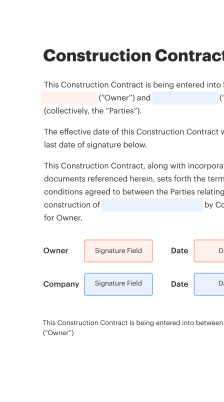
How creating and using a how do you make a receipt works online

An online receipt workflow typically involves uploading or creating a receipt, adding signer fields, authenticating the recipient, and then sending and storing the finalized receipt.

  • Upload or create: Start from a template or upload an invoice file.
  • Add fields: Place signature, date, and text fields for required data.
  • Authenticate signer: Use email, SMS, or stronger ID verification as needed.
  • Send and archive: Deliver signed receipt and save an audit-backed copy.
Collect signatures
24x
faster
Reduce costs by
$30
per document
Save up to
40h
per employee / month

Quick step-by-step for how do you make a receipt

Create a clear, consistent receipt by collecting transaction details, preparing a template, adding required fields, and delivering the signed receipt to the payer and your records.

  • 01
    Prepare details: Collect payer, amount, date, and payment method.
  • 02
    Create template: Build a receipt template with fixed fields and variable placeholders.
  • 03
    Send for signature: Route the receipt to the payer for review and electronic signature.
  • 04
    Finalize & save: Confirm signature, timestamp the file, and store a copy securely.

Audit trail steps for each how do you make a receipt transaction

Maintain a clear event log for receipts by recording actions from creation through signature, export, and archival to support audits and dispute resolution.

01

Record events:

Log create, send, sign events.
02

Timestamping:

Capture precise UTC timestamps.
03

IP capture:

Store signer IP addresses.
04

Authentication record:

Note verification method used.
05

Export logs:

Provide CSV or JSON exports.
06

Archive copies:

Retain signed PDFs securely.
be ready to get more

Why choose airSlate SignNow

  • Free 7-day trial. Choose the plan you need and try it risk-free.
  • Honest pricing for full-featured plans. airSlate SignNow offers subscription plans with no overages or hidden fees at renewal.
  • Enterprise-grade security. airSlate SignNow helps you comply with global security standards.
illustrations signature

Workflow settings to automate how do you make a receipt processes

Configure workflow settings to automate reminders, set signing order, trigger webhooks, and manage template access so receipts move quickly from creation to archived record.

Feature Configuration
Reminder Frequency 48 hours
Signature Order Sequential
Template Library Access Team-wide
Webhooks Endpoint https://api.example.com
Expiration Policy 30 days

Device compatibility for how do you make a receipt: mobile, tablet, desktop

Most receipt workflows work across modern web browsers and native mobile apps, enabling creation, signing, and storage on smartphones, tablets, and desktop computers.

  • Mobile app: iOS and Android supported.
  • Browser support: Chrome, Safari, Edge recommended.
  • Offline access: Limited; sync when online.

Security controls to protect how do you make a receipt documents

Encryption at rest: AES-256 encryption.
TLS in transit: TLS 1.2 or higher.
Access controls: Role-based permissions.
Two-factor auth: Optional MFA for accounts.
Audit logging: Tamper-evident logs.
Data residency: Configurable regions.

Industry examples: practical ways to handle how do you make a receipt

Receipts are used across retail, services, education, and healthcare; the examples below show common patterns for digital receipt issuance and recordkeeping.

Retail point-of-sale

A retail store generates a templated receipt at checkout, including itemized purchases and taxes

  • Quick refund processing
  • Easier returns tracking

Resulting in clearer customer records and faster post-sale service handling.

Freelancer payment receipts

A freelancer issues a receipt after invoice payment with project details and payment method

  • Simple client confirmation
  • Better bookkeeping for taxes

Leading to timely expense reporting and clearer audit trails for self-employed income.

Best practices to ensure secure and accurate how do you make a receipt processes

Follow consistent design, strong signer verification, and clear retention rules to minimize disputes and ensure receipts meet legal and accounting requirements.

Use consistent receipt templates with required fields and legal language
Standardized templates reduce omissions and ensure all receipts capture necessary transactional data, legal disclosures, and identifiers. Implement version control and review templates periodically for regulatory or business changes to maintain accuracy and compliance.
Apply appropriate signer authentication based on transaction risk
Select email, SMS, MFA, or identity verification depending on the sensitivity and value of the transaction. Document the chosen method in workflow settings to ensure repeatable, auditable signer verification for receipts.
Maintain an immutable audit trail for every receipt
Capture timestamps, IP addresses, signer verification records, and change histories. Preserve audit logs alongside signed PDFs so receipts and their provenance are available for disputes, audits, or legal review without manual reconstruction.
Implement clear retention, backup, and deletion policies aligned to law
Define retention periods consistent with tax and regulatory obligations, configure secure backups in separate regions, and automate deletion or archival to reduce storage risk while meeting compliance requirements.

FAQs and troubleshooting for how do you make a receipt

Answers to frequent questions and common issues when creating, sending, and storing digital receipts, with practical troubleshooting steps for each scenario.

Comparing digital versus paper and vendor capabilities for how do you make a receipt

Compare essential capabilities for digital receipt creation and signing across providers to assess features like legal standing, audit detail, bulk processing, mobile support, and HIPAA readiness.

Criteria signNow (Recommended) DocuSign Adobe Sign
Legally binding status
Audit trail completeness Complete Complete Complete
Bulk send capacity High High High
Native mobile app availability
be ready to get more

Get legally-binding signatures now!

Retention and backup timelines for how do you make a receipt records

Define retention and backup schedules to meet legal, tax, and operational needs and to guard against data loss while minimizing unnecessary long-term storage.

Short-term access window:

30 days

Standard retention for tax audit:

3 to 7 years

HIPAA-sensitive records retention:

As required by policy

Backup frequency:

Daily

Long-term archival:

Cold storage, encrypted

Pricing and feature snapshot for how do you make a receipt solutions

High-level pricing and feature indicators help estimate cost and capability differences; actual pricing varies by plan, seat count, and optional add-ons so verify with each vendor.

Plan / Vendor signNow (Featured) DocuSign Adobe Sign HelloSign PandaDoc
Starting price (monthly) $8/user $10/user $9.99/user $15/user $19/user
Free trial availability Yes Yes Yes Yes Yes
API access Included Included Included Included Included
Bulk Send included Included Included Add-on Limited Add-on
HIPAA support Optional Optional Optional No Optional

Understanding the Components of a Receipt

A receipt typically includes essential information that confirms a transaction. Key components of a receipt are:

  • Date and time: Indicates when the transaction occurred.
  • Seller information: Name, address, and contact details of the business.
  • Buyer information: Name and contact details of the customer, if applicable.
  • Itemized list: A detailed description of the items purchased, including quantity and price.
  • Total amount: The total cost of the transaction, including taxes and discounts.
  • Payment method: Indicates how the payment was made (cash, credit card, etc.).

Steps to Create a Receipt Using airSlate SignNow

Creating a receipt with airSlate SignNow is a straightforward process. Follow these steps:

  1. Log in: Access your airSlate SignNow account.
  2. Create a new document: Select the option to create a new document.
  3. Choose a template: Use a pre-made receipt template or start from scratch.
  4. Fill in details: Input the necessary information, including seller and buyer details, item descriptions, and amounts.
  5. Review: Ensure all information is accurate and complete.
  6. Save and send: Save the receipt and share it with the customer via email or download it for printing.

Customizing Your Receipt

Personalizing your receipt can enhance your brand image. Consider these customization options:

  • Logo: Add your business logo to the receipt for branding.
  • Color scheme: Use your brand colors to create a cohesive look.
  • Additional notes: Include a thank-you message or return policy for customer engagement.
  • Terms and conditions: Clearly outline any relevant terms to avoid misunderstandings.

Ensuring Compliance with Legal Requirements

When creating receipts, it is essential to comply with local laws and regulations. Consider the following:

  • Tax information: Ensure the receipt includes applicable tax rates and amounts.
  • Record-keeping: Keep copies of receipts for accounting and tax purposes.
  • Consumer rights: Familiarize yourself with consumer protection laws that may affect your receipt format.

Best Practices for Sending Receipts

Once you have created a receipt, sending it efficiently is crucial. Follow these best practices:

  • Use secure methods: Send receipts via secure email or through a trusted document-sharing platform.
  • Confirm receipt: Ask customers to acknowledge receipt of the document for your records.
  • Follow up: If necessary, follow up with customers to ensure they received their receipts and address any questions.

Tracking and Managing Receipts

Keeping track of receipts can streamline your financial management. Here are some tips:

  • Organize digitally: Use airSlate SignNow to store and categorize receipts for easy access.
  • Regular audits: Periodically review your receipts to ensure accuracy and completeness.
  • Backup data: Regularly back up your receipts to prevent data loss.
walmart logo
exonMobil logo
apple logo
comcast logo
facebook logo
FedEx logo
be ready to get more

Get legally-binding signatures now!