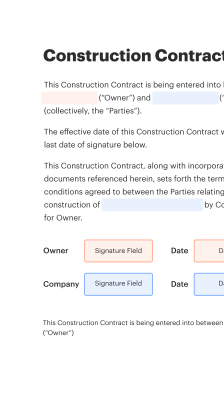
Make Default Field in SignNow for Efficient Document Management

Remove paperwork and optimize digital document managing for higher productivity and countless opportunities. Discover a better strategy for running your business with airSlate SignNow.

Award-winning eSignature solution

What the make default field feature does

The make default field feature lets administrators or template creators set a specific form field as the default value or behavior that populates automatically when a document or template is used. This reduces repetitive editing, enforces consistent data entry, and speeds up preparation across recurring documents. In an eSignature environment, default fields can be applied to text, dates, checkboxes, and dropdowns so that signers see pre-filled values or constraints that align with organizational standards and reduce manual corrections during signing.

Why set a default field in templates

Setting a default field streamlines document preparation, reduces signer errors, and enforces consistent values across batches and templates, improving throughput without altering legal intent of a signature.

Why set a default field in templates

Common challenges addressed by default fields

  • Manual re-entry of the same data across similar documents wastes time and increases transcription errors for signers and administrators.
  • Inconsistent field values across templates create compliance gaps and make audit reviews more time-consuming and error-prone.
  • Complex templates with many optional fields can confuse signers unless sensible defaults guide expected responses and formats.
  • Lack of default field policies can lead to repeated corrections and version conflicts when multiple users prepare similar documents.

Example user roles for default field setup

Template Administrator

Responsible for creating and managing templates, the Template Administrator designs default fields to match organizational policies, tests behavior across devices, and documents rules for other users to follow when preparing documents.

Business User

A business user applies existing templates and may customize certain fields; defaults reduce required edits and ensure consistent entries when sending documents for signature in routine transactions.

Teams and roles that commonly use default fields

  • HR teams using onboarding forms with pre-filled company details and standard start dates.
  • Sales teams who prepare quotes or contracts with preset payment terms and standard clauses.
  • Procurement or operations staff generating purchase orders with fixed account codes and delivery instructions.

Administrators benefit from reduced template maintenance while signers experience faster, clearer forms with fewer editing steps.

Essential tools that support default fields

The following capabilities enhance the usefulness of default fields and make implementation manageable in enterprise environments.

Template Versioning

Tracks changes to templates and allows rollback to prior versions so default-field modifications are auditable and reversible when mistakes are found or policies change.

Role-Based Editing

Restricts who can create or modify default fields to prevent unauthorized changes and to ensure only trained personnel update organization-wide defaults.

Field Mapping

Maps external system fields to document fields so defaults can be sourced from a CRM, HRIS, or database without manual copy-paste, reducing data mismatches.

Conditional Logic

Applies defaults conditionally based on other field values so that defaults adapt to context and reduce the need for multiple similar templates.

Audit Logs

Maintains a tamper-evident record of default field creation and edits, including actor identity and timestamps for compliance and investigations.

API Controls

Provides programmatic management of defaults for automated template provisioning, bulk updates, and consistent behavior across integrations and deployments.

be ready to get more

Choose a better solution

Integrations that complement default field usage

Integrating default-field-enabled templates with document sources and CRMs ensures prefilled values come directly from authoritative systems and reduces duplicate entry.

Google Docs

Link templates to Google Docs to import canonical document content and map document fields to default values sourced from a central doc.

CRM Systems

Connect to CRM records so default fields such as customer name, account number, and billing address prefill from the contact or deal record.

Cloud Storage

Use Dropbox or similar storage to pull template versions and attach related files while keeping default values consistent across saved templates.

Single Sign-On

Leverage SSO to ensure role-based ability to create or change default fields and to record the actor in audit logs.

How default fields behave during sending

This sequence explains how default values are applied when a document is prepared and sent for signature.

  • Template Load: Default values populate during template instantiation.
  • Sender Review: Sender can accept or edit defaults before sending.
  • Signer View: Signers see prefilled fields and required markers.
  • Finalization: Signed copies retain default values in audit trail.
Collect signatures
24x
faster
Reduce costs by
$30
per document
Save up to
40h
per employee / month

Quick steps to make default field in a template

Follow these basic steps to define a default field value in your template so it populates automatically for future sends.

  • 01
    Open Template: Select the template to edit.
  • 02
    Select Field: Choose the form field to set default.
  • 03
    Define Default: Enter default value or select behavior.
  • 04
    Save Template: Save and test the template usage.
be ready to get more

Why choose airSlate SignNow

  • Free 7-day trial. Choose the plan you need and try it risk-free.
  • Honest pricing for full-featured plans. airSlate SignNow offers subscription plans with no overages or hidden fees at renewal.
  • Enterprise-grade security. airSlate SignNow helps you comply with global security standards.
illustrations signature

Automation settings when using default fields

Configure workflow parameters to control how default fields behave during sends, reminders, and batch operations.

Feature Configuration
Default Field Inheritance Template level
Reminder Frequency 48 hours
Batch Apply Defaults Enabled per template
Pre-send Validation Required
API Default Enforcement Server-side

Device support and platform notes for default fields

  • Desktop browsers: Chrome, Edge, Safari
  • Mobile apps: iOS and Android
  • Offline behavior: Limited support

Before wide deployment, test templates and default values across your users' typical devices and internet conditions; address any formatting or validation differences and document supported configurations for senders and administrators.

Security and authentication elements to consider

Access Controls: Role-based restrictions
Field Encryption: Encrypted at rest
Authentication: Multi-factor options
Audit Trail: Tamper-evident logs
Session Controls: Time-limited access
Data Segmentation: Tenant isolation

Industry examples for default field use

Practical case examples show how default fields save time and reduce errors in everyday workflows across industries.

Healthcare Intake Form

A hospital uses default fields to populate provider and facility information in patient intake forms to reduce administrative time

  • default fields for clinic location and provider ID
  • reduces manual data entry and supports accurate billing

Resulting in faster check-in, fewer data errors, and cleaner billing records for compliance and audits.

Sales Quote Template

A software vendor applies default payment terms and standard contract duration to sales quotes to enforce consistent commercial terms

  • default payment term and term length set at template level
  • reduces negotiation time and administrative follow-ups

Resulting in faster quote generation, predictable revenue terms, and consistent recordkeeping across deals.

Best practices for accurate default field configuration

Adopt these practices to reduce errors and maintain compliance when using default fields across templates and workflows.

Limit defaults to non-sensitive values
Avoid pre-filling sensitive personal or financial data unless explicitly needed and protected; prefer tokenized references or require explicit consent before populating sensitive fields.
Document default field policies
Maintain a short policy indicating who may create or edit defaults, naming conventions, and acceptable default types to ensure consistent use across the organization.
Test templates across devices
Validate defaults on desktop, tablet, and mobile to ensure values display correctly and that signers can edit fields where appropriate without UI or formatting issues.
Audit default changes regularly
Track modifications to default field values and templates in an audit trail so administrators can trace when defaults changed and why, supporting compliance reviews.

FAQs and troubleshooting for make default field

Frequently asked questions and common troubleshooting steps to resolve issues with default fields in templates and workflows.

Feature comparison for default field capabilities

A concise availability and capability comparison for setting default fields across leading eSignature providers.

Feature Criteria and Availability Matrix signNow (Recommended) DocuSign Adobe Sign
Default Field Creation
Template-Level Defaults
API Default Management REST API supported REST API supported REST API supported
Bulk Apply Defaults Limited Limited
be ready to get more

Get legally-binding signatures now!

Risks of improper default field use

Incorrect Defaults: Misleading inputs
Overwriting Intent: Alters signer choices
Unauthorized Changes: Policy violations
Data Exposure: Sensitive prefilled data
Compliance Gaps: Regulatory issues
Audit Ambiguity: Unclear provenance

Pricing and plan overview for default-field workflows

Typical plan features and support levels relate to how default-field functionality is packaged across vendors and plans.

Plan and Vendor Columns signNow (Featured) DocuSign Adobe Sign HelloSign PandaDoc
Free/Trial Limited templates Trial available Trial available Trial available Trial available
Individual/Entry Basic templates and defaults Single user plan Single user plan Single user plan Single user plan
Business Team templates, default fields Team plan features Team features Team templates Team collaboration
Enterprise Advanced controls, SSO, audit logs Enterprise suite Enterprise suite Advanced enterprise Enterprise features
Developer/API API access, field defaults Developer API Developer API API options API access

Streamline complicated workflows

Generate, execute, and maintain workflows of any complexity, digitally from near any place. Scalable eSignature capabilities ensure you can exchange documents with the right people in the right way and set up roles for each receiver. Execute document workflows faster and easier than ever before.

Automate document flow

Optimize sophisticated signing procedures with airSlate SignNow�s effective capabilities to boost your operation. Manage your automated signature workflows to make sure they're operating at top performance with quick notices and reminders.

Enhance in team communication

Bring teammates together in a secure, shared workspace. Manage documents, use form templates and notifications to create more efficient cross-company collaboration. Free your workers from having to spend time on repeated routines to enable them to give attention to beneficial, business-critical duties.

Integrate into your current framework

Run your jobs with best-in-class integration. Capture Salesforce, Microsoft Teams, and SharePoint in multi functional business stream. Link up your software to a single unit for unlimited opportunities and higher productivity.

Remain compliant with industry-leading data safety

Feel safe understanding that your data is protected by the most up-to-date in encryption security. airSlate SignNow is GDPR and eIDAS certified and gives you visibility into your eSigning experience with court-admissible audit trails. Set up user access permissions and roles to manage who has access to what.


walmart logo
exonMobil logo
apple logo
comcast logo
facebook logo
FedEx logo
be ready to get more

Get legally-binding signatures now!