Mark Collateral Agreement Template for Secure Transactions

Eliminate paper and optimize digital document processing for higher efficiency and unlimited opportunities. Experience a greater way of doing business with airSlate SignNow.

Award-winning eSignature solution

What a mark collateral agreement template is and why it matters

A mark collateral agreement template standardizes the documentation used to grant, record, and manage security interests in collateral for loans and other secured transactions. Templates capture required clauses, identification of parties, collateral descriptions, and signature blocks to ensure consistency and reduce drafting errors. Using a template with integrated eSignature capabilities helps maintain traceable execution, enforceable signature evidence, and streamlined workflows across legal, lending, and treasury teams. Templates also support version control and can be combined with conditional fields to reflect deal-specific terms while preserving core legal language and compliance checks.

Why use a dedicated mark collateral agreement template

A template reduces drafting time, enforces consistent clause placement, and lowers legal review iterations while preserving key legal language required for secured transactions.

Why use a dedicated mark collateral agreement template

Common challenges when preparing collateral agreements

  • Incomplete collateral descriptions lead to enforceability disputes and additional legal costs if assets are ambiguously defined.
  • Version control problems occur when multiple stakeholders edit clauses without a single authoritative template source.
  • Manual signature collection increases turnaround time and creates gaps in the audit trail for regulatory or lender review.
  • Integration gaps with loan origination systems cause repeated data entry and elevate the risk of mismatched borrower or collateral details.

Representative user profiles for template setup

Lender - Loan Officer

Loan officers configure templates to include required collateral descriptors, lien priorities, and signature sequences. They coordinate with operations to ensure templates map to loan IDs and support downstream filings, aiming to reduce closing delays and ensure consistent documentation across deals.

Borrower - Legal Counsel

Borrower counsel reviews template clauses and negotiates borrower-specific carve-outs. They focus on clarity of collateral schedules, accurate party identification, and consent provisions while ensuring the final signed document reflects negotiated terms and supports enforceability.

Teams and roles that typically use a mark collateral agreement template

Lenders, in-house counsel, credit operations, and borrowers use templates to speed execution and ensure legal completeness across secured transactions.

  • Commercial lenders and credit officers who manage loan documentation and collateral registries.
  • In-house legal teams responsible for drafting, reviewing, and approving secured transaction language.
  • Operations and closing specialists who finalize filings, UCCs, and evidence of perfection.

Using a consistent template reduces closing time and helps integrate signature and filing workflows across departments.

Six advanced features that improve collateral template workflows

Beyond basic templates, these features support scale, compliance, and integration for organizations managing secured transactions.

Conditional Logic

Conditional logic lets templates adapt clause inclusion based on transaction attributes, preventing inapplicable language and reducing negotiation errors while keeping a single authoritative document for multiple deal types.


Reusable Clause Library

A clause library centralizes approved legal language, enabling counsel to update clauses centrally and propagate changes to templates, ensuring consistency and simplifying audits.

Bulk Send

Bulk Send allows sending identical documents to many recipients with individualized fields, useful for standardized notices or mass collateral acknowledgments linked to portfolio events.

Advanced Authentication

Support for multi-factor and knowledge-based verification increases signer identity assurance for high-value or regulatorily sensitive secured transactions, strengthening evidentiary position.

API & Integrations

APIs connect templates to loan origination, CRM, and closing systems for automated population, status tracking, and archival, reducing manual reconciliation and improving data integrity.

Audit and Export

Comprehensive audit logs, tamper-evident signatures, and exportable PDFs support filing needs, audits, and court-ready evidence for perfected security interests.

be ready to get more

Choose a better solution

Core features to include in a mark collateral agreement template

Select features that ensure legal completeness, reliable execution, and operational efficiency when creating and using collateral templates for secured lending.

Template Fields

Structured fields for borrower names, collateral descriptions, serial numbers, UCC filing details, and effective dates reduce manual entry and maintain consistency across transactions while enabling easy data exports for downstream systems.

Conditional Clauses

Logic-driven sections allow inclusion or exclusion of specific warranty, indemnity, or exception language based on collateral type, jurisdictional requirements, or negotiated borrower concessions without creating separate documents for each scenario.

Signature Routing

Predefined signing sequences and role assignments ensure the lender, borrower, and any guarantors sign in the correct order, capture required attestations, and produce a complete audit trail for regulatory and closing records.

Integrations

Direct connections to loan origination, CRM, and document management systems allow automatic field mapping, secure storage, and consistent record-keeping, reducing duplicate data entry and reconciliation work across teams.
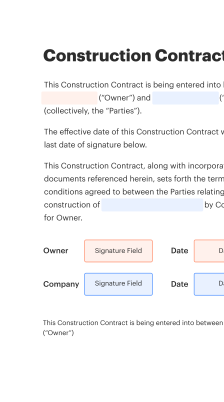
How an online mark collateral agreement template works

An online template combines pre-approved legal language with form fields and signing rules so documents populate and execute consistently.

  • Template Instantiation: Create document from stored template.
  • Field Population: Auto-fill borrower and collateral data.
  • Approval Routing: Route for internal review and sign-off.
  • Execution: Collect eSignatures and record audit trail.
Collect signatures
24x
faster
Reduce costs by
$30
per document
Save up to
40h
per employee / month

Step-by-step: prepare a mark collateral agreement template

Follow a clear sequence to build a reusable template that captures legal requirements, party information, collateral details, and signature workflows.

  • 01
    Draft Core Clauses: Include security interest, description, and priority.
  • 02
    Define Variables: Identify fields for names, amounts, and dates.
  • 03
    Add Conditional Logic: Show or hide clauses based on deal type.
  • 04
    Set Signature Flow: Order signers and authentication methods.

Quick grid: creating and deploying a template

Use this condensed sequence to move from template design to signed agreement efficiently.

01

Design:

Draft core clauses and variables.
02

Map Fields:

Assign tags to data sources.
03

Set Logic:

Configure conditional visibility rules.
04

Assign Roles:

Define signer responsibilities.
05

Test:

Run sample signing sessions.
06

Publish:

Deploy template for operational use.
be ready to get more

Why choose airSlate SignNow

  • Free 7-day trial. Choose the plan you need and try it risk-free.
  • Honest pricing for full-featured plans. airSlate SignNow offers subscription plans with no overages or hidden fees at renewal.
  • Enterprise-grade security. airSlate SignNow helps you comply with global security standards.
illustrations signature

Typical workflow settings for a mark collateral agreement template

Configure routing, reminders, retention, and authentication to align template execution with internal controls and closing timelines.

Workflow Setting and Configuration Header Default Configuration
Reminder Frequency 48 hours
Signature Order Sequential routing
Retention Period 7 years
Authentication Level Standard MFA
Auto-Complete Actions Finalize on last signature

Platform and device requirements for template use and signing

Ensure the platform supports common browsers and mobile devices, secure authentication, and exportable audit logs to meet legal and operational needs.

  • Supported Browsers: Chrome, Edge, Safari
  • Mobile Compatibility: iOS and Android apps
  • Authentication Methods: Password, SMS, MFA

Confirm platform compliance with ESIGN and UETA for electronic execution, ensure HIPAA protections where relevant, and verify that mobile signing retains a complete, exportable audit trail for filings and record retention.

Security and data protections relevant to collateral agreement templates

Audit Trail: Records timestamps and signer IPs
Encryption at Rest: AES-256 encrypted file storage
Encryption in Transit: TLS 1.2+ for transport security
Access Controls: Role-based permissions enforced
Data Residency: Options for US-based storage
Document Watermarking: Conditional visible identifiers applied

Real-world examples of templates in practice

Template use cases illustrate how standardized language and eSignature workflows reduce risk and accelerate closings across different transaction types.

Small Bank Loan

A regional bank used a mark collateral agreement template to ensure consistent collateral descriptions across consumer and small business loans

  • Template automated insertion of borrower data
  • Reduced manual review time and clerical errors

Resulting in faster closings and fewer UCC filing corrections, improving lender operational efficiency and reducing legal overhead.

Commercial Real Estate

A commercial lender deployed a template for property-secured loans that included conditional schedules for multiple properties

  • Conditional fields simplified multi-property descriptions
  • Benefit was clearer lien priority tracking across assets

Leading to more accurate perfection records and fewer disputes during foreclosure or sale processes, supporting better portfolio risk management.

Best practices for secure and accurate templates

Adopt procedures that minimize legal risk and operational friction while maintaining clear records for audits and filings.

Standardize clause language and maintain a single authoritative template library
Keep a controlled repository with version history so legal updates propagate to all templates, reducing inconsistencies and ensuring that every executed agreement reflects current legal and regulatory requirements.
Use conditional fields to adapt templates to transaction complexity
Implement logic to show only relevant sections for secured parties, collateral types, or jurisdiction-specific language to avoid clutter and prevent inclusion of inapplicable clauses that could cause ambiguity.
Require multi-factor authentication for key signers on higher-value deals
Configure stronger identity verification for signers when collateral values or regulatory needs justify higher assurance, thereby improving evidentiary weight and reducing fraud risk.
Validate data with integrations and pre-fill critical fields
Map borrower and collateral data from loan systems to eliminate manual transcription errors, and run validation checks for identifiers such as VINs or asset serial numbers before template execution.

FAQs about mark collateral agreement templates

Answers to common implementation, execution, and compliance questions to help legal and operations teams avoid pitfalls.

Feature availability comparison for mark collateral agreement templates

Compare essential platform capabilities that affect template creation, signing, and compliance when selecting an eSignature provider.

Feature Comparison and Platform Availability signNow (Featured) DocuSign Adobe Sign
Template Creation and Management Features
Bulk Send Capability Availability
API Access and SDK Support Included Available Available
Advanced Authentication Options MFA & SMS MFA & IDKBA MFA & ID verification
be ready to get more

Get legally-binding signatures now!

Typical timing and retention checkpoints for templates

Establish clear timelines for execution, reminders, filing, and retention to support deal discipline and compliance.

Execution Target Window:

7 to 14 days

Reminder Cadence:

Every 48 hours

UCC Filing Timeline:

Within 30 days of signing

Document Retention Start:

From effective date

Record Disposal Review:

Annually after retention period

Potential risks and compliance consequences

Unenforceable Lien: Legal challenge risk
Missed Filing: Priority loss exposure
Data Breach: Confidentiality compromise
Incorrect Parties: Invalid security interest
Noncompliant Signature: Rejected by court
Audit Gaps: Compliance fines possible

Pricing and plan differences relevant to template use

Plan structure and included features influence whether an offering supports high-volume templates, API access, or enterprise controls required for secured lending.

Plan and Tier Names signNow (Featured) DocuSign Adobe Sign Dropbox Sign PandaDoc
Free Tier Availability Free plan with limited features No free plan available No free plan available Free individual plan available Free eSign plan available
Entry-Level Monthly Price Starts around $8 per user monthly Starts around $10 per user monthly Starts around $9.99 per user monthly Starts around $12 per user monthly Starts around $19 per user monthly
Included eSignatures Unlimited on paid plans Limited by tier Limited by tier Limited by tier Limited by tier
Template and Fields Support Unlimited templates and fields Template support on most tiers Template support included Templates with paid plans Robust template builder included
API and Enterprise add-ons API on business plans; SSO and SAML available API with higher tiers; enterprise controls API and enterprise features available API available; team management features API and advanced workflow available

Simplify complicated workflows

Prepare, perform, and control workflows of any difficulty, electronically from almost anywhere. Scalable electronic signature features allow you to share papers with the right people in the right sequence and assign roles for every signee. Stream document workflows faster and easier than ever before.

Automate document managing

Improve complicated signing procedures with airSlate SignNow�s highly effective tools to enhance your company. Control your automatic signature workflows to make sure they're operating at top performance with quick notices and reminders.

Enhance in team communication

Get teammates together in a protected, shared workplace. Manage paperwork, use form templates and notifications to deliver better cross-company communication. Relieve your employees from having to spend time on repeated activities to enable them to give attention to valuable, business-critical projects.

Integrate into your existing systems

Manage your projects with market-leading integration. Collect Salesforce, Microsoft Teams, and SharePoint all in one business thread. Link your software to a single system for limitless possibilities and higher productiveness.

Stay compliant with best-in-class data safety

Feel confident understanding that your data is protected by the most recent in encryption security. airSlate SignNow is GDPR and eIDAS compliant and provides you transparence into your eSigning experience with court-admissible audit trails. Set up user access permissions and rights to regulate who has access to what.


walmart logo
exonMobil logo
apple logo
comcast logo
facebook logo
FedEx logo
be ready to get more

Get legally-binding signatures now!