Sign Patient Intake Form Securely with SignNow

Eliminate paper and automate digital document managing for more performance and countless possibilities. Enjoy a greater strategy for running your business with airSlate SignNow.

Award-winning eSignature solution

What it means to sign patient intake form electronically

Signing a patient intake form electronically replaces paper signatures with a verifiable digital process that captures patient consent, contact information, medical history, and insurance details. The digital intake workflow collects typed or drawn signatures, records signer authentication, timestamps actions, and saves an audit trail. In U.S. healthcare settings this method supports secure transmission and storage when implemented with HIPAA-aligned controls and compliant eSignature platforms that follow ESIGN and UETA principles for legal validity.

Why use electronic signing for patient intake forms

Electronic intake forms streamline admission, reduce manual errors, and centralize records while enabling secure, time-stamped consent tracking that meets ESIGN and UETA standards in most U.S. clinical workflows.

Why use electronic signing for patient intake forms

Common challenges when you sign patient intake form electronically

  • Confirming patient identity remotely can require multi-factor checks or ID verification to meet clinic policies.
  • Ensuring HIPAA-compliant storage and access controls adds configuration and vendor selection complexity.
  • Incomplete or incorrectly mapped form fields create downstream billing and scheduling delays.
  • Patient technology access or low digital literacy can slow completion and require alternatives.

Typical user roles for electronic patient intake forms

Front Desk

Front desk staff handle patient check-in, verify identity and insurance, and initiate electronic intake sessions. They rely on templates, quick field mapping, and prompts to ensure all required fields are completed before clinical staff access the record.

Practice Manager

Practice managers configure templates, manage user permissions, review audit logs, and ensure document retention policies meet regulatory obligations. They coordinate vendor settings for HIPAA compliance and oversee integration with EHR or billing systems.

Organizations and roles that commonly sign patient intake form electronically

Clinics, hospitals, dental practices, behavioral health providers, and outpatient facilities commonly adopt electronic patient intake forms to streamline registration and consent processes.

  • Front desk personnel completing registration and insurance verification tasks.
  • Clinical staff collecting medical history and consent prior to treatment.
  • Practice managers overseeing compliance, retention, and reporting workflows.

Use is practical across small practices and larger health systems when the chosen solution supports role-based access, audit trails, and HIPAA-required safeguards.

Advanced tools to enhance patient intake signing workflows

Beyond basics, these capabilities improve efficiency, compliance, and integration with clinical systems for more complete intake management.

Mobile Signing

Optimized mobile experiences let patients sign intake forms from smartphones or tablets, preserving field formatting and signature capture without requiring printed copies or special software.


HIPAA Controls

Features such as encrypted storage, BAAs, and configurable retention policies support health data protections required by HIPAA and internal compliance programs.

EHR Integration

Bi-directional integration with electronic health records automates population of patient demographic data and stores completed intake forms in the chart for clinician access.

Role Assignment

Granular role assignment lets administrators define who can send forms, who can sign on behalf of patients, and who can export or delete records.

Automated Reminders

Configurable reminder schedules reduce incomplete intake forms by sending follow-up messages to patients who have not completed required fields or signatures.

Document Fields

Advanced field types, conditional logic, and validation ensure structured data capture for billing codes, consent choices, and clinical questionnaires.

be ready to get more

Choose a better solution

Core features to look for when you sign patient intake form

Choose features that ensure accuracy, secure access, and consistent data capture for clinical and administrative needs.

Templates

Re-usable, customizable intake templates reduce repetitive data entry and ensure required clinical fields and disclosures are consistently presented to each patient during registration and pre-visit workflows.

Authentication

Multiple signer authentication options, such as email verification, SMS codes, or identity document checks, allow practices to balance ease of use with identity assurance appropriate to their risk posture.

Audit Trail

Immutable audit logs capture timestamps, IP addresses, and action history for each signed intake form, supporting compliance, internal review, and dispute resolution.

Access Controls

Role-based permissions let administrators limit who can view, edit, or export intake forms, helping maintain least-privilege access and reduce exposure of protected health information.
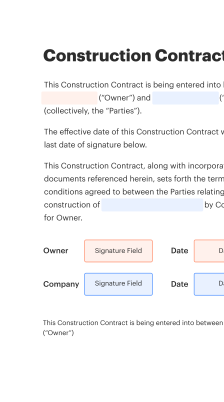
How the electronic intake signing process typically flows

A standard intake workflow moves from template creation to secure delivery, patient completion, and centralized storage with an audit trail.

  • Template creation: Build form fields and required signatures.
  • Secure delivery: Send link or present on device.
  • Patient completion: Fill fields and apply signature.
  • Record storage: Save encrypted document with log.
Collect signatures
24x
faster
Reduce costs by
$30
per document
Save up to
40h
per employee / month

Step-by-step: How to sign patient intake form electronically

Follow these core steps to collect and document patient intake information and signatures in a compliant electronic workflow.

  • 01
    Prepare template: Create or upload the intake form and map required fields.
  • 02
    Set authentication: Choose verification method such as email or MFA.
  • 03
    Send to patient: Deliver via secure link, email, or in-clinic tablet.
  • 04
    Capture signature: Patient signs; system records timestamp and audit data.
be ready to get more

Why choose airSlate SignNow

  • Free 7-day trial. Choose the plan you need and try it risk-free.
  • Honest pricing for full-featured plans. airSlate SignNow offers subscription plans with no overages or hidden fees at renewal.
  • Enterprise-grade security. airSlate SignNow helps you comply with global security standards.
illustrations signature

Common workflow settings for electronic patient intake forms

Configure these settings to align intake workflows with clinical processes, verification needs, and retention policies.

Feature Configuration
Reminder Frequency 48 hours
Signature Order Patient first
Authentication Method Email + SMS code
Template Library Centralized templates
Retention Period 7 years

Platform and device considerations for signing patient intake forms

Verify that your chosen eSignature platform supports the devices, browsers, and integrations your staff and patients use most often.

  • Desktop browsers: Chrome, Edge, Safari
  • Mobile platforms: iOS and Android
  • Tablet support: Responsive forms for tablets

Confirm minimum OS and browser versions, test in-clinic tablet workflows, and review any app requirements to ensure consistent patient experiences and reliable signature capture across devices.

Key security controls for signing patient intake forms

Encryption at rest: AES-256 encryption
Encryption in transit: TLS 1.2+ connections
Access controls: Role-based permissions
Authentication options: Multi-factor available
Audit logging: Comprehensive activity logs
HIPAA hosting: Business Associate Agreement

Real-world examples of signing patient intake forms

These concise examples show how electronic intake can be implemented in different clinical settings to reduce administrative burden and maintain compliance.

Case Study 1

A small primary care clinic switched from paper intake to an electronic workflow that used templates to standardize data capture.

  • Staff used patient email and in-office tablets to collect signatures and insurance details.
  • The clinic reduced registration time and errors in insurance data.

Resulting in faster check-in, fewer billing denials, and clearer audit records for compliance reviews.

Case Study 2

An outpatient behavioral health practice implemented secure remote intake for telehealth appointments, sending forms via authenticated links prior to the session.

  • Patients completed consent, history, and privacy disclosures from home.
  • The practice improved appointment readiness and reduced no-shows caused by in-person paperwork.

Leading to smoother telehealth throughput and reliable, time-stamped documentation for clinical and billing records.

Best practices when you sign patient intake form electronically

Apply consistent processes and technical controls to maintain data quality, patient privacy, and legal defensibility of electronic intake records.

Standardize intake templates across locations
Use centrally managed templates to ensure all required fields and disclosures are present. Standardization reduces omission errors, simplifies staff training, and makes audits faster by aligning data elements across providers and visits.
Enable appropriate signer authentication
Choose authentication methods that match the sensitivity of the form and organizational risk tolerance. For high-risk disclosures or consent, require multi-factor authentication or identity document checks to increase assurance.
Maintain clear retention and access policies
Document retention schedules and role-based access rules to meet HIPAA and state recordkeeping requirements. Regularly review permissions and purge records according to policy to limit exposure.
Integrate with clinical systems
Connect intake forms to the EHR and billing systems to reduce duplicate entry, ensure coding accuracy, and make completed forms immediately available to clinicians at the point of care.

FAQs About sign patient intake form

Answers to common questions when you sign patient intake form electronically, with a focus on compliance, access, and practical troubleshooting.

Comparing electronic signing versus paper for patient intake

A quick comparison of key capabilities when you sign patient intake form electronically versus paper-based processes and a leading eSignature provider.

Signing Criteria signNow (Featured) Paper-Based DocuSign
Legally Enforceable
Identity Verification Multi-factor available Manual ID checks Multi-factor available
Completion Time Minutes Days Minutes
Audit Trail Comprehensive Limited Comprehensive
be ready to get more

Get legally-binding signatures now!

Risks and penalties from improper electronic intake handling

HIPAA fines: Significant monetary penalties
Data breach costs: Notification and remediation expenses
Invalid consents: Potential legal disputes
Operational delays: Treatment or billing interruptions
Reputational harm: Loss of patient trust
Regulatory audits: Increased oversight risk

Pricing and feature snapshot across major eSignature providers

Representative pricing features and availability for common plan capabilities; confirm current plans and terms with each vendor for exact details.

Vendor/Plan signNow (Featured) DocuSign Adobe Sign Dropbox Sign PandaDoc
Entry Price (monthly) $8 per user $10 per user $9.99 per user $15 per user $19 per user
Starter Plan Features Basic eSign and templates Core eSign features Integration with Adobe apps Simple eSign workflows Document workflows and templates
HIPAA Support BAA available BAA available BAA available BAA available BAA available
API Access Available on paid tiers Available Available Available Available
Bulk Send Included on select plans Available paid addon Available Available Available

Make simpler complex workflows

Prepare, perform, and maintain workflows of any complexity, electronically from almost anywhere. Scalable electronic signature capabilities enable you to share contracts with the right users the correct way and set up roles for each signee. Complete document workflows faster and easier than ever before.

Automate document managing

Improve complicated signing tasks with airSlate SignNow�s powerful functions to improve your company. Manage your automatic eSignature workflows to make sure they're operating at peak functionality with immediate notifications and alerts.

Optimize in team communication

Bring teams together in a secure, shared workplace. Manage paperwork, use form templates and notices to create better cross-organization collaboration. Relieve your staff from having to spend time on repeated activities to enable them to focus on beneficial, business-vital tasks.

Integrate into your current systems

Work your jobs with industry-leading integration. Capture Salesforce, Microsoft Teams, and SharePoint in multi functional business flow. Hook up your software to a single system for endless possibilities and more performance.

Stay compliant with industry-leading data security

Feel safe understanding that your data remains secure by the newest in encryption security. airSlate SignNow is GDPR and eIDAS certified and offers you transparence into your signing process with court-admissible audit trails. Configure user access permissions and rights to manage who has access to what.


walmart logo
exonMobil logo
apple logo
comcast logo
facebook logo
FedEx logo
be ready to get more

Get legally-binding signatures now!