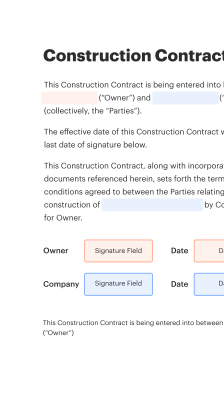
Signatory Letter: Secure eSignature Solutions

Remove paperwork and automate document management for increased efficiency and limitless opportunities. Discover a greater manner of doing business with airSlate SignNow.

Award-winning eSignature solution

What a signatory letter is and why it matters

A signatory letter is a formal document that identifies the individual authorized to sign on behalf of an organization and confirms their authority for a specified transaction or agreement. It typically names the signer, describes the scope of signing authority, references the related agreement or transaction, and includes a signature block and date. In regulated or contractual contexts a signatory letter helps prevent disputes over authority, supports internal controls, and provides a clear audit trail when combined with secure electronic signature systems.

When to use a signatory letter

Use a signatory letter when signing authority must be documented, when a third party requires formal confirmation, or when corporate records need a written delegation.

When to use a signatory letter

Common challenges when handling signatory letters

  • Unclear delegation leads to signature disputes and contract delays.
  • Paper-based storage causes retrieval delays and increases administrative burden.
  • Missing authority documentation creates vendor or counterparty acceptance issues.
  • Poor version control risks signing with outdated or revoked delegations.

Representative user profiles for signatory letter workflows

Corporate Counsel

A corporate counsel prepares and reviews signatory letters to ensure the language matches board resolutions and bylaws. They verify that the signer’s authority aligns with delegated powers, maintain record copies for audits, and coordinate with finance or procurement to satisfy counterparties.

Procurement Officer

A procurement officer requests and stores signatory letters as part of vendor onboarding. They confirm that vendor signers appear on the correct corporate registry, attach letters to contract records, and use electronic workflows to speed acceptance and reduce manual follow-up.

Typical users and teams involved with signatory letters

Legal, procurement, finance, and compliance teams commonly prepare or request signatory letters to confirm authority before closing agreements.

  • Legal counsel: drafts language and ensures corporate authority is properly expressed.
  • Procurement and vendor managers: request letters to verify signers for supplier contracts.
  • Finance and treasury: confirm authorized signers for payment, banking, and credit documents.

Cross-functional review ensures signatory letters match corporate records and mitigate downstream acceptance or audit issues.

Advanced capabilities that improve signatory letter workflows

Beyond basics, these capabilities reduce manual work, ensure governance, and speed counterparty acceptance of signatory letters.

Bulk Send

Send standardized signatory letters to multiple recipients while tracking individual completion and status for each recipient to streamline large onboarding or renewal campaigns.

Conditional Fields

Display or hide sections of a signatory letter based on role or transaction type to tailor authority descriptions without maintaining separate templates.

Team Templates

Provide department-specific template libraries with delegated editing rights so teams maintain approved wording while legal retains central control over master templates.

API Access

Automate issuance of signatory letters from internal systems, attaching generated letters to contract records and reducing manual entry and delays.

Granular Permissions

Restrict who can create, send, and approve signatory letters to enforce segregation of duties and maintain an auditable control environment.

Integrations

Connect with contract management, CRM, and document storage systems to attach signed letters automatically to related records for streamlined retrieval.

be ready to get more

Choose a better solution

Essential features for managing signatory letters

Look for features that support authority verification, secure execution, template reuse, and clear auditability for signatory letters.

Templates

Reusable signatory letter templates let organizations enforce consistent phrasing, preserve required clauses, and reduce drafting time while ensuring every letter contains the same verification and signature blocks.

Verification Methods

Multiple authentication options such as email verification, SMS one-time passcodes, and multi-factor authentication help validate signer identity before execution and reduce counterparty acceptance friction.

Audit Trail

A tamper-evident audit trail records viewing, authentication, signing timestamps, and IP metadata so completed signatory letters have a defensible execution record for legal or compliance review.

Secure Storage

Encrypted cloud storage with configurable retention and export options keeps signed letters accessible to authorized staff and preserves records for audits or regulatory requirements.

How electronic signatory letters work in practice

Electronic signatory letters combine a formatted document with eSignature controls and an auditable delivery path.

  • Document Setup: Upload letter template and fill key fields.
  • Signer Verification: Authenticate signer via email, SMS, or MFA.
  • Execution: Signer applies signature and date electronically.
  • Storage: Save completed letter with audit trail metadata.
Collect signatures
24x
faster
Reduce costs by
$30
per document
Save up to
40h
per employee / month

Preparing a signatory letter: step-by-step

Follow these steps to create a clear signatory letter that meets internal and counterparty needs.

  • 01
    Identify Signer: Specify full legal name and title.
  • 02
    State Authority: Describe the scope and limits of signing power.
  • 03
    Reference Documents: List related agreements or account numbers.
  • 04
    Sign and Date: Include signature block and effective date.

Completing a signatory letter using an eSignature platform

These operational steps reflect typical interactions when preparing and finalizing a signatory letter with an electronic signature provider.

01

Draft:

Create or select template and populate fields.
02

Verify:

Confirm signer identity and required approvals.
03

Send:

Deliver to signer with instructions and deadlines.
04

Sign:

Signer authenticates and applies electronic signature.
05

Record:

Platform stores signed letter and audit data.
06

Share:

Distribute final letter to stakeholders securely.
be ready to get more

Why choose airSlate SignNow

  • Free 7-day trial. Choose the plan you need and try it risk-free.
  • Honest pricing for full-featured plans. airSlate SignNow offers subscription plans with no overages or hidden fees at renewal.
  • Enterprise-grade security. airSlate SignNow helps you comply with global security standards.
illustrations signature

Suggested workflow settings for signatory letter automation

Recommended configuration items to automate issuance, approval, and archival of signatory letters while preserving controls and auditability.

Setting Name Configuration
Approval Routing Two-step legal review
Reminder Frequency 48 hours
Signature Authentication Level MFA required
Retention Policy 7 years
Archive Export Format PDF/A with audit

Platform compatibility and technical requirements

Ensure your eSignature platform supports templates, secure storage, and multiple authentication methods for effective signatory letter workflows.

  • Desktop Support: Browser-based access
  • Mobile Support: iOS and Android apps
  • API Availability: RESTful API access

Confirm the platform integrates with your document repository and identity providers, supports export of audit logs, and aligns with your retention and access controls to maintain governance over signatory letters.

Security and protection measures for signatory letters

Access Controls: Role-based user restrictions
Encryption: At-rest and in-transit encryption
Authentication: Multi-factor authentication options
Audit Logs: Immutable activity records
Document Watermarking: Embedded visible identifiers
Retention Policies: Configurable retention rules

Industry examples showing how signatory letters are used

These short case narratives illustrate typical uses for signatory letters across contracts, banking, and vendor onboarding.

Corporate Contract Signing

A legal team issues a signatory letter to confirm the VP of Sales can sign master services agreements for the North America division.

  • Confirms delegated authority for specific contract types.
  • Reduces negotiation friction by satisfying counterparty verification requests quickly.

Resulting in faster contract execution and fewer administrative holds before commencement.

Banking Authorization

A treasury department provides a signatory letter to a bank to authorize a new signatory on corporate accounts and wire transfers.

  • Names the authorized signers and effective dates.
  • Ensures banking partners accept electronic authorization and match corporate records.

Leading to uninterrupted payment processing and reduced manual bank verification cycles for transactions.

Best practices for secure and accurate signatory letters

Adopt consistent procedures and controls when preparing, approving, and storing signatory letters to reduce risk and expedite acceptance by counterparties.

Use standardized, approved signatory letter templates drafted by legal and updated regularly
Maintain a central library of templates that include required legal language, scope of authority, effective dates, and signature blocks to reduce drafting errors and ensure compliance.
Require documented internal approvals before issuing a signatory letter
Implement a review and approval workflow that captures manager or executive sign-off and attaches any supporting board resolutions or delegation records to the letter for verification.
Authenticate signers using multi-factor methods appropriate to transaction risk
For high-value or sensitive authorizations, require MFA or identity-proofing steps to confirm signer identity and reduce the likelihood of fraudulent or unauthorized signatures.
Retain signed letters with audit trails and apply retention schedules consistent with regulatory needs
Store completed letters in a secure repository with searchable metadata and an established retention policy that aligns with audit, tax, and legal recordkeeping requirements.

FAQs and troubleshooting for signatory letters

Answers to common questions about creating, validating, and storing signatory letters, plus steps to resolve frequent execution issues.

Feature availability comparison for signatory letter workflows

A concise comparison of core features that impact signatory letter creation and delivery across top eSignature providers.

Criteria signNow (Recommended) DocuSign Adobe Acrobat Sign
Legal Validity (US)
Audit Trail Detail Full Full Full
Bulk Send Capability
Integrated Templates
be ready to get more

Get legally-binding signatures now!

Key timing steps for issuing and renewing signatory letters

Manage schedules and reminders so signatory letters remain current and valid for intended use.

01

Initial Preparation

Draft and circulate for approvals.

02

Internal Approval

Obtain manager and legal sign-off.

03

Execution Deadline

Set a completion target and send reminders.

04

Effective Start Date

Record when authority becomes active.

05

Mid-term Review

Check for changes in role or scope.

06

Renewal Reminder

Trigger notification before expiry.

07

Revocation Process

Issue notice and update records promptly.

08

Archival Date

Move expired letters to archive per policy.

Retention and key dates for signatory letters

Track effective dates, expiration, and renewal requirements for signatory letters to avoid relying on stale delegations.

Effective Date and Term:

Record start and end dates for authority.

Review Date for Renewal:

Schedule periodic review, typically annually.

Revocation Notice Date:

Record when authority is revoked and notify partners.

Archive Retention Period:

Set archival rules consistent with governance.

Audit Review Window:

Make records available during audits promptly.

Risks and penalties from inadequate signatory letters

Contract Invalidity: Disputes may arise
Regulatory Fines: Noncompliance exposures
Operational Delays: Closings postponed
Reputational Harm: Counterparty distrust
Financial Loss: Incorrect authorizations
Audit Findings: Negative compliance results

Pricing and plan comparison relevant to signatory letter management

High-level pricing and plan differences that affect template access, API usage, and storage for signatory letter programs.

Provider signNow (Recommended) DocuSign Adobe Acrobat Sign Dropbox Sign PandaDoc
Free tier availability Limited free plan No free tier Free trial only Limited free tier Free trial available
Entry-level monthly price $8 per user $10 per user $16 per user $10 per user $19 per user
API access included Available on paid plans Available on paid plans Enterprise focus Available via Dropbox plans Enterprise and API plans
Templates and storage Unlimited templates, paid storage tiers Templates included, storage limits Templates included, cloud storage Templates included, basic storage Templates included, storage limits
Primary use case fit Cost-effective SMBs and teams Enterprise and regulated workflows Integrated Adobe document workflows Simple signing and integrations Sales and proposal automation

Simplify challenging workflows

Generate, deliver, and manage workflows of any complexness, digitally from almost anywhere. Scalable eSignature features allow you to share contracts with the right people in the right order and set up roles for each receiver. Complete document workflows faster and easier than ever before.

Automate document flow

Improve complicated signing procedures with airSlate SignNow�s effective capabilities to enhance your business. Control your automatic eSignature workflows to make sure they're running at top performance with instant notifications and alerts.

Optimize in team collaboration

Get teammates together in a safe, shared environment. Manage documents, use form templates and notifications to create more effective cross-company collaboration. Relieve your workers from having to spend time on recurring activities to enable them to concentrate on beneficial, business-essential duties.

Integrate into your existing systems

Manage your tasks with market-leading integration. Assemble Salesforce, Microsoft Teams, and SharePoint all in one business thread. Connect your applications to a single environment for unlimited opportunities and higher efficiency.

Stay compliant with industry-leading data security

Feel confident understanding that your data is protected by the most recent in encryption security. airSlate SignNow is GDPR and eIDAS compliant and gives you exposure into your eSigning process with court-admissible audit trails. Set up user authorization and roles to manage who has access to what.


walmart logo
exonMobil logo
apple logo
comcast logo
facebook logo
FedEx logo
be ready to get more

Get legally-binding signatures now!