Signed Lien Release Form for Secure Transactions

Remove paperwork and improve digital document processing for higher efficiency and unlimited possibilities. Discover a greater manner of doing business with airSlate SignNow.

Award-winning eSignature solution

What a signed lien release form is and when it matters

A signed lien release form is a written document that confirms a lien holder has relinquished a security interest in property after a debt or obligation has been satisfied. This form documents that the lender, contractor, or other lien claimant no longer has a claim against the asset, and it typically includes identifying information about the parties, the original lien, the date of satisfaction, and authorized signatures. Properly executed releases protect property owners, enable clear title transfer, and serve as proof for recordkeeping and downstream transactions.

Why a properly executed signed lien release form matters

A correct signed lien release form prevents title disputes, enables property transfers, and preserves legal and financial records in case of audits or resale.

Why a properly executed signed lien release form matters

Common obstacles when obtaining a signed lien release form

  • Incomplete borrower or lienholder details can invalidate the release and slow record updates.
  • Unsigned or improperly witnessed releases may not satisfy county recording requirements or lenders.
  • Delays obtaining signatures from multiple lienholders create closing and transfer bottlenecks.
  • Poor version control risks sending outdated forms and creates conflicting records during title searches.

Representative user profiles for signed lien release workflows

Title Officer

Title officers coordinate lien searches, request signed lien release forms from lienholders, and ensure that releases meet county recording standards before closing. They require traceable signatures, reliable document storage, and audit-ready evidence of satisfaction for each recorded lien.

Construction PM

Construction project managers secure conditional or final lien releases from subcontractors and suppliers after payments. They need standardized release templates, quick signature turnaround, and a timestamped audit trail to avoid disputes at project close.

Typical users and teams that handle signed lien release forms

Title companies, lenders, contractors, and property managers frequently prepare and accept signed lien release forms as part of closing and asset management workflows.

  • Title companies managing closings and verifying lien clearances on property transfers.
  • Construction contractors issuing conditional or unconditional lien releases after payment.
  • Lenders and servicers documenting satisfaction of secured loans against collateral.

These stakeholders rely on accurate releases to clear liens, finalize transactions, and maintain compliant records across jurisdictions.

Additional capabilities that improve lien release workflows

Advanced capabilities add efficiency and control for teams handling multiple lien release forms across projects and properties.

Bulk Send

Send batches of lien release forms to multiple lienholders at once using bulk workflows to accelerate completions across large portfolios and reduce manual sending overhead.


Custom fields

Predefine fields for loan numbers, filing references, and legal descriptions to auto-populate templates and reduce data-entry errors during signing.

Conditional logic

Show or hide fields based on signer role or payment status to ensure only relevant release sections appear to each participant.

Notary support

Facilitate electronic notary or provide guidance for in-person notarization where jurisdictional rules require a notarized release.

API access

Integrate release generation and signature status with loan servicing, ERP, or title platforms to automate lifecycle events and notifications.

Retention policies

Apply configurable retention and archival rules aligned with company and regulatory recordkeeping requirements to manage document lifecycle.

be ready to get more

Choose a better solution

Essential features to support signed lien release forms

Certain platform features streamline creating, signing, recording, and retaining signed lien release forms while preserving legal and audit requirements.

Template library

Reusable, editable lien release templates reduce drafting errors and enforce required fields such as property description, lien reference, and authorized signatory blocks, ensuring consistency across transactions.

Signer authentication

Multi-factor and SMS verification options provide identity assurance for lienholders and witnesses, reducing the risk of unauthorized signatures and meeting jurisdictional authentication expectations.

Audit trail

Comprehensive, time-stamped logs record each action, IP address, and authentication event to support legal admissibility and county recording inquiries when contesting lien status.

Secure storage

Encrypted archival and role-based access controls maintain confidentiality of releases while enabling retrieval for title searches, audits, and future transactions.
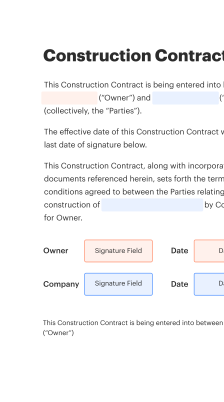
How digital signing works for a signed lien release form

Digital signing lets lienholders sign release forms electronically while preserving authenticity, time-stamps, and audit records required for legal and recording purposes.

  • Upload document: Import the release form PDF or template.
  • Assign signers: Specify lienholder and witness roles and contact details.
  • Authenticate signer: Choose email, SMS code, or two-factor verification.
  • Finalize and store: Execute signature, generate audit trail, and archive.
Collect signatures
24x
faster
Reduce costs by
$30
per document
Save up to
40h
per employee / month

Step-by-step: preparing and obtaining a signed lien release form

Follow these core steps to ensure a valid signed lien release form for title or lien clearance.

  • 01
    Identify lien: Confirm claimant, lien amount, and recorded instrument.
  • 02
    Draft release: Use jurisdiction-compliant language and include property details.
  • 03
    Get signature: Obtain authorized signature and witness or notarization when required.
  • 04
    Record filing: Submit to county recorder and retain certified copies.

Managing audit trails for signed lien release forms

An accurate audit trail supports legal validity and helps resolve disputes by capturing each event in the release lifecycle.

01

Event logging:

Record uploads, views, and signatures.
02

Timestamps:

UTC with local offset.
03

Actor identity:

Signer, viewer, and admin noted.
04

Authentication record:

Method and verification steps.
05

IP and device:

Capture for traceability.
06

Export capabilities:

Downloadable compliance report.
be ready to get more

Why choose airSlate SignNow

  • Free 7-day trial. Choose the plan you need and try it risk-free.
  • Honest pricing for full-featured plans. airSlate SignNow offers subscription plans with no overages or hidden fees at renewal.
  • Enterprise-grade security. airSlate SignNow helps you comply with global security standards.
illustrations signature

Recommended workflow settings for signed lien release automation

Configure these workflow settings to automate reminders, approvals, and recording steps when handling signed lien release forms.

Setting Configuration
Reminder Frequency 48 hours
Expiration Window 30 days
Signer Authentication Method SMS code
Recording Trigger On final signature
Archive Retention Period 7 years

Platform and device requirements for signing a lien release form

Signers can use modern web browsers or mobile apps on updated devices with internet access to complete electronic signed lien release forms reliably.

  • Desktop: Chrome, Edge, Safari supported
  • Mobile: iOS and Android apps
  • Network: Secure internet connection

Ensure browsers and apps support TLS encryption, PDF rendering, and chosen authentication methods; keep devices updated and use corporate policies for secure Wi-Fi and password management.

Security measures applicable to signed lien release forms

Encryption in transit: TLS 1.2+
Encryption at rest: AES-256
Access controls: Role-based
Authentication options: Multi-factor
Audit logging: Detailed events
Document integrity: Tamper-evident

Real-world examples of signed lien release form use

Two concise scenarios show how signed lien release forms resolve practical problems in lending and construction contexts.

Mortgage Payoff

A homeowner completes final payment to a local lender and the lender prepares a lien release form including loan number and property description

  • standardized release template used for clarity
  • buyer confidence and clear title for resale

Resulting in a recorded release and unencumbered title for closing.

Construction Final Release

A subcontractor receives final invoice payment and signs an unconditional release identifying project and scope

  • release includes contractor and owner details for recordkeeping
  • prevents future lien filings and streamlines owner acceptance

Leading to project closeout, final payment distribution, and reduced dispute risk.

Best practices for secure and valid signed lien release forms

Adopt standardized templates, consistent signer verification, and reliable archival methods to reduce errors and maintain compliance for lien release forms.

Use jurisdiction-compliant template language
Maintain and review a centralized set of lien release templates that reflect county and state recording requirements, include precise property descriptions, and clearly name lien identifiers to avoid rejection at recording or disputes later.
Authenticate signers consistently
Implement a consistent authentication policy for lienholders and witnesses such as SMS codes, government ID verification, or two-factor authentication to strengthen identity proof and support legal enforceability.
Record and timestamp every action
Ensure every signature event is logged with a timestamp, IP address, and authentication steps stored in the audit trail to provide admissible evidence of execution and intent in the event of contention.
Retain certified copies and chain of custody
Store executed releases with metadata that shows when, where, and by whom the document was signed; maintain backups and retention schedules consistent with corporate and regulatory policies.

FAQs and troubleshooting for signed lien release forms

Answers to common questions about creating, signing, and recording signed lien release forms, plus troubleshooting tips for signature or recording issues.

How signNow compares to paper-based signed lien release forms

A concise comparison highlights availability, traceability, and speed differences between signed digital releases and traditional paper filings.

Signing Method signNow (Recommended) Paper
Legal validity Varies
Signature traceability Detailed audit Limited
Processing time Hours Days to weeks
Storage durability Encrypted cloud Physical file
be ready to get more

Get legally-binding signatures now!

Retention and recording timeline considerations for signed lien release forms

Use clear timelines to ensure releases are recorded promptly and maintained according to legal and business schedules.

Initial signature:

Day 0: obtain signer signature

Verification and notarization:

Day 1–3: complete identity checks and notarization

Recording submission:

Day 3–10: file with county recorder

Confirmation and archival:

Day 10–30: receive recorded copy and archive

Retention review:

Annually: validate retention compliance

Risks and penalties from improper signed lien releases

Cloud recording issues: Recording delays
Title disputes: Litigation risk
Regulatory noncompliance: Fines possible
Financial exposure: Unexpected liability
Contractor disputes: Payment conflicts
Document loss: Recovery costs

Pricing and plan comparison for signing platforms used with lien release forms

High-level plan comparisons can help estimate costs for digital signing across common vendors; signNow is listed first and labeled as Recommended for balance of features and pricing.

Plan signNow (Recommended) DocuSign Adobe Sign Dropbox Sign PandaDoc
Starting price From $8/user/month billed annually From $10/user/month From $14.99/user/month From $15/user/month From $19/user/month
E-sign compliance ESIGN and UETA ESIGN and UETA ESIGN and UETA ESIGN and UETA ESIGN and UETA
API availability Yes, full API Yes, robust API Yes, enterprise API Yes, developer API Yes, available API
Bulk Send Included on select plans Available on higher tiers Available via enterprise Limited availability Available on upgrades
Enterprise features Custom roles and SSO Advanced admin controls Enterprise workflow tools Team management Document analytics

Streamline challenging workflows

Create, execute, and manage workflows of any intricacy, digitally from almost anywhere. Scalable eSignature features allow you to share documents with the right users the proper way and set up roles for each receiver. Execute document workflows faster and easier than ever before.

Automate document managing

Optimize complicated signing processes with airSlate SignNow�s effective functions to boost your business. Control your automatic eSignature workflows to guarantee they're operating at maximum efficiency with quick notices and alerts.

Optimize in team communication

Join teammates together in a secure, shared environment. Handle paperwork, use form templates and notices to deliver better cross-organization interaction. Relieve your employees from having to hang out on repeated actions so that they can concentrate on beneficial, business-crucial duties.

Integrate into your current network

Work your assignments with market-leading integration. Assemble Salesforce, Microsoft Teams, and SharePoint in one business stream. Link up your applications to a single environment for endless possibilities and more efficiency.

Stay compliant with market-leading data safety

Feel confident knowing that your information is protected by the most up-to-date in encryption security. airSlate SignNow is GDPR and eIDAS compliant and gives you visibility into your eSigning experience with court-admissible audit trails. Configure user access permissions and rights to control who has access to what.


walmart logo
exonMobil logo
apple logo
comcast logo
facebook logo
FedEx logo
be ready to get more

Get legally-binding signatures now!