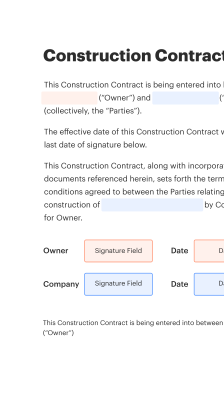
Type on PDF Document with SignNow

airSlate SignNow lets you type on a PDF. You can place a text field anywhere on your document and then add text by typing in it. It's that easy.

Award-winning eSignature solution

What typing on a PDF document means

Typing on a PDF document is the ability to add, edit, and place editable text directly inside a PDF file without printing or handwriting. The capability supports form filling, annotations, and field-based data capture, and it is often combined with templates, validation rules, and signature workflows in eSignature platforms such as signNow. When implemented correctly, typed entries are preserved in the file, included in audit records, and can be locked or tied to signature events to maintain the integrity and traceability of business documents.

Why typed text on PDFs matters for business workflows

Typing on PDFs reduces manual entry, removes the need to print and scan, and decreases transcription errors while keeping documents in a digital, auditable format compatible with compliant eSignature processes.

Why typed text on PDFs matters for business workflows

Common challenges when adding typed text to PDFs

  • Scanned PDFs without OCR require conversion before accepting typed text, which can add processing steps and potential recognition errors.
  • Embedded fonts and fixed layouts may shift when inserting text, necessitating font embedding or careful field sizing to avoid overlap.
  • Complex PDF forms with calculations or conditional fields need mapping and validation so typed inputs trigger the correct business logic.
  • Password-protected or restricted PDFs block editing; owners must remove restrictions or supply an editable original to enable typing.

Typical user roles for typed PDF workflows

Contract Manager

Manages the lifecycle of agreements, builds templates with typed fields, and enforces validation rules. They ensure typed entries are auditable, mapped to contract databases, and preserved alongside signature events to support compliance and dispute resolution.

HR Administrator

Configures onboarding and benefits forms, defines field permissions, and collects typed employee information securely. They use templates and validation to reduce errors, speed processing, and keep personnel records aligned with regulatory requirements.

Which teams rely on typed PDF documents

Legal, HR, sales, and education teams commonly use typed fields in PDFs to collect structured information efficiently and create sign-ready records.

  • Legal departments preparing finalized contracts with embedded typed fields and signature placeholders.
  • HR teams managing onboarding paperwork and typed employee data captured securely in forms.
  • Sales and operations collecting agreement terms and typed inputs for automated processing workflows.

Across these groups, typed PDF data is integrated into document repositories and workflows to improve accuracy, auditability, and processing speed.

be ready to get more

Choose a better solution

Key tools that make typing on PDF documents reliable

These features improve the accuracy and usability of typed fields on PDFs and support consistent document workflows across teams and systems.

Form Fields

Structured text fields, checkboxes, and dropdowns let creators define exact input locations and types so users can type standardized data directly into the PDF without altering layout.

Text Editing

Inline text editing supports font control, sizing, and alignment so typed content matches document design and minimizes layout shifts when entries are added or changed.

Validation Rules

Field-level validation enforces formats, required inputs, and character limits, reducing errors and ensuring typed data conforms to business rules before signing.

Reusable Templates

Template libraries preserve typed field placements and settings across documents, accelerating form creation and ensuring consistent data capture for repeated processes.

How typing on PDFs integrates with signing workflows

A simple flow ties typed fields to signatures, validation, and storage so every typed entry is captured, logged, and included in the final signed PDF.

  • Prepare Template: Create a PDF template with typed and signature fields.
  • Assign Signers: Set signer order and field responsibilities.
  • Collect Inputs: Recipients enter typed data in designated fields.
  • Finalize Record: Signatures lock the typed content and generate an audit trail.
Collect signatures
24x
faster
Reduce costs by
$30
per document
Save up to
40h
per employee / month

Step-by-step: how to type on a PDF document

Follow these core steps to prepare a PDF for typed input, add fields, and preserve typed data for compliance and signatures.

  • 01
    Open Document: Upload or open the PDF in your editor or eSignature tool.
  • 02
    Add Fields: Place text fields where users must type and set labels.
  • 03
    Configure Validation: Set required fields, formats, and input constraints.
  • 04
    Lock and Sign: Lock fields if needed and route for signatures.
be ready to get more

Why choose airSlate SignNow

  • Free 7-day trial. Choose the plan you need and try it risk-free.
  • Honest pricing for full-featured plans. airSlate SignNow offers subscription plans with no overages or hidden fees at renewal.
  • Enterprise-grade security. airSlate SignNow helps you comply with global security standards.
illustrations signature

Recommended workflow settings for typed PDF document processes

These suggested configuration values balance usability, security, and compliance when setting up typed PDF workflows in an eSignature platform.

Workflow Automation Setting Technical Name Default configuration values used by signNow
Email reminder frequency for outstanding signatures Every 48 hours until completion
Signing order enforcement for sequential workflows Enforced by default for multi-recipient flows
Automatic document merge and field population Merge templates and populate fields from contact records
Access controls and signer authentication level Require email and optional SMS two-factor authentication
Expiration and reminder schedule settings Expire after 30 days with weekly reminders

Supported platforms and device requirements for typing on PDFs

Typing on PDFs is supported on modern desktop browsers and native mobile apps; ensure your environment meets minimum platform and app version requirements.

  • Desktop: Chrome, Edge, Safari supported
  • Mobile: iOS and Android apps available
  • PDF Standards: PDF 1.7 and later

For the best experience, keep browser versions up to date, enable JavaScript for web editors, and use official mobile apps for offline typing and secure synchronization with document repositories and audit logs.

Security controls for typed PDF content

Encryption at Rest: AES-256 encryption with key management
Transport Security: TLS 1.2 and above for transport
Access Controls: Role-based permissions and granular access
Audit Trail: Immutable event log for each edit
Document Watermarking: Optional dynamic watermark on exports
Data Residency: U.S.-based storage options available

Industry examples of typing on PDFs in practice

These concise case studies illustrate real scenarios where typed PDF fields replaced paper, improved accuracy, and created auditable digital records.

Healthcare Intake

A clinic replaced paper intake forms by enabling patients to type on PDF document templates during registration, removing handwritten entries and reducing front desk clerical work.

  • The platform provided secure typed fields with validation to ensure required data was captured correctly.
  • That reduced transcription errors and accelerated patient processing times across visits.

Resulting in faster check-ins, clearer audit records, and simplified HIPAA-compliant retention and retrieval workflows.

Education Enrollment

A university converted enrollment and consent packets to editable PDFs so applicants could type directly into standardized forms from any device, lowering return delays.

  • The solution supported typed fields, signature placeholders, and conditional sections for program-specific data.
  • Staff experienced fewer follow-ups and reduced manual data entry into student systems.

Leading to faster enrollment processing, more accurate student records, and improved FERPA-aligned document handling.

Best practices for secure, accurate typed PDF entries

Adopt practices that preserve document fidelity, improve data integrity, and support compliance when users type on PDF documents.

Use clear, descriptive field labels and sizing
Label fields so users understand required content and choose field sizes appropriate for expected input. Clear labels reduce incorrect entries and downstream validation work, and sizing prevents overflow or truncation in final signed PDFs.
Apply validation and default values where appropriate
Validation rules and sensible defaults prevent formatting errors and missing data. Use input masks for dates and phone numbers and set required fields only for essential information to balance completeness and user convenience.
Preserve fonts and layout with embedded fonts
Embed core fonts or use standard web-safe fonts to prevent layout shifts when typed text is added. This preserves the visual integrity of legal documents and avoids rendering differences across devices.
Document permissions and audit configurations
Configure field locking, signer permissions, and comprehensive audit logs so typed entries are recorded with timestamps, actor identity, and event history to support compliance and dispute resolution.

FAQs and troubleshooting for typing on PDF documents

Common issues when typing on PDFs usually stem from file permissions, font embedding, or field configuration; these FAQ-style solutions address practical fixes.

Comparison: typed PDF capabilities across leading providers

A concise feature comparison highlights availability and key capabilities related to typing on PDFs among major U.S.-focused eSignature providers.

Electronic Signature Platform Feature Comparison signNow (Recommended) DocuSign Adobe Sign
Supports simple electronic signatures across platforms
Advanced user authentication methods and certificates Multi-factor Multi-factor Multi-factor
Integration with Google Workspace and CRMs
Document retention and audit trail options Comprehensive Comprehensive Moderate
be ready to get more

Get legally-binding signatures now!

Risks and penalties tied to faulty typed PDF practices

Invalid Signature: Contract unenforceable
Data Breach: Regulatory fines possible
Noncompliance: Process failure risks penalties
Misattributed Edits: Dispute over intent
Document Corruption: Unreadable PDF version
Privacy Violation: HIPAA or FERPA issues

How to type on PDF documents with airSlate SignNow

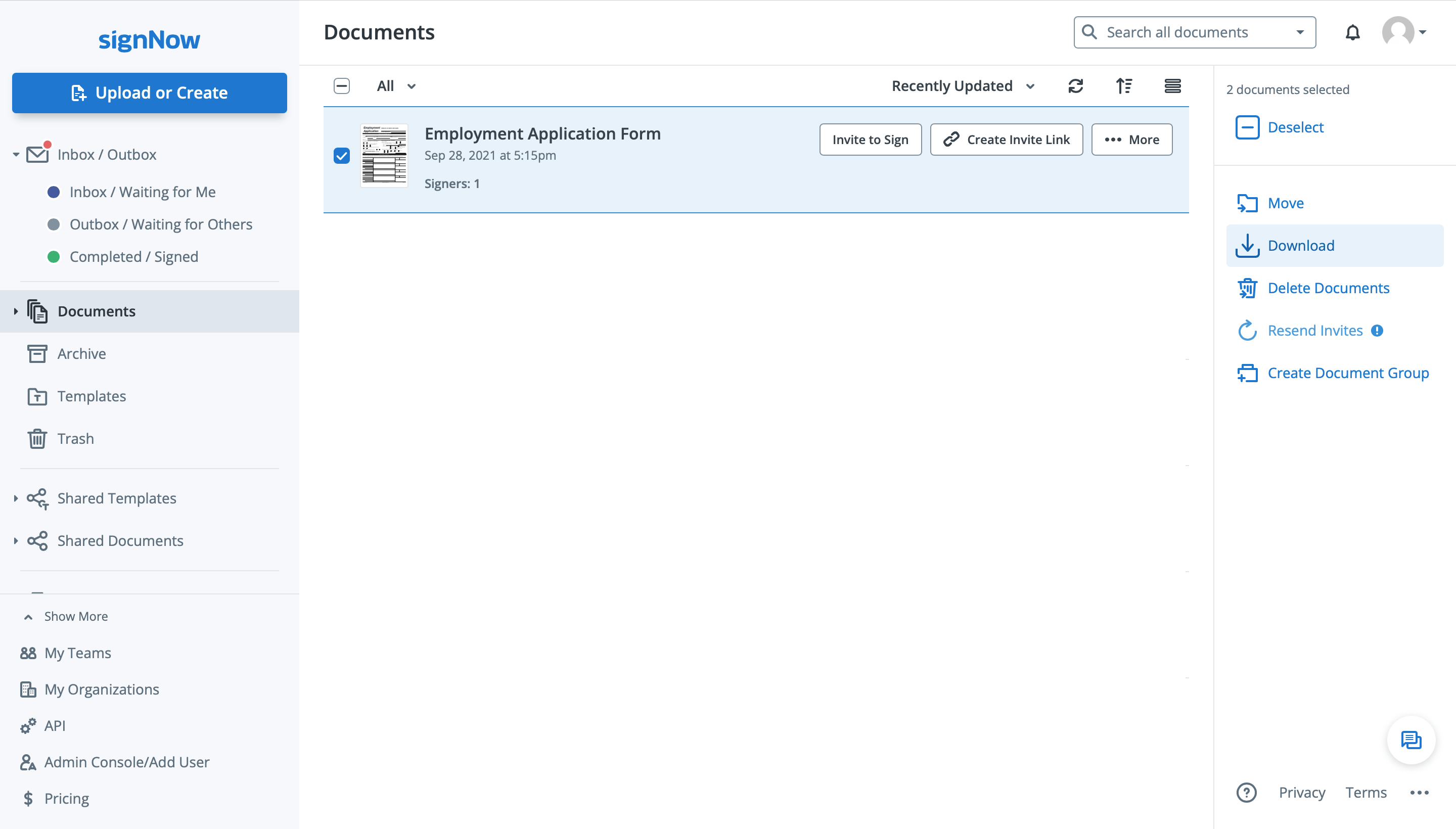
In addition to signing documents electronically, airSlate SignNow enables you to type on PDFs and complete PDF forms online. All you need to do is add a text box anywhere in your document and start typing.

Upload your PDF to airSlate SignNow in seconds

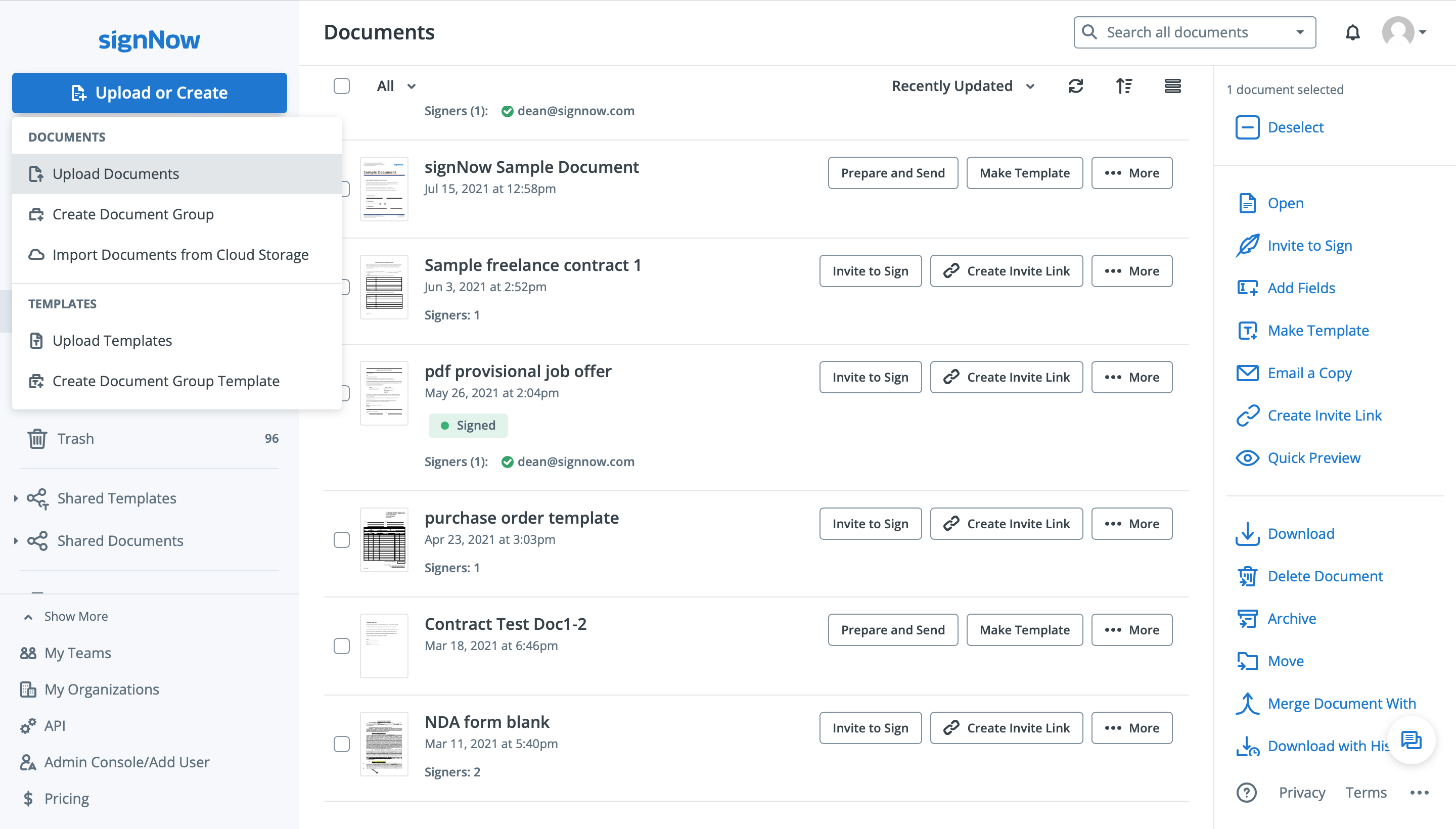
Hover over the Upload or Create button in the airSlate SignNow dashboard and select Upload Documents from the dropdown. Select a PDF on your device and wait a moment for it to upload. Then, open your file in the editor.
fill-guide-illustration

Start typing on your PDF

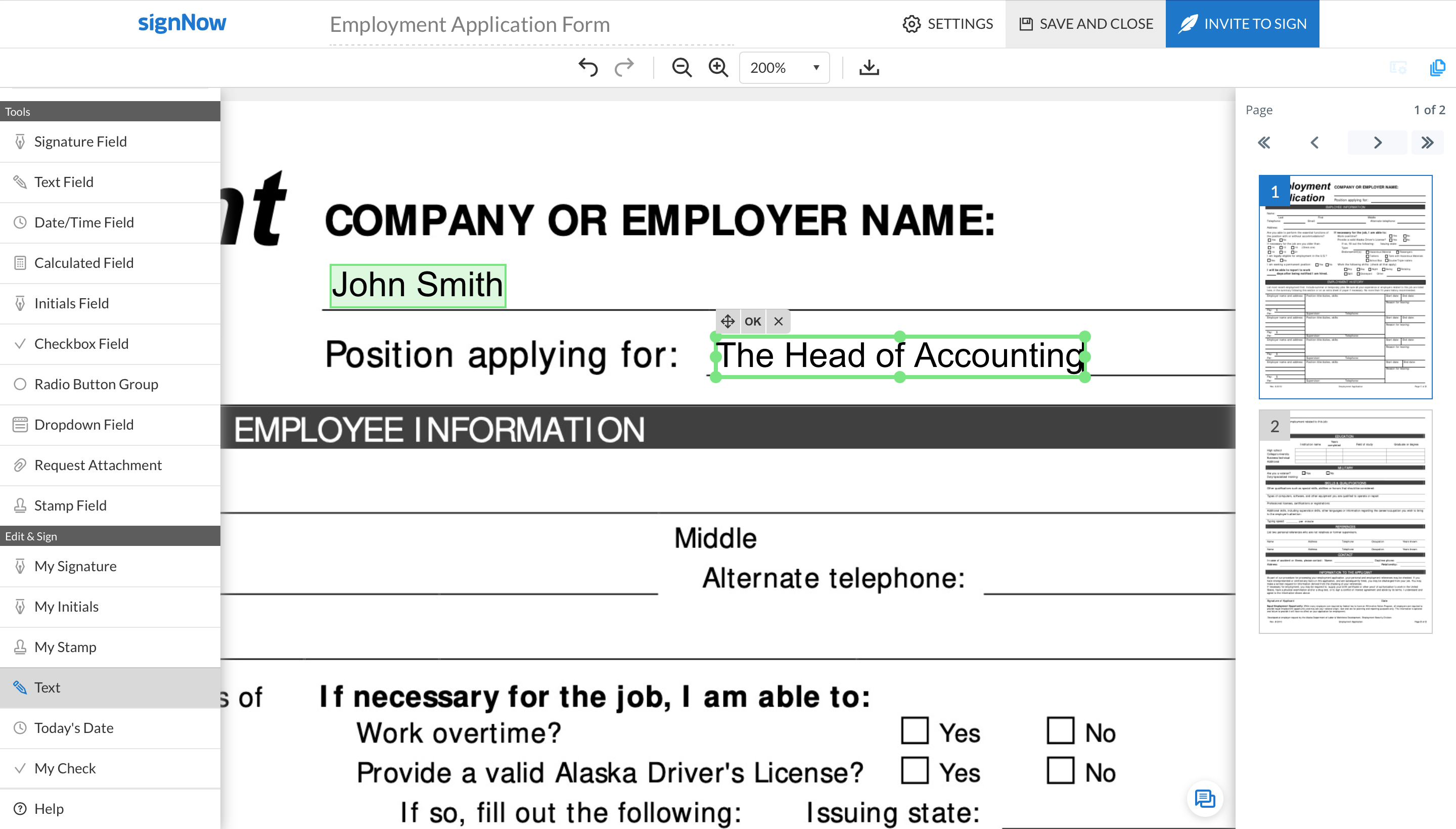
Select Text in the Edit & Sign section of the left-hand toolbar. Then, click on your document where you want your text to appear and start typing.
fill-guide-illustration

Easily move and resize text boxes

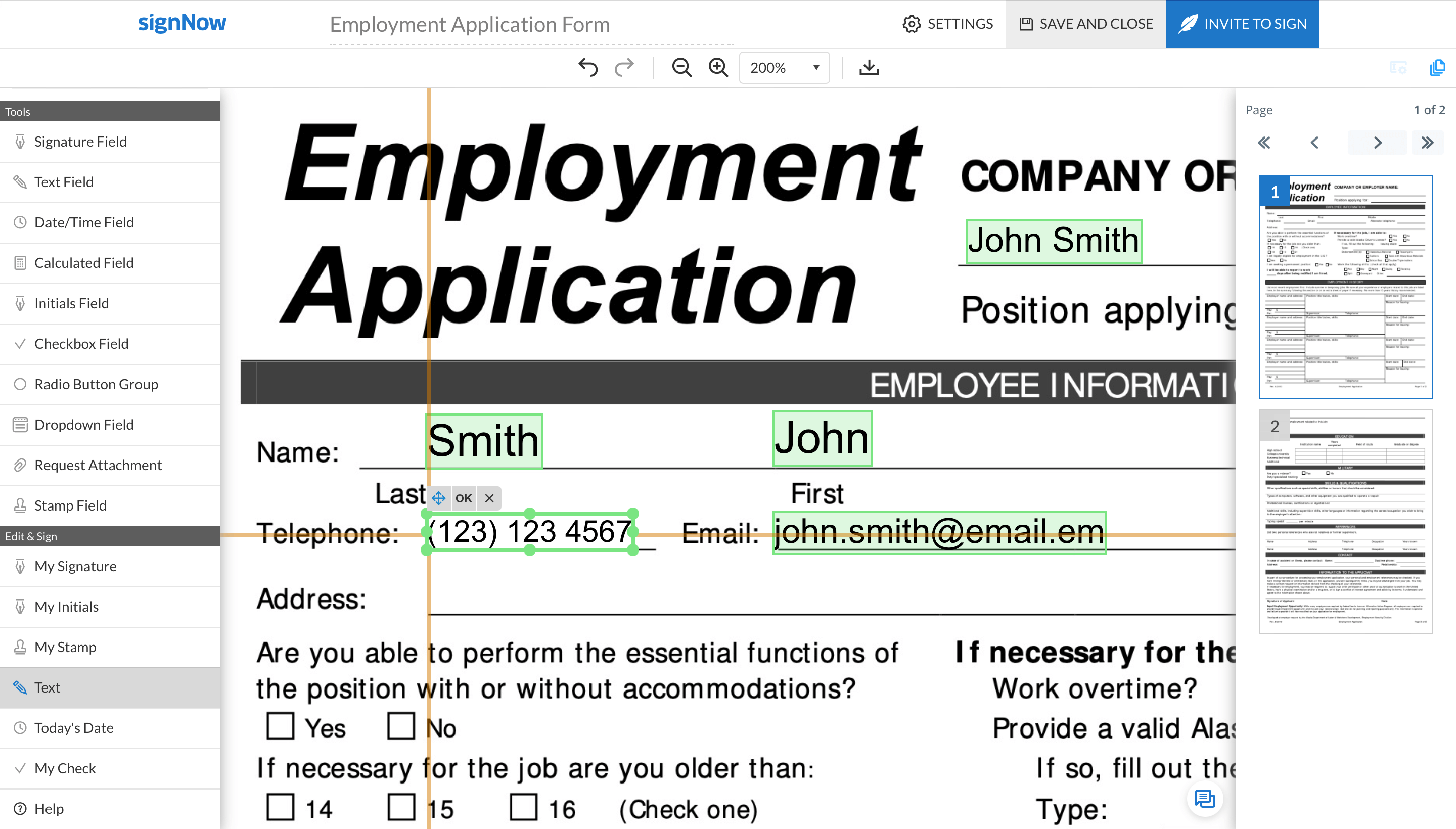
To move your text, simply drag it by the arrow cross icon and drop it anywhere on your document. To change the size of a text box, drag it by its edges.
fill-guide-illustration

When finished adding text to a document, send it for eSignature by clicking Invite to Sign in the top right corner. Or simply save your changes by clicking Save and Close.

You can download or email your edited PDF from the airSlate SignNow dashboard.
fill-guide-illustration
walmart logo
exonMobil logo
apple logo
comcast logo
facebook logo
FedEx logo
be ready to get more

Get legally-binding signatures now!