Establishing secure connection…Loading editor…Preparing document…

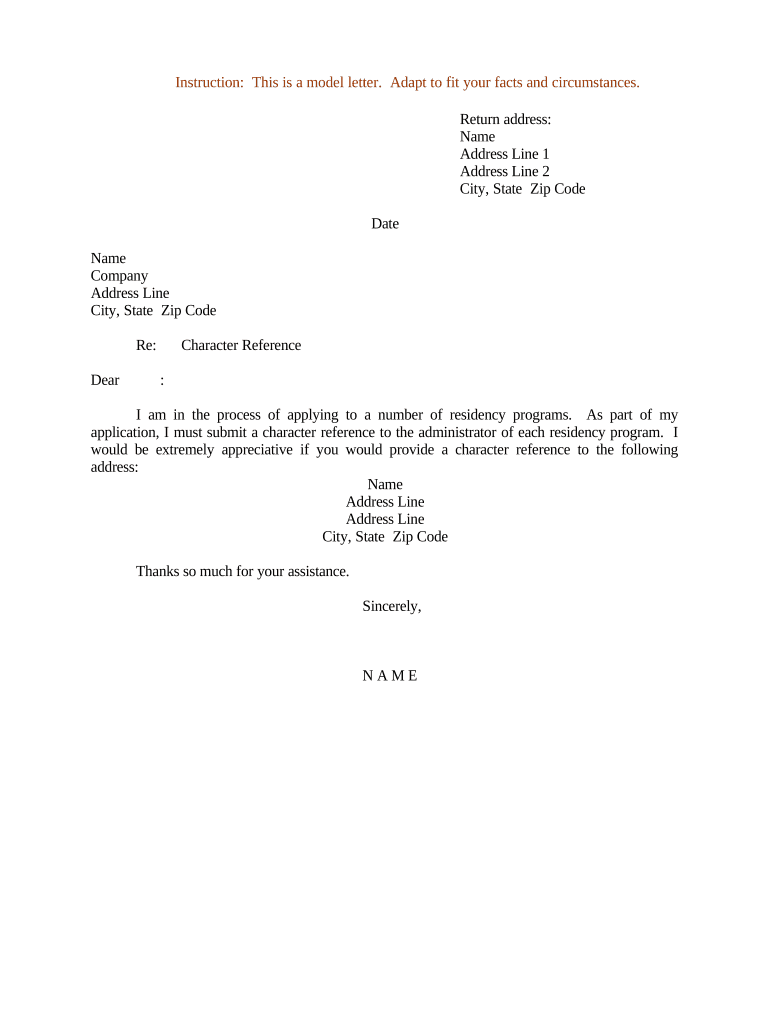
Character Reference Letter

This template is fully customizable. Edit the text, fill out the fields, and send it for signature. Give it a try!
Character Reference Letter

What a Character Reference Letter Is and When It’s Used

A Character Reference Letter is a written statement describing a person’s reputation, behavior, and personal qualities for use in legal, professional, or personal contexts. Common recipients include courts, employers, landlords, and immigration officers; writers are typically friends, colleagues, supervisors, or community leaders. The letter focuses on honesty, responsibility, work ethic, and other traits relevant to the request. It can support sentencing mitigation, employment screening, tenancy approval, or immigration petitions. Accuracy, specificity, and signer credibility determine how persuasive the letter will be in formal proceedings.

Why a Clear Character Reference Letter Matters

A clear, well-structured Character Reference Letter supplies decision-makers with context they otherwise lack, highlighting character traits and real examples that may affect outcomes in employment, housing, immigration, or court proceedings.

Why a Clear Character Reference Letter Matters

Who Typically Writes and Receives These Letters

Choose a writer who knows the subject well and can provide recent, specific examples relevant to the recipient’s decision.

  • Employers and supervisors providing background on a candidate’s work ethic and reliability for hiring or promotion decisions.
  • Friends, neighbors, clergy, or mentors writing to support sentencing mitigation, immigration petitions, or housing applications.
  • Landlords and property managers evaluating prospective tenants based on personal responsibility and rental history.

Step-by-Step: Preparing and Submitting a Character Reference Letter

Follow these sequential steps to draft, verify, and deliver a letter that will be accepted by recipients and hold up under scrutiny.

  • 01
    Draft: Write a concise letter with clear examples and relevant context.
  • 02
    Verify Details: Confirm spelling of names, dates, and the recipient’s title and address.
  • 03
    Sign: Apply a handwritten or compliant electronic signature and add contact information.
  • 04
    Deliver: Send the letter by the method requested by the recipient and retain a copy.

Typical Workflow for an eSigned Character Reference Letter

Digital workflows reduce turnaround and make retention easier; confirm recipient acceptance of electronic copies before relying on e-signatures.

  • Prepare Document: Compose letter, format as PDF or DOCX for stable presentation.
  • Add Fields: Place signature, date, and contact fields where required.
  • Authenticate: Choose signer authentication level (email, SMS, or stronger) per recipient needs.
  • Send & Archive: Send via secure eSignature platform and save audit trail for records.

Configuring an Online Workflow for This Letter

Set up field placement and signer roles in your eSignature platform to match the recipient’s acceptance criteria and documentation needs.

Field Configuration
Signature Field Required for primary writer; type or draw allowed
Date Field Auto-fill MM/DD/YYYY if platform supports
Contact Info Optional but recommended; visible to recipient
Authentication Email by default; SMS or KBA for higher assurance

Technical and Compliance Considerations for eSubmission

Choose an eSignature provider that documents audit trails, supports retention, and can provide a signed certificate if requested by the recipient.

  • File Formats: PDF or DOCX widely accepted
  • Security: TLS in transit, AES-256 at rest
  • Integrations: Works with cloud storage and CRMs

Typical Timing and Deadlines to Watch

Deadlines vary by use case: court filings, immigration petitions, and tenancy applications may impose specific cutoff dates. Confirm recipient instructions early to avoid late submissions.

Court Proceedings:

Follow court scheduling orders and filing deadlines closely

Immigration Filings:

Match petition submission windows specified by USCIS

Job Applications:

Provide letters within employer-requested timeframe

Housing Applications:

Submit with rental application or as requested

Request Lead Time:

Allow at least 3–7 business days for drafting and review

Common Mistakes to Avoid When Writing or Submitting a Letter

  • Using vague generalities instead of specific examples that demonstrate the subject’s behavior.
  • Submitting unsigned letters or failing to include a clear signature block with contact information.
  • Misspelling names, dates, or recipient details that create ambiguity about who is being endorsed.
  • Delivering the letter after the recipient’s stated deadline or without confirming acceptance of electronic copies.

Risks of Errors or Misstatements

Rejection: Recipient may decline unsigned or late letters
Credibility Loss: Inaccuracies can damage writer and subject credibility
Legal Exposure: False statements risk perjury or defamation claims
Immigration Impact: Incorrect facts can delay petitions
Privacy Concerns: Sharing medical details may violate HIPAA
Recordkeeping: Failure to retain copies loses proof of delivery

Essential Elements Every Professional Letter Should Include

A persuasive Character Reference Letter is concise and structured: identify the writer, state the relationship, describe specific behaviors, explain relevance, provide contact details, and sign. These parts improve credibility across use cases.

Writer Identification

State your full name, title, and contact information so the recipient can verify the letter if necessary; credibility depends on verifiable identity and role.
Relationship & Duration

Describe how you know the subject and for how long, including context such as workplace, volunteer setting, or community involvement to establish perspective.

Specific Examples

Provide two or three concrete incidents or behaviors that illustrate honesty, responsibility, or relevant character traits rather than offering generic praise.

Relevance to Purpose

Explain why the cited behaviors matter to the recipient’s decision—such as reliability for employment or trustworthiness for housing or court considerations.

Signature & Date

Include a dated handwritten signature or an electronic signature that meets ESIGN/UETA standards and a printed name beneath the signature block.

Contact Details

List phone number and email so the recipient can follow up; absence of contact information weakens the letter’s utility.

Representative Use Cases and Real-World Contexts

These short examples illustrate how character letters function differently across legal, immigration, and tenancy contexts.

Probation or Sentencing Support

A supervisor details months of reliable performance to a sentencing judge

  • Highlights specific community service and restitution efforts
  • The letter emphasized rehabilitation, provided verifiable examples, and included contact details for follow-up to inform mitigation.

Immigration Petition

A neighbor describes family ties and community involvement for an immigration petition

  • Notes length of acquaintance and positive conduct
  • The statement supplied dates, events, and contact information to corroborate claims and assist adjudicators evaluating discretionary relief.

How a Character Reference Letter Differs from Similar Documents

Compare this letter to affidavits, recommendation letters, and sworn statements to choose the correct format and execution requirements.

Document Type Character Letter Affidavit
Purpose opinion-based support sworn factual statement
Oath Required
Notarization Typical optional usually required
Use Case sentencing, tenancy, hiring legal filings, evidence

Representative eSignature Pricing and Feature Comparison

Compare starting prices and core features for common eSignature providers to evaluate cost and compliance needs for letter signing and retention.

signNow DocuSign Adobe Sign PandaDoc HelloSign
Starting Price $8/user/mo $15/user/mo $14/user/mo $19/user/mo $15/user/mo
Free Trial 7-day free trial No No Yes, limited Yes, limited
Bulk Send Yes Yes Yes Yes No
Audit Trail Yes Yes Yes Yes Yes
HIPAA Compliant Yes Yes Yes No No

Frequently Asked Questions About Character Reference Letters

Answers to common questions about drafting, signing, and delivering Character Reference Letters, including electronic signing considerations.


Need help? Contact support

be ready to get more
Join over 28 million airSlate SignNow users