Establishing secure connection…Loading editor…Preparing document…

Unconditional Guaranty

This template is fully customizable. Edit the text, fill out the fields, and send it for signature. Give it a try!
Unconditional Guaranty

What an Unconditional Guaranty Is and when it's used

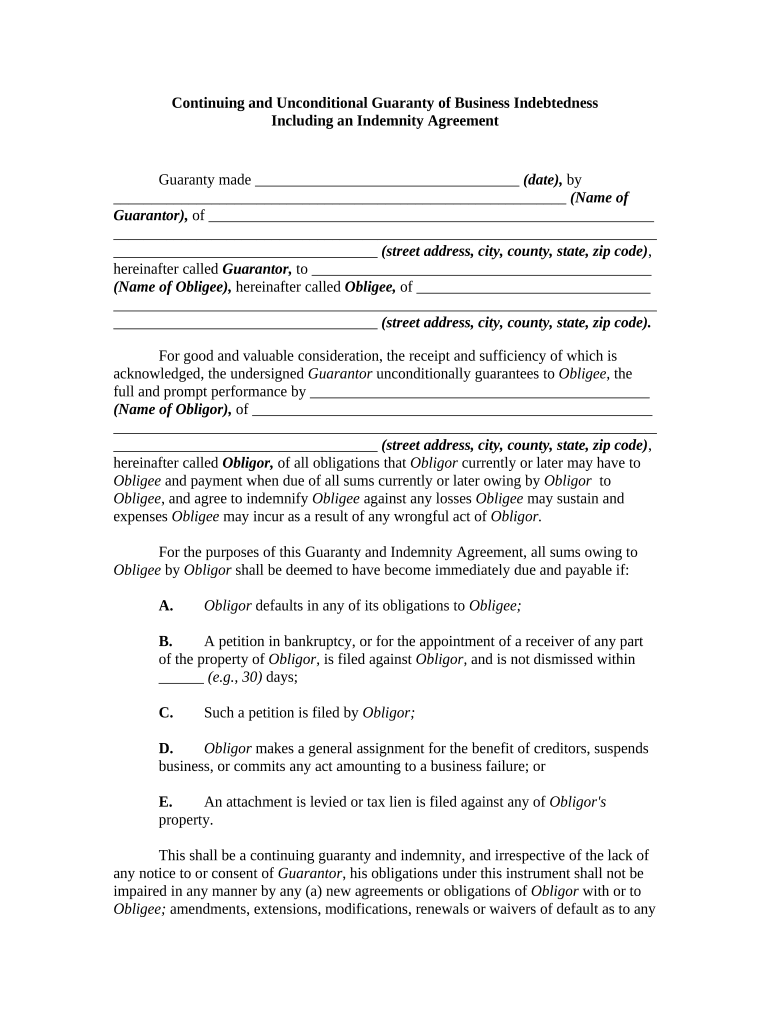
An Unconditional Guaranty is a legal promise by a guarantor to pay or perform another party's obligations without requiring the creditor to first pursue the primary obligor. Commonly used in commercial loans, leases, equipment financing, and vendor credit, the guaranty shifts recovery risk by creating a direct contractual obligation. The instrument typically contains broad payment and enforcement clauses, waiver of defenses, and consent to jurisdiction and remedies; its enforceability depends on clear execution, applicable state law, and any mandatory formalities such as notarization or witness rules.

Why a clear Unconditional Guaranty matters

A well-drafted Unconditional Guaranty reduces collection risk by creating a direct, actionable obligation against the guarantor, clarifies parties' responsibilities, and supports faster enforcement.

Why a clear Unconditional Guaranty matters

Who prepares and who signs an Unconditional Guaranty

The guarantor is usually an individual owner or an affiliated entity with authority to bind the guarantor by signature.

  • Lenders and banks: Use guaranties to secure repayment when borrower credit is limited.
  • Commercial landlords: Require guaranties for leases when tenants are startups or special-purpose entities.
  • Suppliers and lessors: Request guaranties to cover payment or return of leased equipment.

Core provisions to include in a professional Unconditional Guaranty

Include clear, narrowly worded clauses that define obligations, clarify scope, and preserve enforcement options for the creditor while stating parties, dates, and applicable law.

Parties

Identify guarantor(s), creditor, and the primary obligor precisely using legal entity names and addresses to avoid ambiguity in enforcement or service of process.
Guaranteed Obligations

Describe the specific debts, liabilities, or performance obligations guaranteed, including principal, interest, fees, and post-default costs to ensure scope is enforceable.

Unconditional Promise

State that the guarantor's liability is absolute and independent of actions against the primary obligor, removing prerequisite collection or notice requirements where lawful.

Waivers

Include express waivers (e.g., notice of default, presentment, demand, protest) to limit procedural defenses; waivers must comply with state law limitations.

Duration

Specify effective and termination dates, conditions for release (e.g., payoff, substitution), and whether obligations include post-termination liabilities such as indemnities.

Remedies & Jurisdiction

Provide remedies on default, choice of governing law, consent to jurisdiction, and waiver of jury trial if permitted, to streamline dispute resolution.

Step-by-step: completing an Unconditional Guaranty

Follow these four steps to prepare and execute the guaranty accurately and consistently.

  • 01
    Gather documents: Collect loan/lease papers, entity formation records, and ID for guarantor verification.
  • 02
    Draft terms: Ensure obligations, waivers, and remedies are explicit and reference underlying agreements.
  • 03
    Review formalities: Confirm required notarization, witness, or corporate approvals per governing state law.
  • 04
    Execute and distribute: Have guarantor sign, date, and provide executed copies to all parties and counsel files.

How to configure an online signing workflow for the guaranty

Set up roles, authentication, and routing to mirror the physical signing sequence and maintain a clear audit trail.

Field Configuration
Signer Order Set ordering if creditor signature must follow guarantor or vice versa.
Authentication Use email + SMS code or stronger ID verification for guarantor to strengthen attribution.
Notary Field Include notary acknowledgment block if state law or lender requires notarization.
Audit & Copies Enable full audit trail and automatic PDF delivery to all parties when signing completes.

Where to send and how to submit the executed guaranty

Route executed originals and certified copies to parties and retainers in a defined sequence to preserve evidence and serviceability.

  • Creditor File: Send original executed guaranty to creditor's legal or loan file for enforcement readiness.
  • Guarantor Copy: Provide the guarantor a signed copy for their records and tax reporting.
  • Borrower/Obligor: Deliver a copy to the primary obligor to ensure shared understanding of obligations.
  • Counsel & Escrow: Send copies to counsel and escrow agent as required under lending or closing instructions.

Digital signing and platform considerations

Ensure the chosen platform supports audit logs, tamper-evident PDFs, and secure storage consistent with legal retention rules.

  • Auth Options: Email link with SMS code; stronger KBA or ID verification for higher-risk guaranties.
  • Notarization: Support remote online notarization (RON) or local notarization depending on state requirements.
  • Integrations: Connect with document management systems (e.g., NetSuite, Salesforce, Box) for storage and workflow automation.

Key timing considerations and deadlines

Track effective dates, execution deadlines, and any statutory periods that affect enforceability, release, or notice requirements.

Execution Deadline:

Complete signing before loan funding or lease commencement to ensure guaranty attaches.

Notice Windows:

Observe cure and default notice periods stated in the primary agreement and guaranty.

Statute of Limitations:

Enforce within the governing state's limitations period; timing varies by claim type.

Release Conditions:

Monitor payoff, substitution, or release language that terminates guarantor liability.

Document Retention:

Retain executed copies per retention rules below to support later enforcement.

Common mistakes to avoid when preparing a guaranty

  • Using informal or abbreviated party names that make it hard to match the guarantor to corporate records and impede enforcement.
  • Failing to confirm corporate authority or attach a corporate resolution when an entity guarantor signs, risking invalidation.
  • Omitting explicit waiver language (notice, presentment, demand) where intended, allowing guarantor defenses to delay collection.
  • Neglecting notarization or witness requirements in jurisdictions that impose them, which can complicate later proof of execution.

Consequences of an incorrect or incomplete guaranty

Enforceability Risk: Guaranty may be voided.
Collection Delay: Creditor may need additional proceedings.
Increased Costs: Higher attorney and litigation fees.
Regulatory Exposure: Possible state-law penalties.
Credit Impact: Guarantor credit may be harmed.
Tax Consequences: Potential reporting or withholding issues.

Practical tips for accurate and efficient guaranty completion

Apply these practices to reduce negotiation time and avoid later disputes.

Use precise names
Match guarantor and obligor names to formation documents and government IDs to avoid ambiguity at enforcement.
Confirm authority
Obtain corporate resolutions or officer certificates when entities sign to confirm signing authority.
Specify scope
Be explicit about what is guaranteed (amounts, fees, future advances) to prevent disputes over implied limits.
Preserve evidence
Retain signed PDFs with audit trails, notarizations, and related exhibits in a secure, date-stamped repository.

Practical scenarios showing how guaranties are used

These anonymized examples show common commercial contexts and how guaranty terms address lender or landlord concerns.

Lender Guarantee

A small business loan required a personal guaranty from the owner to secure a $150,000 line of credit.

  • The guaranty expressly included future advances and fees.
  • The clear scope and signed corporate resolution accelerated funding and simplified collection when the borrower defaulted.

Lease Guarantee

A landlord required a parent-company guaranty for a new retail tenant to secure a five-year lease.

  • The guaranty waived tenant notice defenses and included indemnity for damages.
  • When the tenant vacated early, the landlord used the guaranty to recover unpaid rent without separate litigation against the subsidiary.

eSignature vendor comparison for executing guaranties (signNow first)

Decision factors include price model, bulk send, audit trail, HIPAA availability, and envelope or session caps; choose per organizational needs.

signNow DocuSign Adobe Sign PandaDoc HelloSign
Starting Price $8/user/mo $15/user/mo $14/user/mo $19/user/mo $15/user/mo
Free Trial Yes, 7-day free trial Varies by plan Varies by plan Varies by plan Varies by plan
Bulk Send Yes Yes Yes Yes No
Audit Trail Yes Yes Yes Yes Yes
HIPAA Compliant Yes Yes Yes No No
Envelope Cap No cap 100 envelopes/user/year Varies by plan Varies by plan Varies by plan

Frequently asked questions about Unconditional Guaranties

Answers to common execution and enforceability questions to help avoid procedural and legal issues.


Need help? Contact support

be ready to get more
Join over 28 million airSlate SignNow users