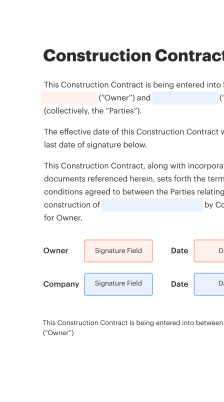
Basic Application Form for Secure eSignatures

Basic application form streamlines your eSignature process with signNow. Experience a secure and compliant solution tailored for various industries in the U.S.

Award-winning eSignature solution

What a basic application form is and how it fits digital workflows

A basic application form is a standardized document that collects applicant information, consent, and required declarations for processes such as hiring, enrollment, membership, or service access. Digitally implemented, the form captures structured data fields, identifies signers, and records timestamps to create a verifiable record. When combined with an eSignature platform, a basic application form supports secure signing, version control, and metadata extraction for downstream systems, reducing manual data entry and improving traceability while preserving a clear audit trail suitable for many U.S. business and regulatory contexts.

Why using a digital basic application form improves consistency

Digitizing a basic application form standardizes data capture, reduces processing time, and creates reliable records for auditing and reporting while minimizing transcription errors across departments and integrated systems.

Why using a digital basic application form improves consistency

Common challenges when moving basic application forms online

  • Designing fields that capture all required data without confusing applicants or creating excessive drop-off during completion.
  • Ensuring identity verification meets regulatory needs while remaining simple for users across devices and locations.
  • Integrating submitted form data with existing CRMs or HR systems without creating duplicate records or data mismatches.
  • Maintaining secure storage, retention schedules, and audit trails while balancing access for reviewers and administrators.

Typical user roles involved with basic application form workflows

HR Coordinator

An HR Coordinator prepares and customizes application templates, routes forms to hiring managers, and monitors completion status. They ensure required fields are present, verify signatures, and export collected data to HRIS or payroll systems for onboarding tasks.

Admissions Officer

An Admissions Officer reviews submitted forms for eligibility and completeness, manages supplemental document requests, applies official decisions, and maintains records according to institutional retention policies and privacy rules.

Which teams typically use a basic application form

Human resources, admissions, membership services, and client onboarding teams commonly manage basic application forms as part of core intake workflows.

  • Human resources teams for candidate intake and background consent forms.
  • Academic admissions and registrars for enrollment and financial aid applications.
  • Nonprofit and membership organizations for new member enrollment and volunteer registration.

These groups benefit from repeatable form templates, standardized consent language, and integration with back-office systems to reduce manual follow-up.

Features to prioritize when selecting a platform for basic application forms

Evaluate capabilities that reduce manual work, ensure compliance, and allow reliable integrations for effective intake and processing of application forms.

Template management

A robust template system enables teams to create, version, and share reusable basic application form templates with predefined fields, conditional logic, and role-based access to streamline repeated intake processes across departments.

Conditional fields

Conditional logic shows or hides fields based on prior responses, reducing applicant confusion, preventing irrelevant data collection, and improving completion rates while keeping templates concise and relevant.

Role-based routing

Routing rules forward completed applications to reviewers or approvers automatically, supporting multi-step approvals and ensuring that each reviewer receives only the forms relevant to their responsibilities.

Field validation

Configurable validation enforces correct formats for emails, dates, and identifiers, minimizing invalid entries and downstream processing errors during data import or verification.

Signed PDF output

A finalized, signed PDF with embedded audit data provides a tamper-evident record suitable for retention, sharing with partners, or printing for records that require physical copies.

API and webhooks

APIs and webhook events let systems ingest submitted form data in real time, trigger downstream workflows, and synchronize applicant records without manual exports or import steps.

be ready to get more

Choose a better solution

Integrations and template features that improve basic application form workflows

Certain features make recurring application forms more efficient by reducing manual steps, ensuring consistency across submissions, and enabling downstream processing.

Template Library

Reusable form templates let teams standardize questions, required attachments, and signature blocks so new intake campaigns can be launched quickly while preserving consistent language and required fields across departments.

CRM Sync

Two-way integrations with CRMs populate applicant records automatically and push completed form data back to contact or lead records, reducing duplicate entry and supporting automated follow-up sequences.

Google Docs Connectivity

Linking forms with Google Docs allows teams to convert existing documents into fillable templates and maintain a familiar editing environment while applying field mapping for data extraction.

Cloud Storage

Automatic saving to cloud storage providers centralizes completed forms for backup and sharing while allowing administrators to apply retention and access policies consistent with organizational requirements.

How a basic application form flows from applicant to archive

A typical digital form progresses through collection, verification, signing, integration, and secure storage steps to create an auditable record.

  • Collection: Applicant completes required fields online
  • Verification: Identity checks or email confirmation
  • Signing: Applicant and approvers apply signatures
  • Storage: Final document stored with audit trail
Collect signatures
24x
faster
Reduce costs by
$30
per document
Save up to
40h
per employee / month

Basic application form setup: four essential steps

Follow these pragmatic steps to prepare a basic application form for secure digital collection and signing.

  • 01
    Define fields: List required data and validation rules
  • 02
    Configure roles: Specify who fills and who approves
  • 03
    Apply security: Set authentication and retention policies
  • 04
    Test flow: Complete end-to-end trial with sample users

Audit trail checklist for basic application form transactions

An effective audit trail captures who, what, when, and where for each signed application to support compliance and dispute resolution.

01

Signer identity:

Name and email recorded
02

Authentication method:

MFA or email token
03

Timestamps:

Field-level and signature times
04

IP logging:

Signer IP address logged
05

Document versioning:

Original and final saved
06

Activity history:

Uploads and edits tracked
be ready to get more

Why choose airSlate SignNow

  • Free 7-day trial. Choose the plan you need and try it risk-free.
  • Honest pricing for full-featured plans. airSlate SignNow offers subscription plans with no overages or hidden fees at renewal.
  • Enterprise-grade security. airSlate SignNow helps you comply with global security standards.
illustrations signature

Typical workflow settings for basic application form automation

Below are common configuration settings to automate a basic application form lifecycle, from reminders to archival behavior.

Setting Name Configuration
Reminder Frequency 48 hours
Signature Order Sequential
Expiration Period 30 days
Auto-Archive On completion
Notification Recipients Form owner only

Supported devices and minimum technical requirements

Users should meet basic device and browser requirements to ensure form rendering, signing, and file uploads work consistently across platforms.

  • Desktop browsers: Chrome, Edge, Safari
  • Mobile platforms: iOS 13+, Android 9+
  • File uploads: PDF, JPG, PNG accepted

For secure deployments, ensure browsers support TLS 1.2 or higher, that pop-up blocking does not prevent signature dialogs, and that network policies allow API and webhook traffic for integrations to operate reliably across desktop and mobile environments.

Key security controls for basic application form processing

Encryption in transit: TLS 1.2+ required
Encryption at rest: AES-256 standard
Access controls: Role-based permissions
Authentication options: Email or multi-factor
Audit logging: Immutable activity logs
Data residency: Configurable regional storage

Real-world examples of basic application form use

Below are two summarized use cases showing how a basic application form can be implemented across sectors to improve intake and recordkeeping.

Community Health Clinic

A clinic implemented a standardized intake form to collect patient demographics and consent for treatment

  • Patient identity fields, insurance information, and HIPAA consent
  • Faster triage and accurate insurance billing

Resulting in reduced front-desk wait times and improved claims processing accuracy.

University Admissions

An admissions office used a digital application form to receive student data and supplemental documents

  • Structured fields for transcripts and recommendation details
  • Centralized data feed into the student information system

Leading to fewer missing materials, quicker review cycles, and consistent records for accreditation.

Best practices for secure, accurate basic application forms

Adopt consistent design and governance to minimize errors, protect data, and maintain legal and operational readiness for form submissions.

Limit required fields to necessary information
Collect only information essential for the decision or record, reducing applicant burden and exposure of sensitive data, and making validation rules easier to manage across workflows.
Use clear consent and disclosures
Place plain-language consent statements and privacy disclosures near signature elements to ensure applicants understand rights and data use, supporting enforceability and regulatory compliance.
Enable layered authentication when needed
Apply stronger identity verification (phone, knowledge-based questions, or multi-factor authentication) for high-risk applications while keeping low-friction options for routine submissions.
Maintain an immutable audit trail
Record timestamps, signer IP addresses, and field change history to support verification, dispute resolution, and compliance reviews without altering the original signed document.

FAQs and troubleshooting for basic application form issues

Answers to common questions and practical steps to resolve issues that arise during deployment, submission, or integration of a basic application form.

Feature availability comparison for common eSignature vendors

This concise feature comparison highlights whether several major vendors support common capabilities important for basic application forms and compliance.

Feature / Criteria signNow (Recommended) DocuSign Adobe Sign
Bulk Send
BAA / HIPAA Option Available Available Available
REST API Access
Native CRM Integrations Salesforce, Google Salesforce, MSFT Salesforce, MSFT
be ready to get more

Get legally-binding signatures now!

Risks of noncompliant or insecure basic application forms

Regulatory fines: Potential monetary penalties
Data breaches: Unauthorized data exposure
Legal disputes: Signature validity challenged
Operational delays: Processing interruptions
Reputational harm: Loss of stakeholder trust
Data loss: Incomplete records retention

Understanding the Basic Application Form

A basic application form is a foundational document used by individuals or organizations to collect essential information from applicants. This form typically includes fields for personal details, contact information, and specific qualifications or requirements relevant to the application process. By utilizing a digital platform like airSlate SignNow, users can easily create, customize, and share these forms, ensuring a streamlined application process.

Creating a Basic Application Form with airSlate SignNow

To create a basic application form using airSlate SignNow, users can start with a blank template or choose from existing templates that suit their needs. The platform allows for easy customization, where users can add or remove fields, adjust layout, and incorporate branding elements. This flexibility ensures that the form meets specific requirements while remaining user-friendly.

Filling Out the Basic Application Form

When filling out a basic application form, clarity and accuracy are crucial. Users should ensure that all required fields are completed, providing truthful and relevant information. airSlate SignNow’s interface allows applicants to fill out forms digitally, making the process efficient and reducing the chances of errors that can occur with handwritten forms.

Submitting the Basic Application Form for Review

After completing the basic application form, users can submit it directly through airSlate SignNow. The platform offers secure submission options, ensuring that sensitive information is protected. Users can track the status of their application, receive notifications, and access completed forms at any time, enhancing the overall experience.

Common Uses of Basic Application Forms

Basic application forms are widely used across various sectors, including education, employment, and service industries. For example, schools may require application forms for student admissions, while businesses often use them for job applications. By digitizing these forms with airSlate SignNow, organizations can improve efficiency, reduce paperwork, and enhance the applicant experience.

Ensuring Compliance and Security

When handling basic application forms, it is essential to comply with relevant regulations, such as the Family Educational Rights and Privacy Act (FERPA) for educational institutions or the Fair Credit Reporting Act (FCRA) for employment applications. airSlate SignNow provides features that support compliance, including secure storage and audit trails, ensuring that all submitted information is handled appropriately and securely.


walmart logo
exonMobil logo
apple logo
comcast logo
facebook logo
FedEx logo
be ready to get more

Get legally-binding signatures now!