Personalization
Merge fields allow insertion of recipient names, contract IDs, or custom variables into the subject and body so each recipient receives a tailored message without manual edits.




Custom messages reduce recipient confusion, increase trust, and speed response by providing clear instructions and context; they are essential for compliance communications and efficient document workflows.

Admins manage organization-level templates, set default subjects and messages, and control who can edit or send customized emails. They also review compliance requirements and approve language used in regulated communications.
Signers receive customized subjects and messages, follow instructions, and may provide optional data. They do not edit templates but can request clarification or contact the sender for questions before signing.
Merge fields allow insertion of recipient names, contract IDs, or custom variables into the subject and body so each recipient receives a tailored message without manual edits.
Store preapproved subjects and email messages as templates to maintain consistent language, reduce errors, and speed sending for repeat transactions across teams.
Use conditional blocks or logic to include different instructions or clauses in the message based on recipient role, locale, or document type to keep communications relevant.
Apply custom sender name, signature, and organization details to messages so recipients recognize the sender and context, improving open and completion rates.
Preview messages and send test copies to internal reviewers to verify subject lines, links, and merge data render correctly before outbound delivery.
Programmatically set subject and body via API calls to automate personalized sends and integrate email content with CRM or document workflows.
Mapping CRM fields into the subject and message automates personalization for contacts and opportunities, reducing manual entry and ensuring that recipients receive contextually accurate emails tied to existing records.
Insert document links or storage references into message bodies so recipients can verify attachments against the source, useful when combining file systems like Dropbox or Google Drive with signature workflows.
Centralized templates provide approved language for legal, HR, or finance communications and reduce risk by standardizing phrasing across senders and departments.
APIs enable programmatic setting of subjects and messages when automating sends from other systems, ensuring messages include dynamic data from external records.

| Feature | Configuration |
|---|---|
| Default subject template | Organization default |
| Merge field mapping | CRM to email fields |
| Reminder frequency | 48 hours |
| Conditional messaging rules | Role-based rules |
| API email override | Enabled |
Most eSignature platforms allow subject and message customization across web, mobile, and desktop interfaces with similar workflows and saved templates.
Ensure your environment uses an updated browser or the latest app build; mobile interfaces often streamline options, so test template rendering across devices before large sends.
A clinic sends a consent form with a clear subject identifying the procedure
Resulting in higher completion rates and clearer patient expectations.
A sales rep sends a proposal with the account name in the subject line
Leading to faster responses and fewer follow-up clarifications.
| Feature | signNow (Recommended) | DocuSign |
|---|---|---|
| Custom email subject | ||
| Custom email body | ||
| Merge field support | ||
| API message override |
30 to 90 days
7 years standard
Permanently retained
Annual review
After retention period
| Pricing Feature | signNow (Featured) | DocuSign | Adobe Sign | HelloSign | PandaDoc |
|---|---|---|---|---|---|
| Starting monthly price | Entry-level plans start low | Personal plans from around $10/mo | Included with some Adobe subscriptions | Individual plans available | Plans start at small business pricing |
| Custom message in basic plan | Included on core plans | Included on most plans | Included with subscription | Included on paid plans | Included on paid plans |
| API access level | Available on business plans | Developer and enterprise tiers | Enterprise APIs available | Paid plan APIs | Developer and higher tiers |
| Template management | Available across business plans | Templates on most plans | Template features on business tiers | Template library in paid plans | Central template repository |
| Support and onboarding | Email support and docs | Tiered support options | Enterprise support options | Email support and resources | Onboarding for higher tiers |
When sending documents for signing, you are free to change the subject line and introductory message of your email any way you see fit.
In addition, you can pre-fill a subject and message for your templates so that you don’t have to retype them every time you send a signing invite.
Click the Invite to Sign button next to the name of the document you need eSigned.
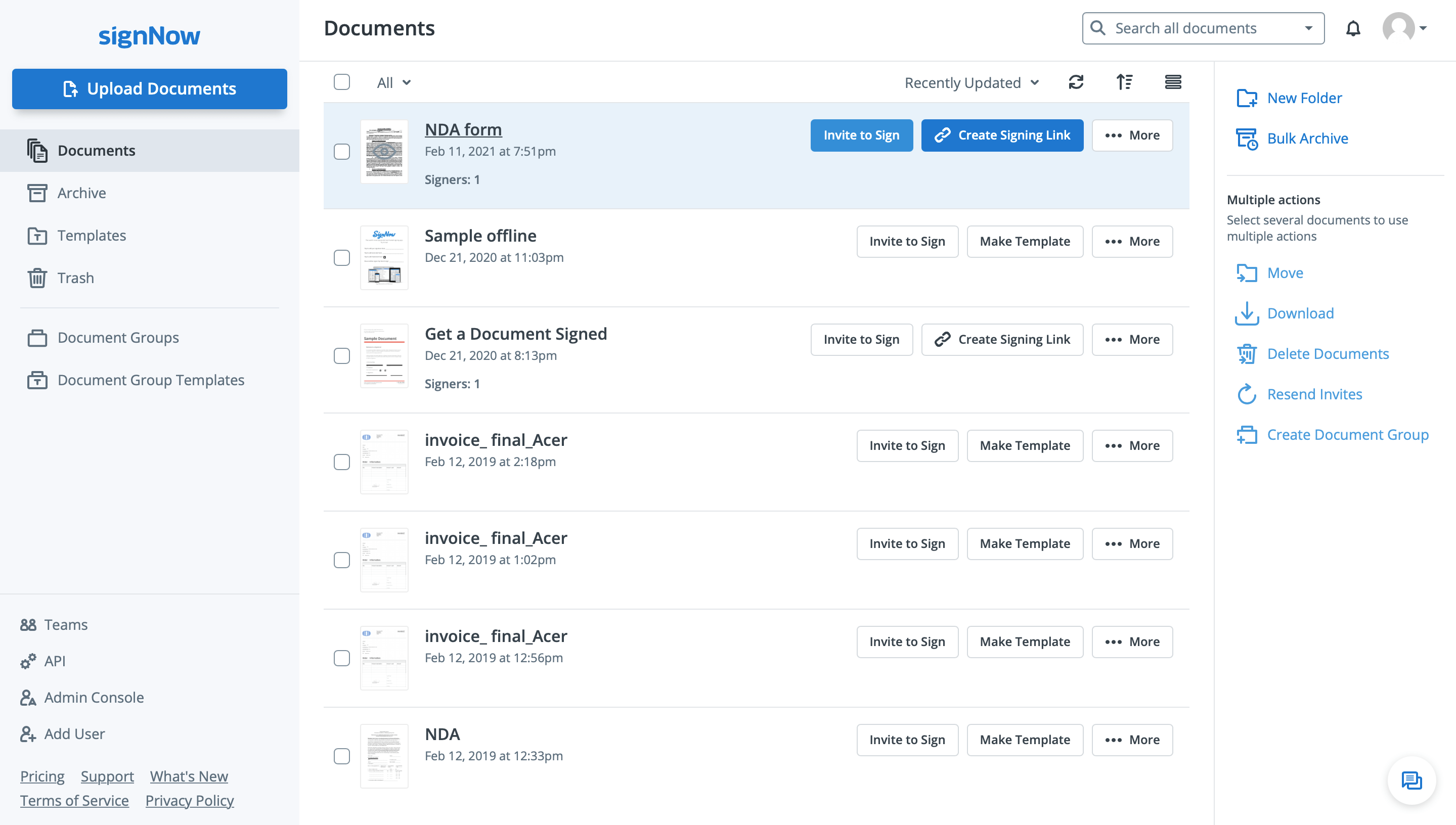
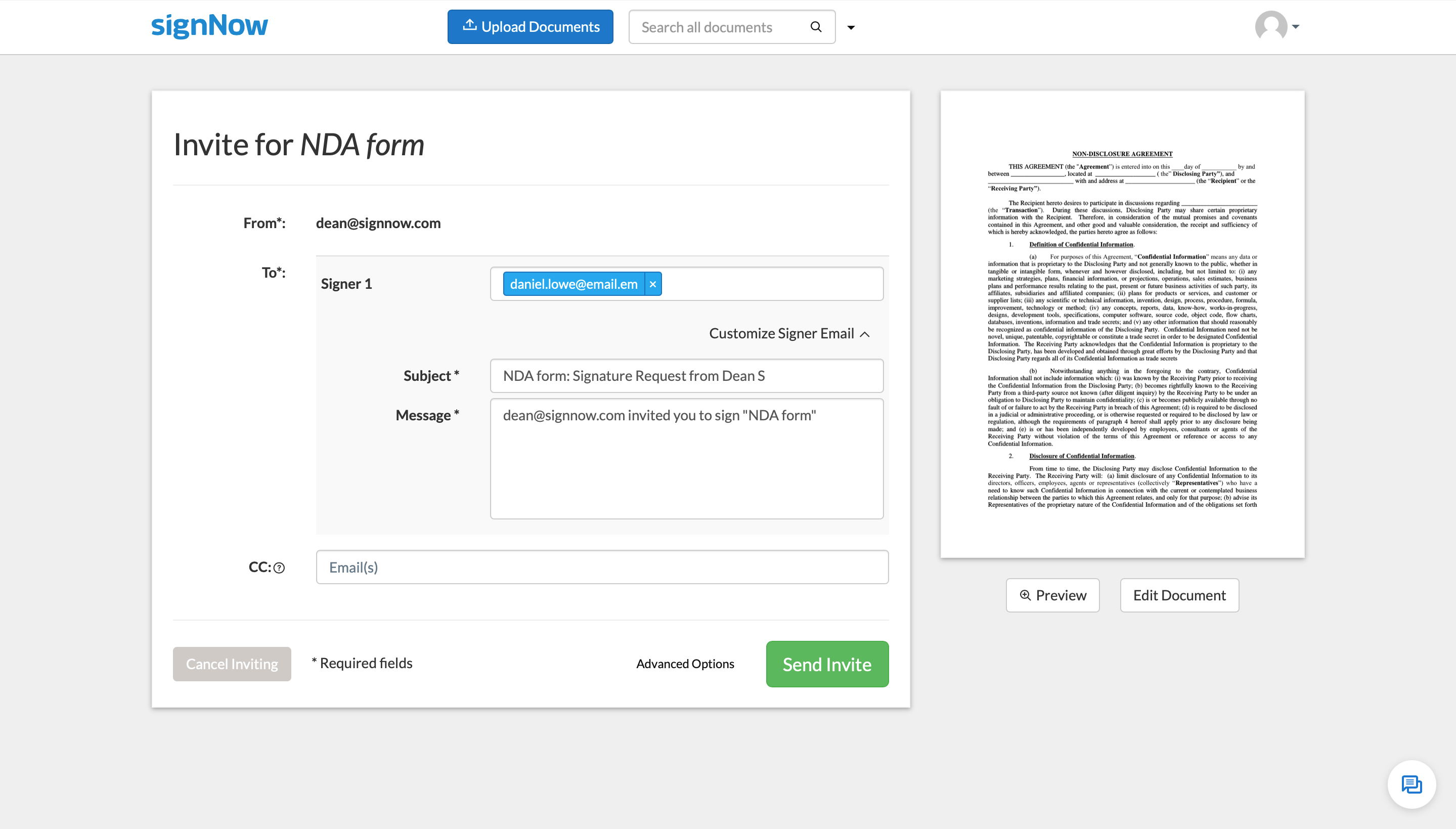
Click on the Customize Signer Email dropdown. Add or modify data in the Subject and Message fields.
After entering the recipient’s email address, hit Send Invite. Your signing request will be delivered to the signer and will feature the subject line and message you’ve set.
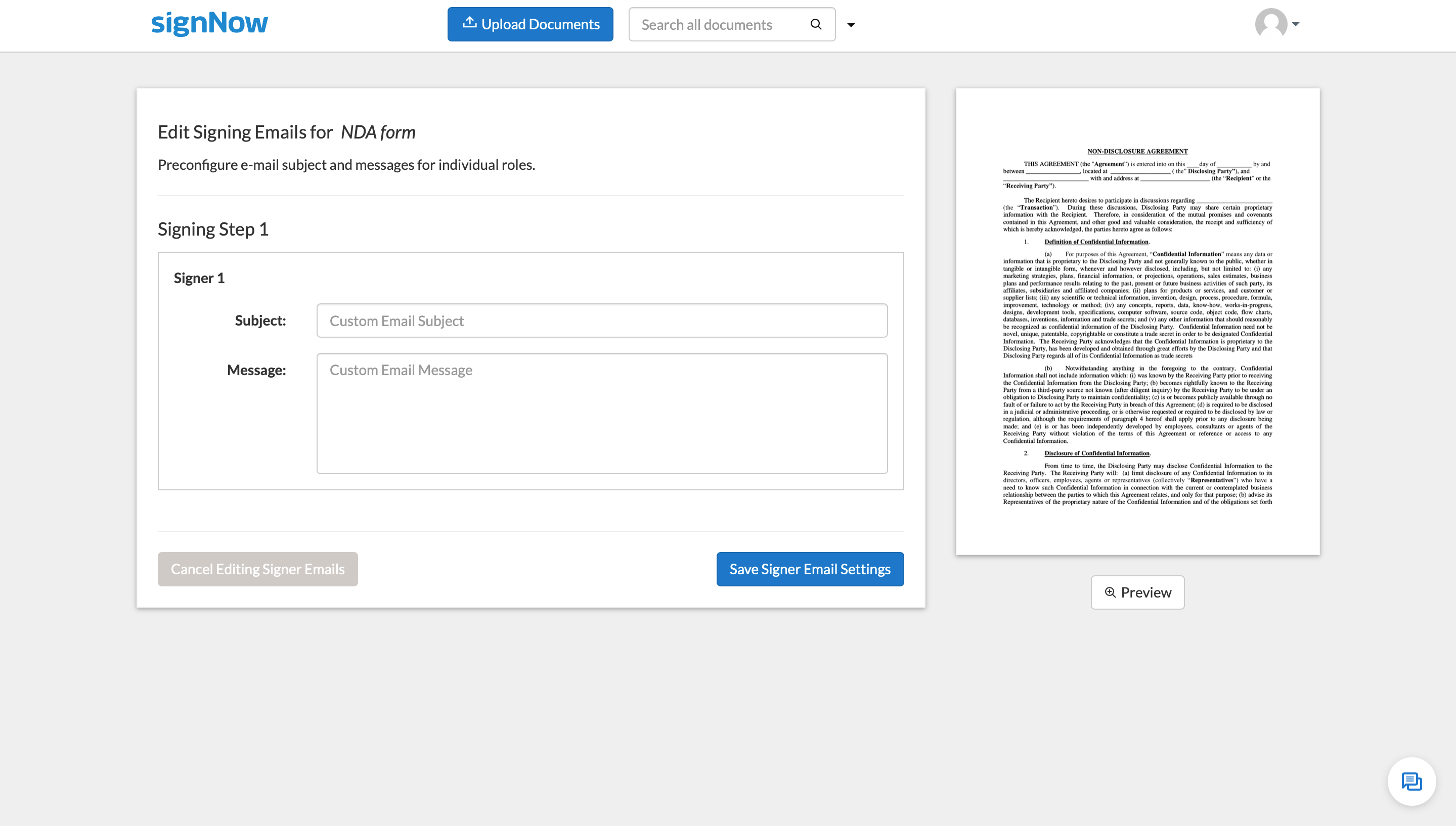
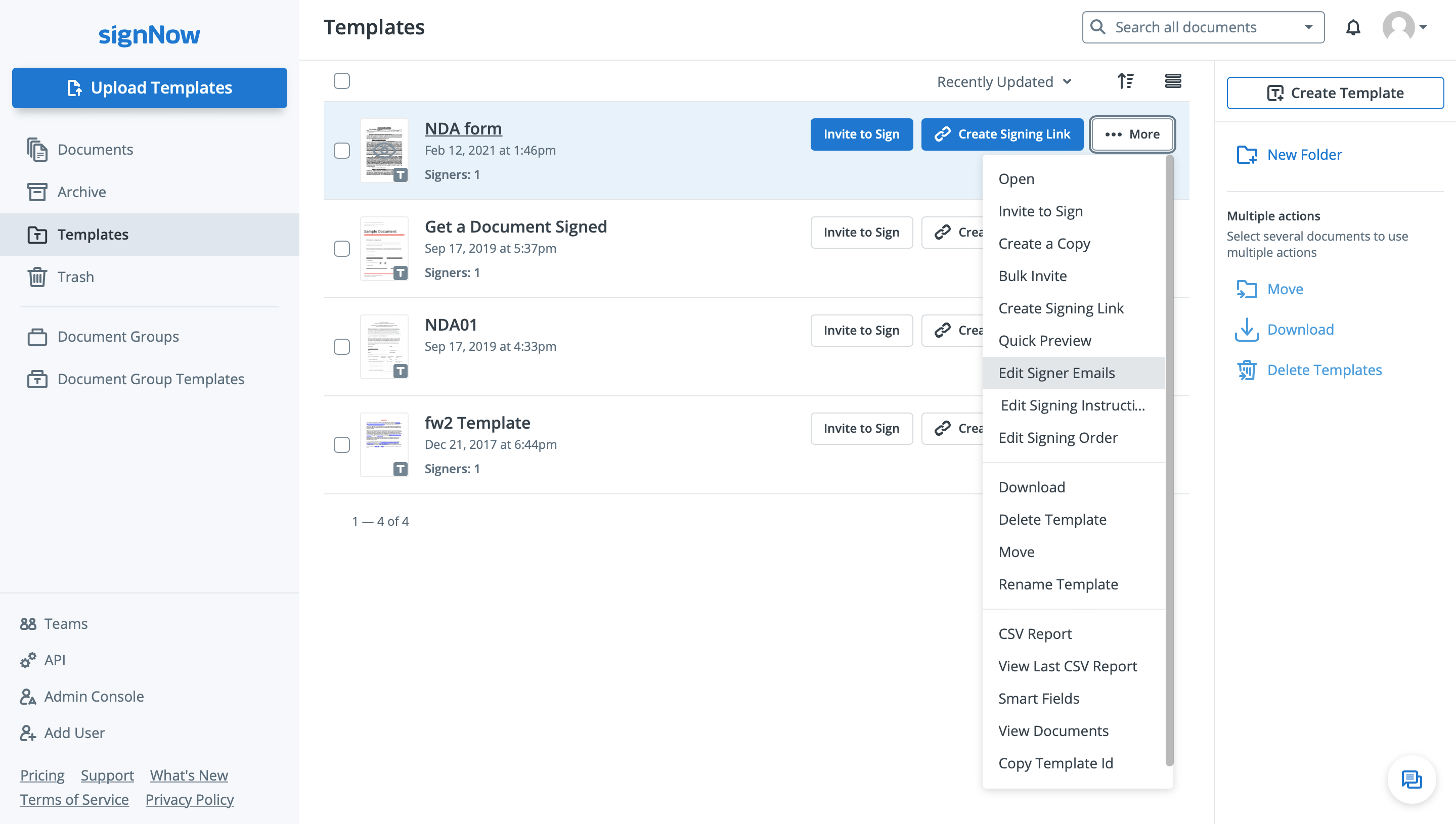
Pre-fill the email subject and message for your templates to avoid re-entering data again and again. Go to the Templates tab on the left and click More next to the name of the template you need to configure. Then, click Edit Signer Emails.
Now, simply fill in the Subject and Message fields and click Save Signer Email Settings. From now on, all the eSignature requests generated from this template will be sent using the subject and message you’ve pre-set.