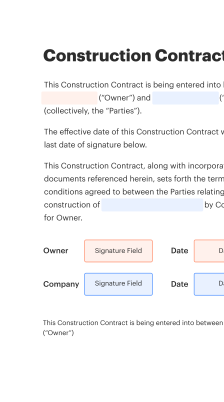
Digital Signature Authentication with SignNow

Remove paperwork and improve document management for increased efficiency and endless opportunities. Enjoy the best manner of doing business with airSlate SignNow.

Award-winning eSignature solution

What digital signature authentication means for document workflows

Digital signature authentication is the process of verifying the identity of a signer and the integrity of a signed document using electronic methods. It combines identity checks, cryptographic safeguards, and an auditable record to confirm who signed, when, and what changed, if anything. In U.S. contexts, properly implemented digital signature authentication aligns with ESIGN and UETA requirements when it captures intent, attribution, and a reliable audit trail. Solutions such as signNow provide these capabilities across platforms while supporting common enterprise controls and compliance needs.

Why robust digital signature authentication matters

Reliable authentication reduces fraud, enforces policy, and creates admissible electronic evidence. It streamlines signing, lowers administrative overhead, and supports regulatory compliance when identity, consent, and auditability are demonstrable.

Why robust digital signature authentication matters

Common challenges when adopting digital signature authentication

  • Verifying signer identity across remote channels without introducing friction or excluding legitimate users with limited technology access.
  • Maintaining chain-of-custody and preventing undetected post-signature changes while preserving usability for everyday transactions.
  • Balancing strong authentication methods with user convenience to avoid repeated sign-in failures or delayed approvals.
  • Implementing consistent retention, backup, and legal hold policies across multiple cloud storage locations and third-party integrations.

Typical user roles in digital signature authentication

Account Admin

Account Admins configure authentication policies, manage templates, monitor audit trails, and assign user roles. They typically enforce settings like two-factor authentication, IP restrictions, and retention policies to meet internal controls and compliance obligations across the organization.

Document Signer

Signers complete required identity steps, apply signatures, and receive final signed copies. Their experience varies with authentication strength; additional identity verification may require SMS codes, knowledge-based questions, or government ID checks depending on the workflow.

Organizations and teams that commonly use digital signature authentication

Many sectors rely on verified e-signatures to close transactions, maintain records, and meet regulatory obligations.

  • Healthcare providers and payers handling consent forms and billing documents under HIPAA privacy requirements.
  • Real estate firms and title companies processing purchase agreements and closing paperwork with identity verification.
  • Human resources and education offices executing employment, onboarding, and student records with authenticated signatures.

These examples show how authentication supports both operational efficiency and legal defensibility across functions.

be ready to get more

Choose a better solution

Essential features to look for in digital signature authentication

Several platform capabilities directly affect the strength and usability of authentication for signed documents and should be evaluated against compliance and workflow needs.

Authentication options

Multiple verifier choices such as email verification, SMS one-time passcodes, knowledge-based authentication, and optional ID document checks allow organizations to match identity assurance levels to transaction risk and regulatory requirements.

Audit trail

Comprehensive, tamper-evident logs that record events like views, authentications, signature placement, timestamps, and IP addresses to support legal admissibility and internal governance.

Document sealing

Cryptographic sealing and digital certificates applied at signature completion protect the document from undetected changes and provide a verifiable integrity check for future validation.

Integrations

Native connectors and APIs for CRMs, document repositories, and identity services reduce manual steps and ensure authentication controls are consistently applied within existing business systems.

How online digital signature authentication typically operates

A readable workflow showing the typical stages of an authenticated e-signature transaction from initiation to archival.

  • Initiation: Sender uploads document and assigns signing roles.
  • Authentication: Platform verifies signer identity using chosen method.
  • Signing: Signer applies signature; system timestamps and seals the document.
  • Archival: Final signed document and audit trail are stored securely.
Collect signatures
24x
faster
Reduce costs by
$30
per document
Save up to
40h
per employee / month

Quick steps to set up digital signature authentication

A concise step sequence for enabling authentication on electronic documents and initiating a verified signing flow.

  • 01
    Upload document: Add your file in PDF or Word format to the signing platform.
  • 02
    Prepare fields: Place signature and data fields where required on the document.
  • 03
    Select authentication: Choose SMS code, email verification, or ID check for each signer.
  • 04
    Send and monitor: Dispatch the request and track completion via audit logs and notifications.
be ready to get more

Why choose airSlate SignNow

  • Free 7-day trial. Choose the plan you need and try it risk-free.
  • Honest pricing for full-featured plans. airSlate SignNow offers subscription plans with no overages or hidden fees at renewal.
  • Enterprise-grade security. airSlate SignNow helps you comply with global security standards.
illustrations signature

Recommended workflow settings for consistent authentication

Suggested configuration defaults to balance security with signing convenience across teams and document types.

Setting Name and Configuration Header Default configuration used for most teams and common documents
Reminder frequency interval for sign requests Every 48 hours until signer completes the request
Default authentication method for external signers Email verification with optional SMS OTP fallback
Retention policy for signed documents and logs 7 years archival storage with secure backups
Template sharing and permission defaults Team-level templates editable by designated roles
Notification and escalation rules for overdue signatures Auto-escalate after three reminders to account owner

Core security elements for digital signature authentication

Encryption: AES-256 at rest and TLS in transit
Multi-factor: Optional SMS or authenticator apps
Certificate support: X.509-compatible certificate handling
Access controls: Role-based permissions and SSO
Tamper proofing: Cryptographic signatures and hashes
Audit logging: Immutable event trails for each document

Industry examples where digital signature authentication adds value

These case examples illustrate how authenticated e-signatures are applied in different regulated contexts to reduce friction and meet documentation requirements.

Real Estate Closing

A brokerage uses authenticated e-signatures for purchase agreements and addenda to speed deals and reduce courier delays.

  • Use of SMS codes and ID verification during signing.
  • Results include fewer last-minute cancellations and clearer signer attribution.

Leading to faster closings and reduced overhead while preserving audit records for post-closing reviews and lender compliance.

Healthcare Consent

A clinic digitizes patient consent forms to reduce paper handling and streamline intake processes.

  • Authentication includes two-factor confirmation and patient ID capture.
  • Benefit: clearer evidence of informed consent and reduced administrative follow-up.

Resulting in improved patient experience, defensible records for audit, and tighter HIPAA-compliant handling of signed documents.

Practical best practices for secure digital signature authentication

Follow these operational guidelines to make authentication robust and usable without overcomplicating signer experience or compliance posture.

Use layered authentication and identity verification where appropriate
Apply stronger authentication for high-value or regulated documents while defaulting to lighter methods for routine transactions; document the rationale and maintain consistent configuration across teams to reduce errors and disputes.
Keep an auditable and immutable record of signature events
Ensure every signing flow produces a time-stamped audit trail with authentication evidence, IP addresses, and event metadata so documents remain verifiable and defensible in compliance reviews or legal proceedings.
Align authentication strength to transaction risk and regulation
Perform a risk assessment to determine when enhanced verification or identity provider integration is required to meet industry rules such as HIPAA, state-specific regulations, or contractual obligations.
Document retention and chain-of-custody policies clearly
Define retention periods, backup strategies, and legal hold procedures for signed documents and their audit trails to ensure records are available for audits, litigation, or regulatory inquiries.

FAQs about digital signature authentication

Answers to common questions about implementing and troubleshooting digital signature authentication in U.S. business contexts.

Feature comparison for authentication capabilities across platforms

A concise feature availability comparison highlighting authentication and related capabilities among leading e-signature vendors.

Vendor feature comparison across eSignature platforms signNow DocuSign Adobe Sign
US legal compliance (ESIGN/UETA)
Two-factor authentication support
ID document verification Optional Add-on Add-on
Bulk Send capability
be ready to get more

Get legally-binding signatures now!

Risks and penalties from weak digital signature authentication

Non-compliance fines: Regulatory penalties and audits
Contract disputes: Enforceability challenges in court
Data breaches: Exposure of PII and PHI
Business interruption: Operational delays and lost revenue
Reputational harm: Customer trust erosion
Legal costs: Litigation and remediation expenses

Pricing and plan model overview for top e-signature vendors

High-level comparison of plan structures and common billing models across five well-known providers to inform budgeting and procurement decisions.

Plans and billing comparison across vendors signNow DocuSign Adobe Sign Dropbox Sign PandaDoc
Entry-level offering and billing Affordable per-user monthly plans, annual discounts available Personal and Standard monthly tiers Individual and small business plans Free tier with limits then subscription Free e-sign and Essentials plans
Mid-tier business capabilities Business plans include templates, team folders, and basic SSO Standard and Business Pro tiers with advanced workflows Business plans with workflow tools and integration Business tier adds single sign-on Business tier supports CRM integrations
Enterprise features and customization Custom enterprise plans with SSO, API, and admin controls Enterprise plans offer advanced integrations and governance Enterprise solutions with enterprise licensing and support Enterprise offers SSO and custom deployments Enterprise includes advanced workflows and API access
API access and developer support API available with developer resources and SDKs Robust API and developer platform Enterprise API and Adobe Dev support API available with PKI options API with comprehensive docs and SDKs
Trial and free-tier availability Free trial and limited-feature free tier Free trial on select plans Free trial for new users Free tier with limited sends Free trial and limited free plan

Make simpler complicated workflows

Generate, perform, and maintain workflows of any intricacy, electronically from almost anywhere. Scalable electronic signature capabilities enable you to share documents with the right users the right order and set up roles for each signee. Stream document workflows faster and easier than ever before.

Automate document flow

Optimize complicated signing tasks with airSlate SignNow�s highly effective capabilities to enhance your company. Take control of your automated signature workflows to ensure they're running at top efficiency with instant notices and reminders.

Optimize in team collaboration

Get teams together in a safe, shared workspace. Handle documents, use form templates and notices to produce more efficient cross-company communication. Relieve your employees from having to spend time on repeating activities so that they can give attention to valuable, business-critical activities.

Integrate into your existing framework

Work your projects with best-in-class integration. Assemble Salesforce, Microsoft Teams, and SharePoint in one business stream. Link up your software to a single system for endless possibilities and more productivity.

Stay compliant with market-leading data safety

Feel safe knowing that your information remains secure by the latest in encryption security. airSlate SignNow is GDPR and eIDAS compliant and provides you exposure into your signing experience with court-admissible audit trails. Set up user access permissions and roles to manage who has access to what.


walmart logo
exonMobil logo
apple logo
comcast logo
facebook logo
FedEx logo
be ready to get more

Get legally-binding signatures now!