Order Form Vs Invoice: Understanding the Differences

Order Form vs Invoice: Learn the essential differences between these two important documents. Understand their roles in transactions and how signNow can help you manage them securely.

Award-winning eSignature solution

What an order form vs invoice means for businesses

An order form and an invoice serve distinct roles in commercial transactions: an order form captures customer intent and specifics for goods or services, while an invoice requests payment for delivered items. Digitally, both documents can be created, sent, and signed using eSignature platforms to speed processing, reduce errors, and maintain consistent records. In the United States these electronic records and signatures can meet legal standards under ESIGN and UETA when implemented with proper authentication, tamper-evidence, and audit trails. Understanding the operational and legal differences helps teams choose appropriate formats, fields, and workflows for each document type.

When to use an order form rather than an invoice

Use an order form to confirm purchase details and obtain customer authorization before fulfillment; use an invoice to request payment after goods or services are provided.

When to use an order form rather than an invoice

Common challenges when managing order forms and invoices

  • Missing or inconsistent fields cause delays and extra reconciliation work between teams.
  • Manual handoffs increase the risk of lost documents and payment delays.
  • Inadequate authentication can create disputes over signature validity and acceptance.
  • Poor version control leads to billing errors and contract mismatch issues.

Typical users and how they interact with these documents

Sales Manager

A Sales Manager uses order forms to lock in product specifications, pricing, and delivery schedules. They rely on templates to reduce entry errors, track pending approvals, and confirm customer authorization before routing to operations for fulfillment and to finance for billing.

Accounts Payable

Accounts Payable teams receive invoices to reconcile against delivered goods or services, validate supporting order forms, process approvals and payments, and maintain records for audit and tax reporting. They use standardized workflows to ensure timely payment and regulatory compliance.

Teams and roles that commonly handle order forms and invoices

Sales, operations, and finance teams coordinate to create, approve, and process order forms and invoices across customer lifecycles.

  • Sales representatives who capture order intent and collect authorizations before fulfillment.
  • Accounts payable and receivable staff who issue invoices and manage payments.
  • Procurement and legal teams that verify terms, approvals, and contractual compliance.

Smaller teams may combine responsibilities while larger organizations separate duties to maintain clear control and auditability.

Additional capabilities to support complex order and billing workflows

Advanced features help organizations scale order-to-cash processes while maintaining security, compliance, and integration with other systems.

Audit Trail

Comprehensive logs of every action on a document for legal defensibility and auditing purposes.

Authentication

Multiple signer verification methods to match transaction risk and regulatory needs.

Templates Library

Centralized template management reduces errors and enforces corporate standards across teams.

Third-Party Integrations

Connectors to CRM, accounting, and storage systems to keep data synchronized.

Mobile Signing

Support for signing on phones and tablets to speed approvals anywhere.

APIs

Programmatic access to automate generation, sending, and processing of documents at scale.

be ready to get more

Choose a better solution

Core features that improve order form and invoice accuracy

Identify features that reduce manual errors, accelerate approvals, and maintain consistent records across teams managing order forms and invoices.

Templates

Structured templates ensure consistent fields for order forms and invoices, enforce required entries, and reduce data entry variance across the organization for accurate billing and fulfillment.

Calculated Fields

Built-in calculations for taxes, discounts, and totals reduce manual arithmetic errors and ensure invoices reflect the same pricing captured on order forms, improving reconciliation.

Bulk Send

Bulk Send automates distribution of identical invoices or order confirmations to multiple recipients, saving time on repetitive sends while maintaining individualized audit records.

Payment Links

Integrated payment collection attaches checkout links to invoices, allowing customers to pay online and reconcile payments against the originating order form automatically.
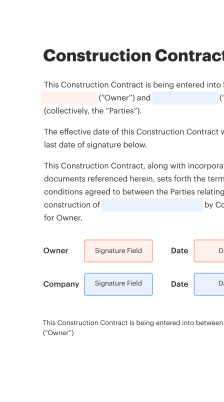
How online order form and invoice workflows operate

Digital workflows streamline creation, approval, signature capture, and storage for both order forms and invoices.

  • Template Setup: Create reusable templates with fixed fields and calculations.
  • Recipient Input: Allow customers to complete order details or attach documents.
  • Signature Capture: Collect authorized signatures with authentication controls.
  • Recordkeeping: Store documents with audit trails for compliance.
Collect signatures
24x
faster
Reduce costs by
$30
per document
Save up to
40h
per employee / month

Quick steps to create an order form or invoice

Follow these core steps to set up and process order forms and invoices efficiently in a digital workflow.

  • 01
    Choose a template: Select a standardized order form or invoice template.
  • 02
    Add fields: Insert required data fields, pricing, and tax calculations.
  • 03
    Obtain approval: Route to signers for authorization and validation.
  • 04
    Send invoice: Generate and deliver invoice after fulfillment or milestone completion.

Detailed actions to complete an order form or invoice process

A more granular checklist helps teams move from document creation to final archival with fewer errors and clearer ownership.

01

Prepare document:

Select template and populate core fields.
02

Verify pricing:

Confirm prices, discounts, and taxes.
03

Route for approval:

Assign approvers and order of signatures.
04

Collect signatures:

Authenticate signers and capture acceptance.
05

Issue invoice:

Generate invoice referencing the signed order.
06

Archive and reconcile:

Store with audit data and reconcile payments.
be ready to get more

Why choose airSlate SignNow

  • Free 7-day trial. Choose the plan you need and try it risk-free.
  • Honest pricing for full-featured plans. airSlate SignNow offers subscription plans with no overages or hidden fees at renewal.
  • Enterprise-grade security. airSlate SignNow helps you comply with global security standards.
illustrations signature

Recommended workflow settings for order form and invoice automation

Configure these workflow settings to ensure reliable routing, reminders, and recordkeeping across order and invoice lifecycles.

Document Workflow Configuration Setting Name Configuration
Reminder Frequency Interval in Days 48 hours
Sequential Signature Routing Order Type Sequential
Auto Archive After Completion 30 days
Payment Integration Connector Enabled Yes
Field Validation and Required Entry Rules Enabled

Supported devices and platform requirements

Modern order form and invoice workflows should be accessible from web browsers and mobile devices to accommodate signers and internal users.

  • Desktop browsers: Chrome, Edge, Safari supported
  • Mobile platforms: iOS and Android apps
  • integrations: Popular CRMs and storage services

Ensure your chosen eSignature solution supports current OS and browser versions, provides responsive mobile experiences, and includes integrations for your CRM, accounting, and cloud storage systems to maintain end-to-end efficiency.

Security controls to protect order forms and invoices

Data Encryption: AES-256 at rest
Transport Security: TLS 1.2+ in transit
Access Controls: Role-based permissions
Authentication Options: Email, SMS, OAuth
Tamper Evidence: Audit trail records
Data Isolation: Segregated storage

Industry examples showing order form vs invoice usage

Two concise scenarios illustrate practical workflows and outcomes when order forms and invoices are handled digitally.

Retail B2B Purchase

A regional retailer uses an online order form to capture SKU quantities, delivery windows, and approval signatures from a buyer

  • Template fields auto-calculate totals and taxes
  • The invoice is generated after fulfillment to match the accepted order, simplifying reconciliation

Resulting in faster payment cycles and fewer disputes due to clear pre-delivery acceptance.

Professional Services Engagement

A services firm issues an order form to define scope, hourly rates, and milestones for client approval

  • The order form requires client eSignature and optional PO number entry
  • After milestone delivery the firm issues an invoice referencing the approved order for payment processing

Leading to transparent billing, fewer client queries, and improved cash flow predictability.

Best practices for secure order form and invoice handling

Adopt policies and practices that reduce disputes, maintain compliance, and improve operational efficiency when processing order forms and invoices.

Use structured templates with clear field labels
Design templates that require consistent data entry, include help text for unusual fields, and lock critical fields to prevent accidental edits. This reduces downstream reconciliation work and supports automated processing.
Implement signer authentication appropriate to risk
Choose email verification, SMS codes, or identity verification based on transaction value and regulatory requirements to ensure signatures are attributable and defensible.
Keep an immutable audit trail for every document
Record timestamps, IP addresses, and action histories for order forms and invoices so teams can resolve disputes, meet audit requirements, and demonstrate compliance with ESIGN and UETA.
Reconcile invoices to approved order forms
Automate matching between invoices and previously signed order forms before payment to prevent billing errors and support clear accounting records.

Frequently asked questions about order form vs invoice

Answers to common questions about validity, corrections, and compliance for digital order forms and invoices.

Quick comparison: signNow vs DocuSign for order form and invoice needs

A concise feature availability comparison focused on common capabilities for managing order forms and invoices.

Feature signNow DocuSign
ESIGN and UETA Legal Compliance
Bulk Send capability for many recipients
API access for automation
Native HIPAA support option Optional Optional
be ready to get more

Get legally-binding signatures now!

Typical deadlines and retention milestones to track

Track critical dates from order acceptance through invoicing, payment, and records retention to maintain compliance and operational clarity.

Order signature deadline date:

Specify acceptance cutoff for orders.

Invoice issuance timeframe:

Issue invoice upon delivery or milestone.

Payment due date terms:

Net 30 or agreed payment terms.

Dispute resolution window:

Define time allowed to raise billing disputes.

Document retention period:

Retain records per policy or law.

Risks and potential penalties for mishandled documents

Late payment fines: Contract remedies
Regulatory penalties: State or federal fines
Breach of contract: Damages owed
Data exposure: Privacy violations
Audit failures: Noncompliance findings
Reputational harm: Customer trust loss

Pricing and plan overview for popular eSignature providers

High-level plan and pricing characteristics to help compare signNow with other major eSignature vendors for order form and invoice workflows.

Plan/Offering signNow DocuSign Adobe Sign Dropbox Sign PandaDoc
Starting price per user per month Affordable tiered plans with volume discounts Higher entry price, enterprise focus Enterprise and integrated Creative Cloud pricing Simple per-user plans, included in some Dropbox bundles Mid-market plans emphasizing documents and payments
Free trial availability and trial length Free trial available on select plans Free trial with limited features Trial available via Adobe accounts Free trial offered for new users Free trial for paid plans
User and team management features Role-based user controls and team administration Advanced enterprise user controls Integrated with Adobe Admin Console Basic team controls within Dropbox Business User groups and permission tiers
API access and developer resources APIs for document creation and sending with SDKs Mature API ecosystem and developer tools APIs integrated with Adobe services Developer API for sending and templates Robust API including workflow tools
Compliance and advanced security offerings Audit trails, encryption, and optional advanced compliance Extensive compliance and large-enterprise controls Enterprise-grade compliance, Adobe integrations Standard encryption and compliance options Compliance features plus payment workflows

Understanding the Difference Between Order Forms and Invoices

Order forms and invoices serve distinct purposes in the transaction process. An order form is a document that a buyer fills out to request goods or services. It typically includes details such as item descriptions, quantities, prices, and buyer information. This form acts as a formal request to the seller to fulfill the order.

In contrast, an invoice is issued by the seller after the goods or services have been provided. It outlines the transaction details, including the total amount due, payment terms, and a breakdown of the items sold. Invoices serve as a request for payment and are essential for accounting and tax purposes.

When to Use an Order Form

Order forms are most beneficial in situations where a business needs to streamline the ordering process. For example, a retail company may use an order form to collect customer information and product selections during a sale. This ensures that all necessary details are captured at once, reducing errors and improving efficiency.

Additionally, businesses can customize order forms to include specific fields relevant to their industry, such as shipping preferences or promotional codes. This customization can enhance the customer experience and facilitate smoother transactions.

When to Use an Invoice

Invoices are essential after a sale has been completed. They provide a formal record of the transaction and are crucial for both the seller and buyer. For instance, a service provider may issue an invoice after completing a project, detailing the services rendered and the total amount owed.

Invoices also help businesses keep track of their accounts receivable. They serve as reminders for customers to make payments and can include terms that specify payment deadlines, late fees, or discounts for early payment. This clarity helps maintain healthy cash flow for businesses.

Key Components of an Order Form

When creating an order form, it is important to include several key components to ensure clarity and efficiency. These components typically include:

  • Contact Information: Buyer’s name, address, phone number, and email.
  • Product Details: Descriptions, quantities, and prices of items being ordered.
  • Payment Options: Accepted payment methods and any necessary payment information.
  • Shipping Information: Delivery address and preferred shipping method.

Including these elements can help prevent misunderstandings and ensure that orders are processed smoothly.

Key Components of an Invoice

Invoices must also contain essential information to be effective. Key components include:

  • Invoice Number: A unique identifier for tracking purposes.
  • Date of Issue: The date the invoice is generated.
  • Seller Information: Name, address, and contact details of the seller.
  • Buyer Information: Name and address of the buyer.
  • Itemized List: Detailed descriptions of goods or services provided, including quantities and prices.
  • Total Amount Due: The total cost, including taxes and any applicable fees.
  • Payment Terms: Instructions on how and when to pay the invoice.

These components ensure that both parties have a clear understanding of the transaction and facilitate timely payments.

Benefits of Using Digital Order Forms and Invoices

Utilizing digital order forms and invoices offers numerous advantages. One significant benefit is the ease of sharing and storing documents electronically. Digital formats reduce the risk of loss and make it simple to access records when needed.

Additionally, digital solutions often include features such as eSigning, which allows for quick approvals and confirmations. This can significantly speed up the transaction process, enhancing overall efficiency. Businesses can also track submissions and payments, providing valuable insights into their operations.


walmart logo
exonMobil logo
apple logo
comcast logo
facebook logo
FedEx logo
be ready to get more

Get legally-binding signatures now!