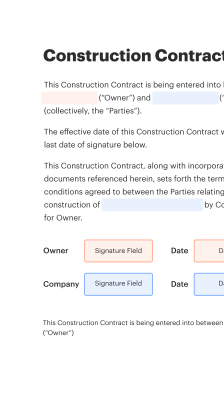
Scan Sign with SignNow's Secure eSignature Solution

Remove paper and improve document processing for increased efficiency and endless possibilities. Explore a greater strategy for doing business with airSlate SignNow.

Award-winning eSignature solution

What scan sign means and how it works

scan sign refers to the process of converting a physical, paper signature into a validated electronic record by scanning a signed page and attaching it to a digital document or by capturing a signature image and applying it to an electronic form. In practice this can mean uploading scanned pages, applying a scanned signature image into an electronic workflow, or using mobile device capture to digitize signatures for storage, tracking, and verification within an eSignature platform such as signNow.

Why organizations choose scan sign workflows

Using scan sign reduces physical handling, centralizes records, and supports hybrid signing practices where a scanned paper signature must be linked to an electronic transaction for storage and auditability.

Why organizations choose scan sign workflows

Common challenges with scan sign

  • Image quality issues can obscure required signature details and timestamps, complicating verification.
  • Linking scanned images to the correct digital record requires consistent naming and metadata practices.
  • Regulatory acceptance varies; some jurisdictions require additional authentication beyond a scanned signature image.
  • Storage of scanned signatures can create privacy risks without proper access controls and encryption.

Representative user profiles

Operations Manager

An operations manager overseeing contract intake who coordinates scanned signatures from field offices into a central repository, ensuring documents are indexed, attached to correct records, and tracked for retention and audit purposes.

HR Coordinator

A human resources coordinator who receives signed onboarding paperwork in person, scans them into the HR system, and verifies that the electronic record includes a clear signature image, date, and linkage to the employee profile.

Typical users and teams that rely on scan sign

Organizations that combine paper and electronic processes often use scan sign to bridge legacy workflows and modern digital records.

  • Legal and compliance teams managing signed paper originals and electronic copies.
  • Field agents and inspectors capturing paper signatures then digitizing for central records.
  • HR and onboarding teams collecting paper forms during in-person meetings.

Teams prioritize auditability and retention, using scan sign as a transitional or supplementary method while moving toward full electronic signing.

Additional capabilities that enhance scan sign reliability

Beyond core features, platforms offer authentication, validation, retention controls, integrations, templates, and mobile capture to improve scanned signature workflows.

Multi-factor authentication

Adds an extra verification step before uploading or linking scanned signatures, strengthening identity assurance for sensitive documents and reducing fraud risk.

Signature image validation

Tools to inspect image quality and confirm visible signature and date fields, prompting re-scan if the capture does not meet minimum clarity standards.

Retention scheduling

Configurable retention rules applied to scanned attachments to satisfy recordkeeping policies and automate archival or disposal processes when retention periods expire.

System integrations

Connectors for document management, HRIS, and CRMs allow scanned files to flow into existing systems and maintain a single source of truth.

Mobile capture tools

Purpose-built mobile apps and capture helpers that guide users to frame and scan documents consistently, improving image quality and metadata capture.

Template association

Ability to associate scanned pages with predefined templates to ensure consistent indexing and to speed processing in repeatable workflows.

be ready to get more

Choose a better solution

Core features that support scan sign workflows

Key platform features make scanned signatures useful: efficient upload, secure storage, searchable metadata, and auditable linkage between image and electronic transaction.

Bulk upload

Ability to import batches of scanned documents with configurable naming conventions and metadata mapping so large volumes of scanned pages can be attached and indexed quickly for downstream processing and search.

Automatic OCR

Optical character recognition extracts names, dates, and identifiers from scanned pages to populate form fields and indexing tags, reducing manual data entry and improving document discoverability.

Metadata tagging

Structured tagging of scanned files with signer, document type, and transaction ID ensures consistent linkage to electronic records and supports retention and audit workflows.

Audit trail

Comprehensive logging of upload, access, and linking actions records who scanned and attached the page plus timestamps, supporting compliance and evidentiary needs.

How scan sign integrates with an eSignature platform

This outline shows the typical flow from physical signature to stored electronic record and audit trail within a signing platform.

  • Capture: Scan or photograph the signed page.
  • Upload: Send the image to the platform as an attachment.
  • Link: Associate the scanned image with the matching electronic document.
  • Record: Log metadata, timestamp, and user who uploaded the scan.
Collect signatures
24x
faster
Reduce costs by
$30
per document
Save up to
40h
per employee / month

Step-by-step: scanning and attaching a signed page

Follow these concise steps to convert a physical signature into a validated digital attachment inside an eSignature workflow.

  • 01
    Prepare document: Verify the paper signature is clear and dated.
  • 02
    Scan page: Use a high-resolution scanner or mobile capture app.
  • 03
    Label file: Include document ID, signer name, and date in filename.
  • 04
    Attach and log: Upload to the eSignature platform and record metadata.
be ready to get more

Why choose airSlate SignNow

  • Free 7-day trial. Choose the plan you need and try it risk-free.
  • Honest pricing for full-featured plans. airSlate SignNow offers subscription plans with no overages or hidden fees at renewal.
  • Enterprise-grade security. airSlate SignNow helps you comply with global security standards.
illustrations signature

Recommended workflow settings for scan sign

These settings help standardize scanned signature capture, attachment, and lifecycle management within an eSignature system.

Workflow setting name and header Configuration value or default example
Reminder frequency for outstanding signatures 48 hours
Scan upload naming convention enforcement Enabled with template
OCR verification and field extraction Enabled, moderate accuracy
Retention policy for scanned files 7 years
Access role required to attach scans Manager-level

Platform and device requirements for scan sign

Ensure devices and software meet minimal capture and security requirements to create reliable scanned signature attachments.

  • Scanner or camera quality: 300 DPI or higher
  • Supported file formats: PDF, JPEG, PNG
  • Secure upload channel: HTTPS/TLS required

Validate that mobile devices have adequate camera resolution and that staff are trained to capture evenly lit, flat scans; confirm platform encryption and access controls before storing scanned signature images.

Security and authentication elements

Encryption in transit: TLS protected
Encryption at rest: AES-256 storage
Access controls: Role-based
Authentication methods: Multi-factor optional
Document integrity: Audit hash
Retention controls: Configurable policies

Practical examples of scan sign use

Two typical scenarios show how scanned signatures are incorporated into digital workflows where full electronic signing is not feasible.

Field inspection reports

An inspector collects a paper acknowledgment on site and scans the signed pages into the agency system for record keeping

  • Image capture is done using a mobile scanner or device camera
  • The scanned file is attached to the digital inspection record and timestamped for traceability

Ensures records are centralized and searchable, resulting in quicker audits and fewer lost documents.

In-person onboarding packets

A new employee signs several paper forms in the office and HR scans them into the HRIS for onboarding documentation

  • Scanned pages are labeled with employee ID and date
  • The HR system links the scanned documents to the digital employee record and logs the action

Leading to consistent retention and simplified compliance reviews during audits or personnel changes.

Best practices for secure and accurate scan sign

Adopt standard procedures and controls to maintain reliability, legal defensibility, and efficient retrieval of scanned signature records.

Standardize capture and naming conventions
Use consistent file naming, include date and identifier in filenames, and require specific metadata fields on upload to ensure scanned signatures can be reliably matched to transactions and discovered during audits.
Enforce minimum image quality and OCR checks
Set device-level guidelines and platform validation rules that require a minimum DPI, legible signature area, and automatic OCR verification to reduce manual rework and ensure reliable data extraction.
Apply role-based access and retention controls
Restrict who can upload and attach scanned signatures, configure retention schedules to meet legal obligations, and log all actions for accountability and regulatory compliance.
Combine scanned images with authentication evidence
Where possible, link scanned signatures to supplemental identity evidence—such as a witnessed attestation or an additional digital authentication step—to strengthen legal defensibility for critical agreements.

FAQs and troubleshooting for scan sign

Common questions and practical troubleshooting steps for problems that arise when capturing or using scanned signatures.

Quick feature comparison for scanned-signature support

A concise comparison of how major eSignature platforms handle scanned signature attachments and related capabilities.

Feature comparison across eSignature vendors signNow (Recommended) DocuSign Adobe Sign
Supports scanned attachment upload
OCR and text extraction Built-in Add-on Built-in
Configurable retention policies
Mobile capture guidance App-based App-based App-based
be ready to get more

Get legally-binding signatures now!

Retention and deadline considerations for scanned signatures

Retention schedules and deadlines for scanned signature records should reflect regulatory requirements and internal policy to avoid premature deletion or extended over-retention.

Short-term retention window:

Evidence for active transactions: 90 days

Standard retention period:

HR and payroll records: 7 years

Legal holds and litigation:

Suspend deletion during hold

Archival review schedule:

Annual review for archival suitability

Secure disposal deadline:

Delete after retention expiry

Regulatory risks to consider

Noncompliance fines: Possible penalties
Privacy breaches: Data exposure
Invalid evidence: Limited admissibility
Contract disputes: Verification gaps
Retention failures: Legal risk
Unauthorized access: Security incident

Representative pricing and plan differences

Typical plan features and starting price points vary; the table below summarizes common entry-level offerings and notable plan inclusions for comparison.

Monthly pricing and plan features signNow (Recommended) DocuSign Adobe Sign Dropbox Sign PandaDoc
Starting monthly price per user $8 per user monthly $10 per user monthly $14 per user monthly $15 per user monthly $19 per user monthly
eSignature included in base plan Yes included Yes included Yes included Yes included Yes included
API access availability Available on paid plans Available with business plans Available on enterprise Available on business tiers Available on business tiers
Template and bulk send features Included Included on specific plans Included Included Included
HIPAA compliance option Available via BAAs Available via BAAs Available via BAAs Not broadly promoted Available via enterprise

Streamline complicated workflows

Generate, execute, and maintain workflows of any difficulty, electronically from almost anywhere. Scalable electronic signature capabilities ensure you can exchange papers with the right users the right way and set up roles for each signee. Complete document workflows faster and simpler than ever before.

Automate document managing

Improve complex signing tasks with airSlate SignNow�s highly effective functions to improve your company. Manage your automatic eSignature workflows to ensure they're running at maximum performance with quick notifications and alerts.

Enhance in team collaboration

Join teams together in a protected, shared workplace. Manage paperwork, use form templates and notices to deliver more effective cross-company collaboration. Relieve your workers from having to spend time on repetitive routines so that they can concentrate on beneficial, business-essential activities.

Integrate into your existing systems

Work your assignments with market-leading integration. Capture Salesforce, Microsoft Teams, and SharePoint in one business stream. Connect your applications to a single system for limitless possibilities and higher productivity.

Remain compliant with industry-leading data safety

Feel confident knowing that your information remains secure by the newest in encryption security. airSlate SignNow is GDPR and eIDAS compliant and provides you visibility into your signing process with court-admissible audit trails. Configure user authorization and roles to regulate who has access to what.


walmart logo
exonMobil logo
apple logo
comcast logo
facebook logo
FedEx logo
be ready to get more

Get legally-binding signatures now!