Sign on Chrome with SignNow's Secure eSignature Solution

Get rid of paperwork and automate document managing for increased efficiency and limitless opportunities. Discover the perfect strategy for running your business with airSlate SignNow.

Award-winning eSignature solution

What signing on Chrome means and how signNow fits

Signing on Chrome refers to applying a legally valid electronic signature to a document using the Google Chrome browser. This can be done through a web-based eSignature service such as signNow, which runs inside Chrome without additional local software. signNow supports common document formats, maintains an audit trail for each transaction, and operates under U.S. electronic signature laws such as ESIGN and UETA. Using a browser-based flow simplifies cross-device access, reduces the need for paper handling, and retains server-side controls for authentication, encryption, and record retention.

Why signing inside Chrome can be practical

Signing documents in Chrome with a compliant eSignature service reduces friction, centralizes records, and supports standard security controls without installing native apps.

Why signing inside Chrome can be practical

Common challenges when you sign on Chrome

  • Browser extensions or privacy settings can block script execution needed for signature workflows, causing interruptions.
  • Poor document preparation leads to missing fields or unclear signing order, increasing completion time and errors.
  • Weak authentication settings may expose transactions to impersonation risk if multi-factor authentication is not enforced.
  • Relying on local storage or downloads without centralized backup risks document loss and inconsistent retention.

Typical user profiles for Chrome-based signing

HR Manager

An HR Manager uses Chrome-based eSignature workflows to distribute offer letters, collect tax and benefits forms, and track completed records in a centralized repository. They rely on templates, role-based access, and automated reminders to reduce manual follow-up while maintaining audit trails for compliance purposes.

Sales Rep

A Sales Rep sends proposals and contracts from the CRM, preferring browser signing to avoid app installs. They use Bulk Send and pre-filled templates to accelerate deal cycles, and they review signature status and timestamps in the transaction history to verify execution.

Organizations and roles that commonly sign on Chrome

Businesses, educational institutions, and healthcare providers often use browser-based signing to streamline approvals and administration.

  • Sales teams completing contracts and NDAs via browser workflows.
  • HR departments processing onboarding documents and I-9 forms.
  • Legal and procurement groups executing vendor and service agreements.

Teams choose Chrome-based signing when they need wide compatibility, easy deployment, and centralized audit capabilities across users.

Additional features that improve the Chrome signing experience

These extended features support complex workflows, automation, and integration with common business tools while operating inside Chrome.

Document Editor

In-browser editing tools allow redaction, text edits, and formatting corrections before signature, reducing dependency on external editors.


Team Templates

Shared templates and folder permissions help teams standardize forms and control access to templates across departments.

API Access

APIs enable integrations with CRM, HR, and document systems so Chrome-based flows can be launched and tracked programmatically.

Role Management

Granular user roles and permissions let administrators assign sending, template editing, and reporting privileges to specific users.

Document Retention

Configurable retention schedules and export options support institutional recordkeeping and eDiscovery needs for signed documents.

Mobile Responsiveness

Responsive signing pages ensure Chrome on mobile devices provides the same signing experience and audit capture as desktop Chrome.

be ready to get more

Choose a better solution

Four Chrome-friendly features relevant to signing on Chrome

These browser-compatible capabilities help streamline signing, maintain compliance, and integrate with existing systems used in Chrome.

Templates

Reusable document templates let senders predefine fields, signing order, and default settings so common agreements can be issued quickly from Chrome without repetitive setup.

Bulk Send

Bulk Send enables sending identical documents to many recipients at once, reducing manual sends for mass forms while preserving individual audit records and delivery tracking.

Audit Trail

Comprehensive audit logs capture signer IP addresses, timestamps, and event history to support dispute resolution and regulatory review for Chrome-based transactions.

Two-Factor Authentication

Optional two-factor authentication adds a secondary verification step via SMS or one-time code to strengthen signer identity before completing a Chrome session signature.
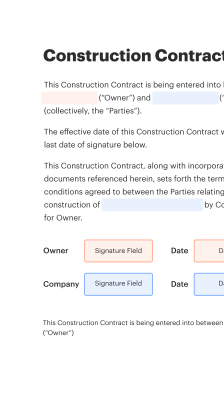
How browser signing workflows operate from sender to signer

A typical Chrome-based signing flow routes a prepared document from sender to recipients, enforces authentication, and captures execution evidence.

  • Prepare: Sender uploads and configures signature fields and signing order.
  • Notify: System sends email links opening in Chrome for recipients.
  • Authenticate: Recipients verify identity using chosen methods.
  • Record: The system records timestamps, IP, and completed document.
Collect signatures
24x
faster
Reduce costs by
$30
per document
Save up to
40h
per employee / month

Step-by-step: how to sign on Chrome using an eSignature service

Follow these basic steps to complete a signature through a browser: upload, prepare, authenticate, sign, and store.

  • 01
    Upload document: Open Chrome and upload the file to the signing service.
  • 02
    Place fields: Add signature, date, and required form fields for signers.
  • 03
    Authenticate signer: Choose an authentication method such as email code or SMS.
  • 04
    Finalize: Execute signing and save the signed copy with an audit trail.
be ready to get more

Why choose airSlate SignNow

  • Free 7-day trial. Choose the plan you need and try it risk-free.
  • Honest pricing for full-featured plans. airSlate SignNow offers subscription plans with no overages or hidden fees at renewal.
  • Enterprise-grade security. airSlate SignNow helps you comply with global security standards.
illustrations signature

Typical workflow settings when configuring Chrome signing

These configuration items are common when setting up browser-based signing workflows for teams and organizations.

Setting Name Configuration
Signing order enforcement Sequential
Reminder Frequency 48 hours
Authentication method Email code
Retention policy 7 years
File format output PDF/A

Platform and device considerations for signing on Chrome

Chrome on desktop and mobile supports modern eSignature flows but requires up-to-date browser versions and stable connectivity.

  • Chrome version: Latest stable release
  • Network: Reliable internet connection
  • Cookies enabled: Session persistence required

Ensure browser extensions that block scripts are disabled for signing pages, and confirm devices meet security baselines; signNow and similar platforms often list supported browser versions and recommended settings for optimal Chrome performance.

Key security controls relevant to signing on Chrome

TLS encryption: Protects data in transit
At-rest encryption: Protects stored documents
Two-factor auth: Adds signer verification
Audit trail: Records signature events
Role-based access: Limits user permissions
Document locking: Prevents post-signing edits

Practical examples of signing on Chrome in regulated industries

These case narratives show how browser-based signing is used in healthcare and real estate, focusing on process, controls, and outcomes.

Healthcare Agreement

A hospital used Chrome-based signing to distribute patient consent forms to tablets at intake, ensuring consistent form versions and immediate collection of signatures

  • Enforced signer authentication via two-factor code
  • Connected signed records to the EHR and retained logs

Resulting in auditable consent records, reduced paper handling, and faster patient throughput while maintaining HIPAA safeguards.

Real Estate Closing

A brokerage implemented Chrome signing to collect purchase agreements and disclosures from buyers and sellers remotely, using templates to eliminate manual data entry

  • Applied sequential signing order for parties
  • Stored executed documents centrally with timestamped audit trails

Leading to faster closings, fewer clerical errors, and a clear chain of custody for each transaction.

Best practices for secure and accurate signing on Chrome

Follow consistent preparation, authentication, and retention practices to reduce errors and strengthen the legal defensibility of browser signatures.

Prepare documents with clear fields and labels
Define required fields, use descriptive labels, and set signing order to prevent misplacement of signatures and reduce the need for follow-up corrections.
Enforce signer identity verification
Use multi-factor authentication or identity verification services for higher-risk transactions to reduce impersonation risk and improve evidentiary value.
Maintain centralized audit and retention policies
Store executed documents and audit logs in a central repository with defined retention schedules to support compliance, reporting, and legal discovery.
Test workflows before wide rollout
Validate templates, reminders, and signer paths in Chrome across devices to ensure the user experience works reliably and captures necessary metadata.

FAQs About signing on Chrome

Answers to common questions about executing and troubleshooting browser-based signatures in Chrome.

Feature availability comparison for signing on Chrome

Quick feature checklist showing common capabilities across browser-based eSignature providers for Chrome users.

Criteria signNow (Recommended) DocuSign Adobe Sign
Bulk Send
API Access
HIPAA support BAA available BAA available BAA available
In-browser editor Limited
be ready to get more

Get legally-binding signatures now!

Document retention and backup considerations for Chrome-signed files

Retention schedules and backup practices should align with legal, regulatory, and business needs when storing signed documents from Chrome workflows.

Retention policy length:

Set retention based on regulatory periods and business needs

Backup frequency:

Daily backups for signed document stores

Export formats:

Preserve signed PDFs and audit logs

Legal hold process:

Suspend deletion when litigation or review is anticipated

Access logging:

Maintain logs for audit and compliance reviews

Risks and potential penalties for improper electronic signing

Contract disputes: Invalid signatures
Regulatory fines: Non-compliance penalties
Data breaches: Exposure fines
Record retention failures: Auditor findings
HIPAA violations: Civil penalties
FERPA breaches: Education sanctions

Pricing and plan notes for Chrome-compatible eSignature solutions

High-level plan comparisons and availability notes for common browser-based eSignature vendors; contact vendors for current pricing and enterprise options.

Plan Tier signNow (Recommended) DocuSign Adobe Sign Dropbox Sign PandaDoc
Entry-level plan availability Per-user paid plans with low-cost tiers Individual and small business plans Business plans via Adobe Acrobat subscriptions Free tier and paid teams Free trial and paid plans
Trial or free tier Free trial available Free trial available Free trial available Free tier with limits Free trial available
API access Available on developer and enterprise plans Available on most paid plans Available on paid plans Available with paid plans Available with paid plans
Enterprise features Advanced deployment and SSO options Global compliance and advanced controls Enterprise document workflows Team management and SSO Document automation and templates
HIPAA support BAA offered for eligible plans BAA available for eligible customers BAA available via enterprise agreements BAA available via Dropbox agreements BAA available via enterprise arrangements

Streamline complex workflows

Create, deliver, and maintain workflows of any complexness, electronically from almost anywhere. Scalable electronic signature functionality ensure you can share documents with the right people in the proper sequence and determine roles for every receiver. Stream document workflows faster and simpler than ever before.

Automate document management

Enhance complex signing tasks with airSlate SignNow�s powerful capabilities to boost your company. Take control of your automatic signature workflows to ensure they're running at top efficiency with quick notifications and alerts.

Optimize in team collaboration

Get teammates together in a secure, shared workplace. Handle paperwork, use form templates and notices to create more effective cross-company collaboration. Relieve your employees from having to hang out on repeated actions so that they can give attention to valuable, business-essential projects.

Integrate into your existing framework

Work your projects with market-leading integration. Assemble Salesforce, Microsoft Teams, and SharePoint all in one business stream. Hook up your applications to a single environment for countless opportunities and higher efficiency.

Stay compliant with industry-leading data protection

Feel confident with the knowledge that your data is protected by the latest in encryption security. airSlate SignNow is GDPR and eIDAS compliant and gives you awareness into your signing procedure with court-admissible audit trails. Set up user authorization and rights to manage who has access to what.


walmart logo
exonMobil logo
apple logo
comcast logo
facebook logo
FedEx logo
be ready to get more

Get legally-binding signatures now!