Establishing secure connection…Loading editor…Preparing document…

Letter Tendering Property in Satisfaction of Agreement

This template is fully customizable. Edit the text, fill out the fields, and send it for signature. Give it a try!
Letter Tendering Property in Satisfaction of Agreement

What the Letter Tendering Property in Satisfaction of Agreement Is

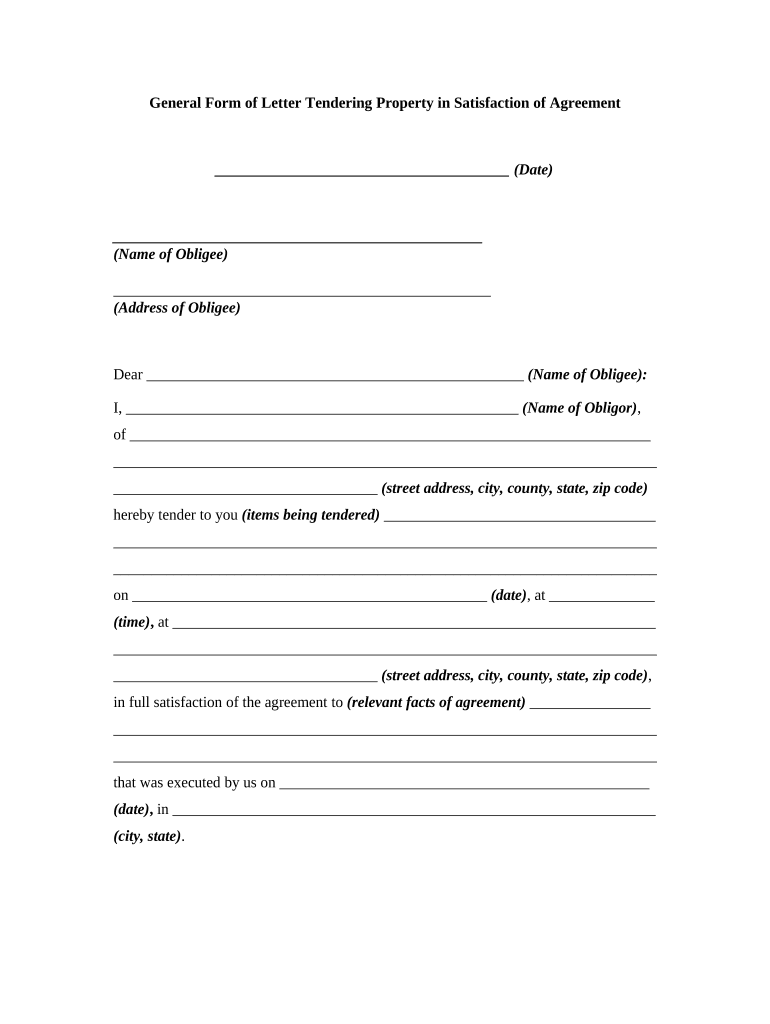
A Letter Tendering Property in Satisfaction of Agreement is a formal written communication used when a debtor offers real property to a creditor to satisfy an outstanding obligation under a contract. The letter documents the debtor's intent to transfer ownership or equitable interest in the property, describes the asset, states the outstanding obligation being satisfied, and sets proposed terms for acceptance and transfer. It is commonly used in secured-loan situations, deed-in-lieu negotiations, and settlement discussions where the parties seek an out-of-court resolution of debt using real estate as consideration.

Why a Clear Tender Letter Matters for Debt Resolution

A properly drafted letter provides written evidence of intent, clarifies terms for transfer, and reduces ambiguity that can stall negotiations or create legal disputes. It helps record the parties' expectations and supports enforceability if subsequently incorporated into a deed or settlement agreement.

Why a Clear Tender Letter Matters for Debt Resolution

Common Parties Who Prepare or Receive This Letter

Each party's role differs: senders propose terms and evidence, recipients evaluate title and tax consequences, and counsel ensures statutory and recording compliance.

  • Lenders and servicers reviewing property acceptance terms and title issues before consent.
  • Borrowers proposing transfer to avoid foreclosure or satisfy secured debt obligations.
  • Real estate attorneys preparing legal language and ensuring clear conveyance mechanics.

Essential Components to Include in the Letter

A complete tender letter should be concise but include the legal identifiers, factual description of the debt, property details, proposed transfer mechanics, and any conditions for acceptance and closing.

Parties

Full legal names and entity types for debtor, creditor, and any third-party escrow or title agent involved in the transfer process.
Debt Details

Specific account or loan numbers, principal and arrears amounts, and citation to the underlying agreement being satisfied to avoid misapplication.

Property Description

Legal description or parcel number, street address, and county of record to precisely identify the property being tendered.

Proposed Consideration

Statement that the property is offered in full or partial satisfaction of the obligation and any allocation of value or deficiency treatment.

Conditions

Any contingencies such as title cure, environmental inspection, release of liens, or closing timeline required before acceptance.

Execution

Signature block, notary or witness language if required, and a deadline for creditor acceptance to create a clear decision window.

Key Information Required at a Glance

Debtor Name: Exact legal name
Creditor Name: Exact legal name
Loan Identifier: Account or docket number
Property ID: Parcel or legal description
Proposed Date: Effective tender date
Acceptance Deadline: Clear response deadline

Step-by-Step: Preparing and Sending the Tender Letter

Follow these steps to prepare a clear, defensible tender and minimize processing friction for the recipient and title authorities.

  • 01
    1. Gather Documents: Collect deed, title report, loan statements, and authorization documents.
  • 02
    2. Draft Letter: Include all essential components and state conditions clearly.
  • 03
    3. Attach Exhibits: Attach title search, payoff statement, and property survey if available.
  • 04
    4. Deliver and Track: Send via recorded delivery and retain proof of transmission.

Customizing an Online Tender Workflow

Configure a simple digital workflow that collects signatures, verifies identity, and stores a certified audit trail for future recordkeeping.

Field Configuration
Signer Authentication Use email plus SMS code or ID verification
Document Attachments Require title report and payoff statement uploads
Signature Order Set debtor then creditor signing sequence
Audit Trail Settings Enable IP, timestamp, and completion certificate

Where to Send or File the Tender Letter

Choose delivery and filing destinations based on the creditor’s procedures and local recording rules to ensure legal effect and public notice.

  • Primary Recipient: Route to the creditor’s loss mitigation or legal department
  • Title Company: Send to the title agent for clearance and recording estimates
  • County Recorder: Record the deed or release once acceptance and signature complete
  • Escrow Agent: Use escrow for closing mechanics and funds proration

Digital Signing and Authentication Considerations

Ensure the selected platform supports notarization or remote online notarization workflows if notarized transfer instruments are required.

  • File Formats: PDF and DOCX accepted
  • Authentication: Email, SMS, or identity verification
  • Audit Trail: Timestamps, IP address, and signer metadata

Typical Timing and Deadlines to Monitor

Several time-sensitive points affect validity and recording: acceptance deadline, recording windows, tax proration dates, and any statutory cure periods.

Acceptance Deadline:

Set a clear number of days for creditor response, commonly 10–30 days

Recording Window:

Record promptly after acceptance to protect priorities and constructive notice

Tax Proration Date:

Specify who pays property taxes through the effective transfer date

Title Cure Timeline:

Allow time for lien releases or encumbrance removal before closing

Notary/Signing Date:

Match deed and tender effective dates where required

Common Risks and Consequences of Errors

Failure to Identify: Misdescribing property
Improper Authority: Signer lacks entity authorization
Title Defects: Undisclosed liens remain
Missing Notarization: Deed may be unrecordable
Inadequate Notice: Creditor disputes acceptance
Tax Exposure: Unexpected tax liabilities

Real-World Examples of Property Tender Letters

Two short case examples illustrate typical uses and outcomes when a property is tendered to satisfy debt.

Optica Ventures — Loan Resolution

A commercial borrower offered a parcel in full satisfaction of a matured loan to avoid foreclosure and litigation.

  • Creditor evaluated title and environmental risk.
  • The parties executed a deed-in-lieu after title clearance; the borrower avoided a costly foreclosure and the lender gained an asset it could market or liquidate.

Martin Properties — Residential Settlement

An owner tendered a single-family home to the servicer to satisfy arrears and prevent eviction.

  • Servicer required payoff figures and two witness notarization.
  • After acceptance and recording, the servicer issued a release for deficiency claims and coordinated tax reporting to minimize future disputes.

Practical Tips for Accurate and Efficient Tendering

Adopt standard procedures to reduce errors and accelerate acceptance when offering property in satisfaction of an agreement.

Use Precise Legal Descriptions
Copy the recorded legal description exactly from the deed or county records to ensure the correct parcel is identified for recording.
Attach Supporting Payoff
Include a dated payoff statement and itemization of fees so the creditor can verify amounts without additional requests.
Confirm Signatory Authority
Provide corporate resolutions or power-of-attorney documents when an entity signs to prevent acceptance delays.
Plan for Recording
Reserve funds for recording and estimated transfer taxes and confirm county requirements for acknowledgement or witness signatures.

eSignature Platform Pricing Snapshot for Tender Documents

Compare common vendor pricing and basic feature availability when choosing an eSignature provider for property-tender workflows. Confirm plan details directly with each vendor.

signNow DocuSign Adobe Sign PandaDoc HelloSign
Starting Price $8/user/mo $15/user/mo $14/user/mo $19/user/mo $15/user/mo
Free Trial Yes, 7-day trial Yes Yes Yes Yes
Bulk Send Yes Yes Yes Yes No
Audit Trail Yes Yes Yes Yes Yes
HIPAA Compliant Yes Yes Yes No No

Frequently Asked Questions About Tendering Property

Answers to common questions when preparing, sending, or recording a Letter Tendering Property in Satisfaction of Agreement.


Need help? Contact support

be ready to get more
Join over 28 million airSlate SignNow users