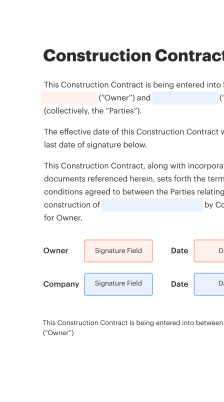
Making a Fillable Form in Word with SignNow
What making a fillable form in Word means and why it matters
Why use Word to create fillable forms
Creating fillable forms in Word lets teams reuse familiar templates, collect structured responses, and reduce manual data entry. It streamlines review, supports consistent branding, and fits into existing document workflows without requiring specialized form software.
Common challenges when making a fillable form in Word
- Inconsistent field naming can cause mapping errors when exporting data or importing into other systems.
- Complex layouts with tables or images may shift when protecting the document for form entry.
- Legacy form controls and modern content controls behave differently across Word versions and platforms.
- Users may expect real-time collaboration features that are limited for protected, fillable Word documents.
Representative user profiles for building Word fillable forms
HR Manager
An HR manager creates onboarding and benefits enrollment forms in Word to match company branding and policy language. They need reliable field validation, consistent form layout, and an audit trail when forms are signed and returned. They frequently export completed forms to HRIS systems or attach them to employee records.
Field Technician
A field technician uses a Word-based service report template that includes checkboxes and text fields to record equipment status. The technician needs mobile-friendly forms, simple drop-downs for standardized responses, and fast submission options that produce a signed record for warranty and billing workflows.
Who typically uses Word-based fillable forms
Teams across HR, legal, finance, and operations often create Word fillable forms because of familiarity with Microsoft Word and existing templates.
- Human resources teams using onboarding packets and benefit enrollment forms.
- Legal and compliance groups preparing standardized agreements and consent forms.
- Field staff and service technicians collecting structured job-site information and approvals.
Smaller teams and departments frequently pair Word forms with eSignature or document management solutions to add signing, tracking, and storage without replacing core authoring tools.
Choose a better solution
Essential tools when making a fillable form in Word
Content Controls
Modern content controls in Word let authors insert structured text fields, rich text, repeating sections, and date pickers that can be required or optional, provide placeholder text, and help ensure consistent data entry across multiple responses and versions of a template.
Auto Field Detection
Some workflow platforms and eSignature services can scan uploaded Word documents to identify likely signature, date, and text fields automatically, which speeds envelope preparation and reduces manual placement errors when routing forms for signature.
Document Protection
Restricting editing to form fields or applying password protection prevents accidental layout changes while allowing recipients to complete required fields; this preserves form structure for accurate data extraction and consistent print or PDF conversion.
Export and Integration
Export completed forms to PDF or structured data (CSV/XML) and connect with storage services or CRMs to store signed copies and populate records, reducing manual transcriptions and enabling automated downstream workflows.
How online workflows integrate with Word fillable forms
-
Upload: Send the Word file to the signing or workflow service.
-
Field recognition: Auto-detect or place form fields where signers must act.
-
Assign roles: Set signer roles, order, and authentication requirements.
-
Send and track: Deliver the form and monitor completion status.
Step-by-step: Create a fillable form in Word
-
01Open document: Start with a finalized Word template.
-
02Enable Developer: Turn on the Developer tab in Word settings.
-
03Insert controls: Add text boxes, checkboxes, and drop-down lists where needed.
-
04Protect form: Restrict editing to form fields only and save.
Why choose airSlate SignNow
-
Free 7-day trial. Choose the plan you need and try it risk-free.
-
Honest pricing for full-featured plans. airSlate SignNow offers subscription plans with no overages or hidden fees at renewal.
-
Enterprise-grade security. airSlate SignNow helps you comply with global security standards.
Typical workflow configuration for Word-based fillable forms
| Workflow Setting Name and Purpose Header | Default configuration for workflow fields and timing |
|---|---|
| Reminder Frequency | 48 hours after send |
| Approval Order | Sequential signer order |
| Automatic Field Mapping | Map by field name |
| Expiration Period | 30 days post-send |
| Signer Authentication Level | Email or access code |
Supported platforms and requirements for Word fillable forms
Authoring and using fillable Word forms works best with modern versions of Microsoft Word on desktop environments, but some features vary across platforms.
- Windows desktop: Full form control support
- macOS desktop: Most controls supported
- Mobile and web: Limited native control support
For reliable form creation, use Word on desktop to build and test controls, then export or upload to a workflow platform for mobile-friendly completion, signing, and centralized tracking, which ensures consistent behavior across recipient environments.
Industry examples using Word fillable forms effectively
Employee Onboarding
A mid-size company converts its hiring packet into a fillable Word form to capture personal and tax information consistently
- Auto-fill templates speed HR data entry across hires
- Standardized fields reduce missing data and errors during processing
Leading to faster employee setup and cleaner records for payroll and benefits.
Work Order and Site Inspection
A facilities team uses a Word inspection template with checkboxes and notes fields to record equipment condition on site
- Mobile workers complete the form on tablets and attach photos
- Structured responses feed a maintenance tracking system and reduce follow-up questions
Resulting in faster issue resolution and clearer maintenance histories.
Best practices for creating reliable Word fillable forms
FAQs About making a fillable form in Word
- Form fields not editable on recipient devices
Ensure the document was protected for form filling rather than locked for full editing. If recipients use Word Online or mobile apps, confirm that the specific content controls are supported; otherwise provide a PDF version or use a workflow platform that renders the fields correctly for web and mobile access.
- Data from fields not exporting correctly
Check that each field has a unique and descriptive name and that your export or integration tool maps by field names. Avoid duplicate labels and verify that controlled inputs (drop-downs, checkboxes) are configured consistently to enable reliable extraction into CSV or connected systems.
- Layout shifts after protecting the form
Protect only the areas necessary for data entry and avoid complex nested tables. Test the protected document in its final format and use fixed-width elements or anchored images to reduce reflow across versions of Word and when saving as PDF.
- Fields appear differently across Word versions
Some legacy controls perform differently in modern Word or Word Online. Prefer modern content controls for wider compatibility and test across the Word versions used by your recipients before distributing the form broadly.
- Signatures required with form submissions
Word itself doesn't add legal digital signatures for remote signing; export the completed document to PDF and use an eSignature service to capture a compliant electronic signature, or route the Word file through a signing platform that supports Word uploads and signing workflows.
- Form accessibility concerns
Label fields clearly, provide alternative text for images, and test with screen readers. Use semantic controls and ensure tab order is logical so users who rely on assistive technology can navigate and complete the form successfully.
Feature comparison for handling Word fillable forms
| Feature Comparison Criteria and Providers Header | signNow (Recommended) | DocuSign | Adobe Sign |
|---|---|---|---|
| Native Word upload and processing support | |||
| Automatic field detection from Word | |||
| Built-in field creation in web editor | |||
| Mobile-friendly field rendering |
Get legally-binding signatures now!
Steps to Create a Fillable Form in Word
Creating a fillable form in Word involves a few straightforward steps. Begin by opening a new or existing document in Microsoft Word. Navigate to the "Developer" tab, which may need to be enabled in the Word options if it is not visible. Once you have access to the Developer tab, you can insert various form controls, such as text boxes, check boxes, and drop-down lists. Each control can be customized to fit the specific needs of your form. After adding the desired fields, save the document as a Word template to maintain the fillable features.
Customizing Your Fillable Form Fields
Customization is key to making your fillable form user-friendly. For text fields, you can set properties such as default text, character limits, and formatting options. Check boxes can be labeled to clarify their purpose, while drop-down lists can include predefined options for users to select. Adjusting these properties ensures that the form meets your requirements and enhances the user experience. Additionally, consider using instructional text or tooltips to guide users on how to fill out the form correctly.
Saving and Sharing Your Fillable Form
Once your fillable form is complete, saving it correctly is essential. Save the document in the Word format to retain the fillable features. If you plan to share the form with others, consider converting it to a PDF format for easier distribution. This can be done using Word's built-in export feature. Sharing the form via email or cloud storage ensures that recipients can access it easily, allowing for efficient completion and return of the form.
Utilizing airSlate SignNow for Enhanced Form Management
After creating your fillable form in Word, airSlate SignNow can enhance your document workflow. You can upload your form to airSlate SignNow, where it can be securely stored and easily shared. The platform allows users to prepare and send the form for eSigning, streamlining the process of collecting signatures. This integration simplifies the management of your forms and ensures that all completed documents are stored securely, accessible from anywhere.
Common Use Cases for Fillable Forms
Fillable forms created in Word are versatile and can be used in various scenarios. Businesses often use them for employee onboarding, customer feedback surveys, and event registrations. Additionally, legal and financial institutions frequently utilize fillable forms for contracts, applications, and consent forms. By understanding the common use cases, you can tailor your forms to meet specific needs, improving efficiency and accuracy in data collection.
Troubleshooting Common Issues
While creating a fillable form in Word is generally straightforward, users may encounter some common issues. If form fields are not functioning as expected, ensure that the Developer tab is enabled and that the controls are properly inserted. Additionally, check the document's protection settings, as these can affect the ability to fill out the form. If users experience difficulties saving or sharing the form, verify that the file format is correct and that permissions are set appropriately for sharing.

Explore Advanced Features
- Outstanding Invoice Letter for Logistics
- Outstanding Invoice Letter for Planning
- Outstanding Invoice Letter for Export
- Outstanding Invoice Letter for Public Relations
- Basic Invoice Example for Support
- Basic Invoice Example for Research and Development
- Basic Invoice Example for Customer Service
- Down Payment Invoice Sample for It