Establishing secure connection…Loading editor…Preparing document…

Surrogate Parenting Agreement

This template is fully customizable. Edit the text, fill out the fields, and send it for signature. Give it a try!
Surrogate Parenting Agreement

What the Surrogate Parenting Agreement Is and When It’s Used

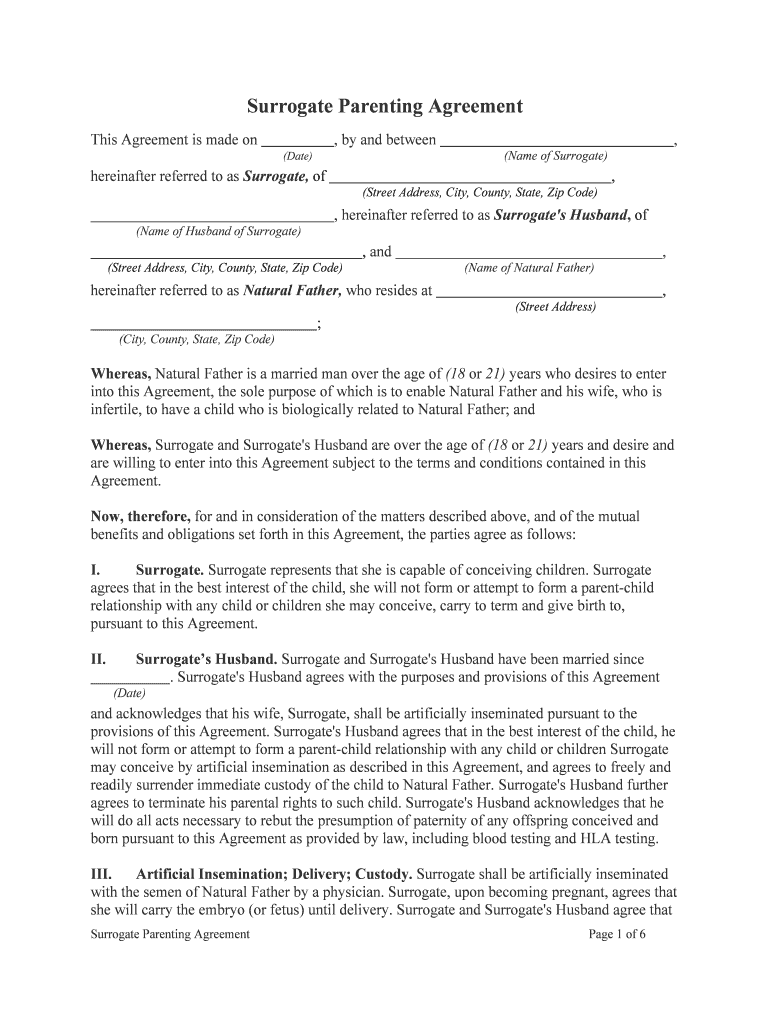
A Surrogate Parenting Agreement is a written contract that defines the legal, medical, financial, and parental expectations between intended parents and a surrogate. It typically covers parentage intentions, medical decision authority, compensation, insurance and expense arrangements, confidentiality, and steps for establishing legal parentage after birth. These agreements are negotiated before embryo transfer or pregnancy and often accompany clinic intake, consent forms, and any court filings required by state law. Proper execution, witnessing, and related supporting documents affect enforceability and the path to parental rights.

Why a Clear, Signed Agreement Matters

A detailed Surrogate Parenting Agreement clarifies obligations, reduces dispute risk, and records consent for medical and legal decisions. It preserves the parties’ expectations and supports later steps to secure parental rights.

Why a Clear, Signed Agreement Matters

Who Typically Uses a Surrogate Parenting Agreement

The agreement is used by parties involved in a gestational or traditional surrogacy arrangement to document roles, responsibilities, and legal steps.

  • Intended parents who want legal certainty about parentage, custody intentions, and financial obligations during and after pregnancy.
  • Surrogates (gestational or traditional) who need written confirmation of medical decision authority, compensation, and post-birth procedures.
  • Fertility clinics and attorneys who require documented consent and procedural timelines before treatment or embryo transfer.

Primary Roles and Typical Signers

Intended Parent(s)

Individuals or couples commissioning the pregnancy who will be named as legal parents where state law permits; they typically contract for medical decisions, financial support, and steps to secure parental status after birth.

Surrogate

Person who agrees to carry the pregnancy; the surrogate’s responsibilities include medical compliance, consent for medical treatment as described, and adherence to confidentiality and compensation clauses spelled out in the agreement.

Core Sections to Include in a Professional Agreement

A comprehensive Surrogate Parenting Agreement organizes legal, medical, financial, and administrative items so every party understands obligations and remedies.

Parties

Full legal names, addresses, and roles for intended parent(s), surrogate, and any embryo donor or sperm donor to avoid ambiguity and ensure consistent legal identification.
Medical Terms

Procedures, clinic name, embryo transfer timing, consent for prenatal tests and emergency interventions, and responsibilities for following clinic guidance and physician recommendations.

Parental Rights

Statement of intended parentage, steps for pre-birth or post-birth orders, and coordination with counsel to secure legal parent status under applicable state law.

Compensation & Expenses

Detailed schedule for base compensation, reimbursements, insurance responsibilities, and payment triggers tied to milestones or invoices.

Confidentiality

Privacy obligations for medical information and any permitted disclosures; specify data handling tied to HIPAA where medical records are exchanged.

Termination & Dispute

Circumstances that allow termination, governing law, dispute resolution method, and any required court or clinic notifications.

Step-by-Step: Completing and Executing the Agreement

Follow a consistent sequence to prepare, review, and finalize the agreement to reduce errors and meet clinic or court timelines.

  • 01
    Draft: Prepare initial draft with counsel and clinic input.
  • 02
    Review: Each party and attorney reviews terms for clarity.
  • 03
    Sign: Execute with required signatures, witnesses, or notarization.
  • 04
    File or Submit: Provide copies to clinic, attorneys, and any court as required.

How Electronic Completion and eSubmission Works

An online workflow can streamline review, signature capture, and distribution while preserving an audit trail and secure storage.

  • Upload: Sender uploads the agreement to the eSignature system.
  • Prepare Fields: Place signature, date, and initial fields for each party.
  • Authenticate: Signers verify identity via email, SMS, or stronger methods.
  • Complete: Signed document and audit trail are generated automatically.

Configuring an Online Signing Workflow for This Agreement

Configure authentication, fields, and routing to match legal and clinic expectations before sending the document to signers.

Field Configuration
Authentication Level Email + SMS code or stronger ID verification
Signing Order Define sequential or parallel signer order
Witness/Notary Fields Add fields for witness names, signatures, and notary acknowledgments
Audit Trail Options Enable IP, timestamp, and action logs

Technical and Security Considerations for eSigning

Choose a platform that meets security, audit, and healthcare compliance for handling sensitive medical and personal data.

  • Encryption: TLS in transit; AES-256 at rest
  • Audit Trail: IP, timestamp, and event logs
  • BAA Support: Availability for HIPAA compliance

eSignature Vendor Comparison Relevant to Surrogate Parenting Agreements

Comparing vendor pricing and core capabilities can inform selection for HIPAA, notarization, and volume needs; signNow appears first in the table per comparison conventions.

signNow DocuSign Adobe Sign PandaDoc HelloSign
Starting Price $8/user/mo $15/user/mo $14/user/mo $19/user/mo $15/user/mo
Free Trial 7-day free trial Varies by vendor Varies by vendor Varies by vendor Varies by vendor
Bulk Send Yes Yes Yes Yes No
Audit Trail Yes Yes Yes Yes Yes
HIPAA Compliant Yes Yes Yes No No

Time-Sensitive Steps and Typical Scheduling Considerations

Certain steps should be timed to clinic schedules and legal windows to avoid delays in treatment or parental rights proceedings.

Execution Timing:

Sign before embryo transfer or clinic procedures; effective date determines obligations

Medical Clearance:

Complete required clinic consents and clearances according to provider timelines

Notarization Window:

If notarization is required, schedule notarization before clinical milestones

Court Filings:

File pre-birth or post-birth orders per local court guidance and clinic timing

Record Retention:

Preserve signed copies for minimum retention periods defined earlier

Common Errors to Avoid When Preparing the Agreement

  • Using informal or partial names increases the risk of identity disputes during court review or parental status confirmation.
  • Leaving compensation terms vague without schedule or conditions often leads to payment disputes or contested reimbursements.
  • Skipping required notarization or witness steps in jurisdictions that demand them can render parts of the agreement difficult to enforce.
  • Failing to attach clinic consent forms, insurance verification, or donor documentation creates gaps that clinics or courts may reject.

Potential Consequences of an Incomplete or Noncompliant Agreement

Enforceability Risk: Partial execution may limit enforceability of parental or payment provisions
Parental Dispute: Ambiguous parentage clauses can trigger custody or parentage litigation
Court Rejection: Missing statutory language may lead a court to refuse pre-birth orders
HIPAA Exposure: Improper PHI handling can create regulatory obligations
Financial Liability: Unclear expense allocations can result in unexpected medical bills
Tax Reporting: Incorrect compensation characterization can affect tax treatment

Frequently Asked Questions and Quick Resolutions

Answers to common questions about execution, notarization, electronic signatures, and how to handle state differences to help parties avoid common delays.


Need help? Contact support

be ready to get more
Join over 28 million airSlate SignNow users