Template Flags
Apply routing or instruction rules in templates so declined responses automatically notify legal or operations teams and attach standardized follow-up steps to the transaction record.



A Decline feature improves transparency by giving signers a clear, auditable way to refuse a document, reducing informal refusals and improving downstream handling of contested agreements.

An HR Manager uses decline records to track when candidates or employees refuse agreement terms, ensuring the organization documents refusals for onboarding, benefits enrollment, or policy acknowledgements and can follow predefined procedures after a decline.
A Contract Administrator reviews decline reasons to determine whether to renegotiate, cancel, or escalate contracts; the recorded decline, timestamp, and identity help with legal assessments and audit responses.
Teams that manage risk, approvals, or regulated agreements require clear refusal records to support decisions and compliance.
Capturing declines consistently reduces uncertainty, supports measurable responses, and preserves a defensible record for internal or external review.
Apply routing or instruction rules in templates so declined responses automatically notify legal or operations teams and attach standardized follow-up steps to the transaction record.
Set conditional automation to reroute declined documents, start review tasks, or trigger revised requests based on decline reasons or signer roles.
Limit who can see decline reasons and associated metadata, ensuring sensitive reasons are only accessible to relevant compliance or case owners.
Downloadable PDF or CSV export of decline events and audit metadata simplifies archival and submission for legal or regulatory purposes.
Built-in connectors pass decline events into CRMs, ticketing systems, or document stores so organizational processes remain synchronized.
Configurable retention policies ensure declined documents and their audit records are preserved according to legal and company requirements.
A visible Decline control presented during the signing session that lets the recipient refuse to sign while capturing a structured reason and preventing further signature input on that document.
Configurable reason fields let organizations require or allow optional comments from signers, ensuring contextual information is preserved alongside the timestamped decline record.
Comprehensive logging records the decline action, signer identity, IP address, and UTC timestamp in an immutable audit trail that supports ESIGN- and UETA-aligned evidence collection.
Automated alerts inform senders, administrators, or case handlers immediately after a decline so predefined remediation or routing can begin without manual checks.
| Setting Name | Configuration |
|---|---|
| Decline notification recipients | Sender, legal team |
| Require decline reason | Optional or required |
| Route on decline | Escalate or restart workflow |
| Retry or revised request | Create new request |
| Retention on decline | Archive for X years |
Decline functionality is available across modern browsers and native mobile apps, with modest technical requirements for reliable operation.
For enterprise deployments check browser versions, corporate proxy configurations, and mobile OS policies; ensure one-click access to decline controls and that required fields render correctly across devices before rolling out to end users.
A patient receives a treatment consent form but declines to sign due to questions about privacy practices
Resulting in a documented interaction that supports HIPAA-compliant follow-up and patient counseling within the medical record.
A borrower reviews an electronic loan disclosure and declines to sign because terms differ from expectations
Leading to a documented decline event that supports regulatory reconciliation and a clear audit trail for compliance and remediation steps.
| Feature | signNow (Recommended) | DocuSign | Adobe Sign |
|---|---|---|---|
| Decline option present | |||
| Require reason option | Optional | Required setting | Optional |
| Audit trail detail | Full metadata | Full metadata | Full metadata |
| Automated routing on decline | Limited |
| Feature | signNow (Recommended) | DocuSign | Adobe Sign | PandaDoc | Dropbox Sign |
|---|---|---|---|---|---|
| Starting Price | From $8 per user per month | From $10 per user per month | From $9.99 per user per month | From $19 per user per month | From $15 per user per month |
| API access | Available | Available | Available | Available | Available |
| Bulk Send support | Yes | Yes | Yes | Yes | Yes |
| SSO and SAML | Available | Available | Available | Available | Available |
| Mobile app | iOS and Android | iOS and Android | iOS and Android | iOS and Android | iOS and Android |
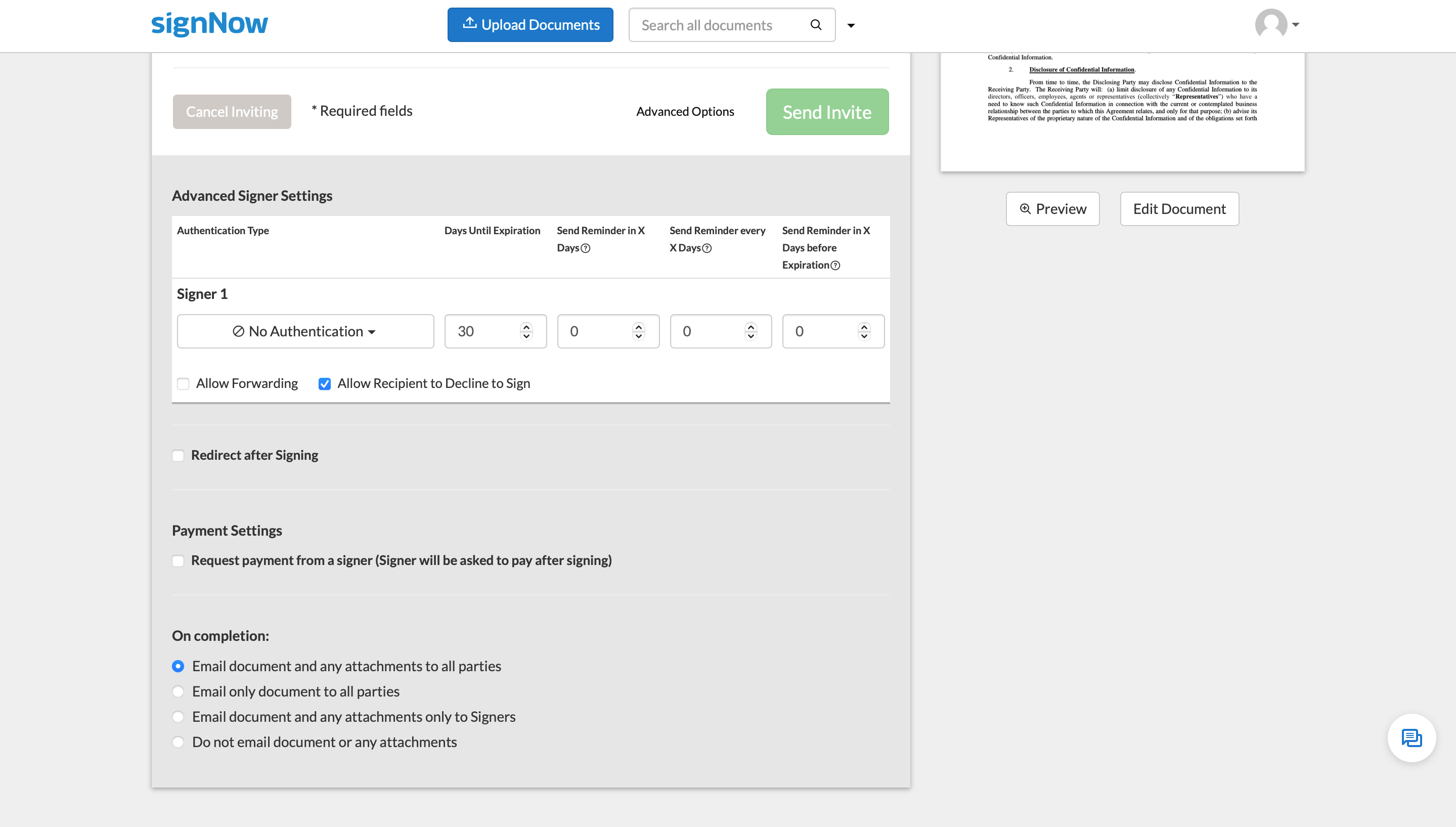
When sending documents for signing, enable the option for recipients to decline your document instead of signing and submitting it.
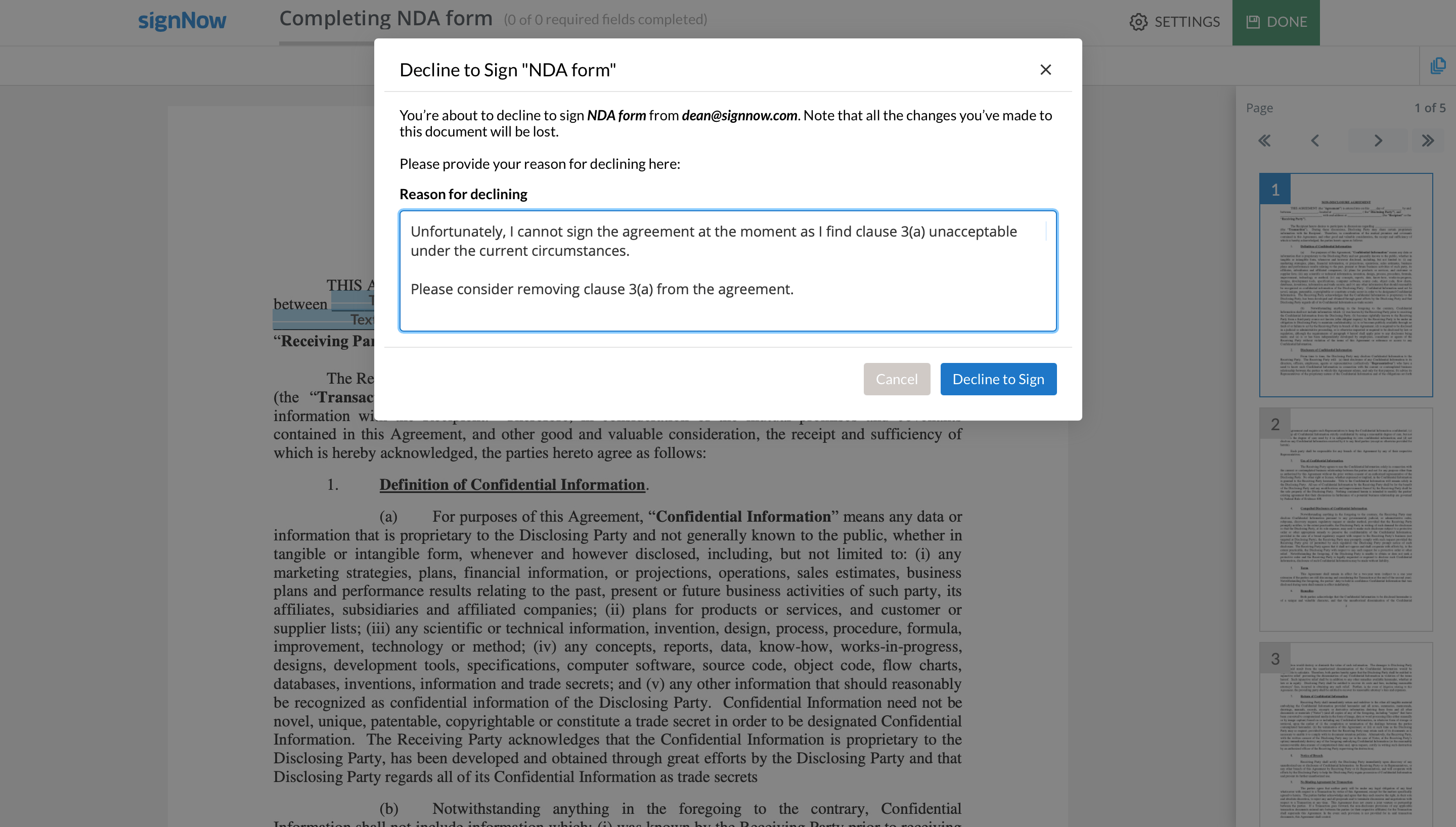
This feature is especially useful during contract negotiations as a recipient can specify reasons for declining and request changes to a document before signing it.
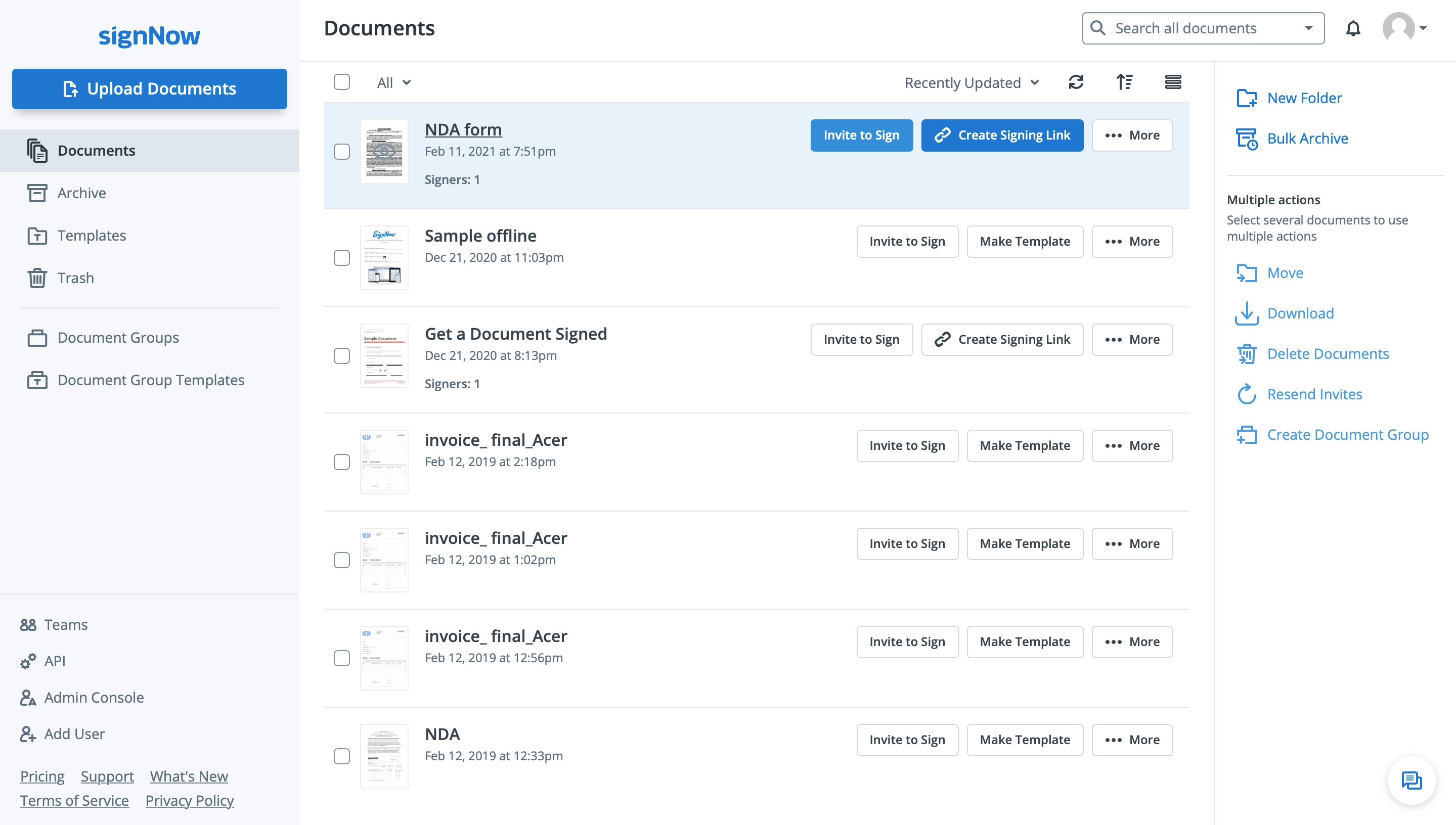
Click the Invite to Sign button next to the name of the document you want to send for signing.
After adding a recipient’s email address, click Advanced Options at the bottom of the from-to form.
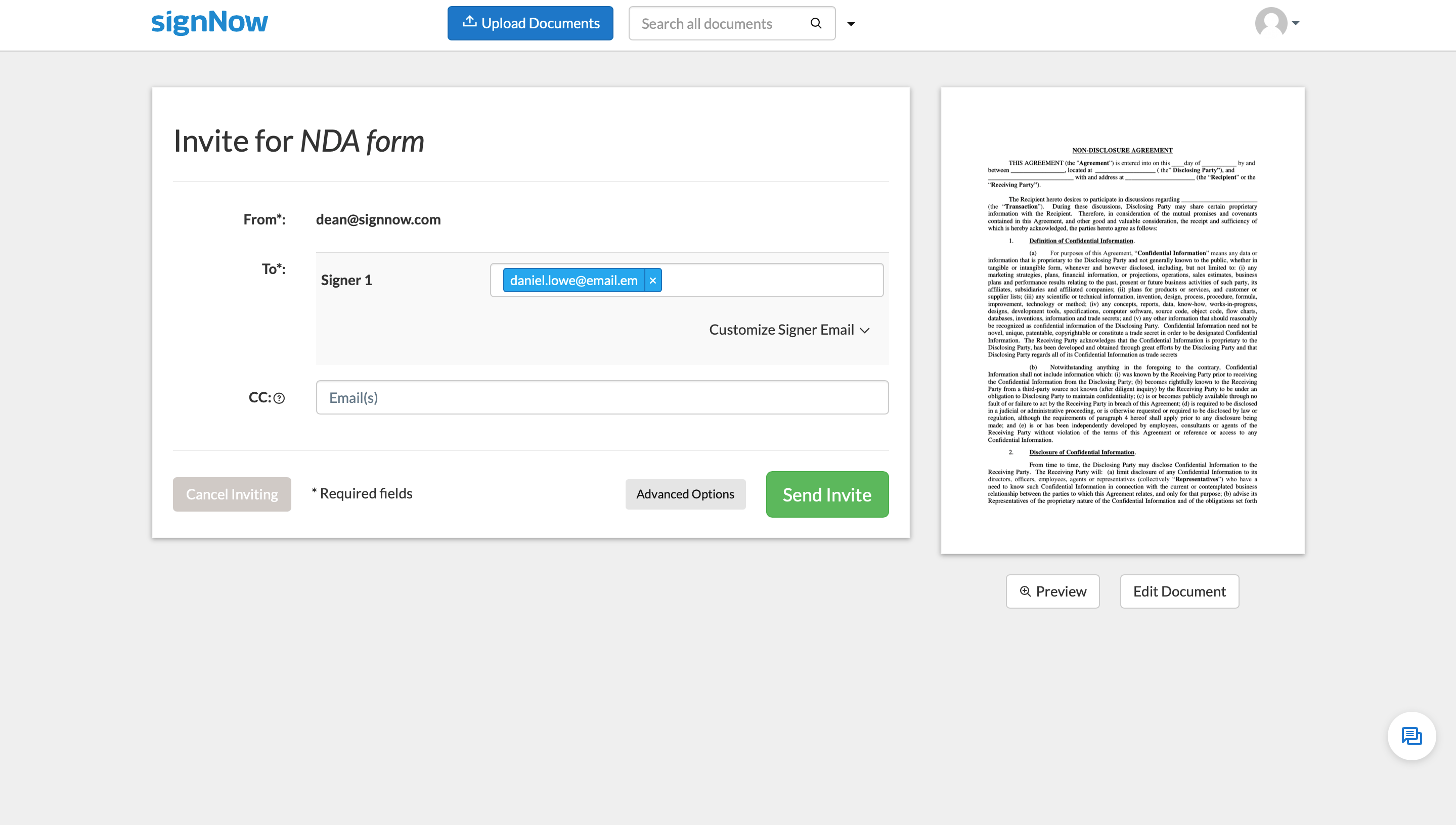
Below the Advanced Signer Settings table, check the Allow Recipient to Decline to Sign box. Then, click Send Invite.
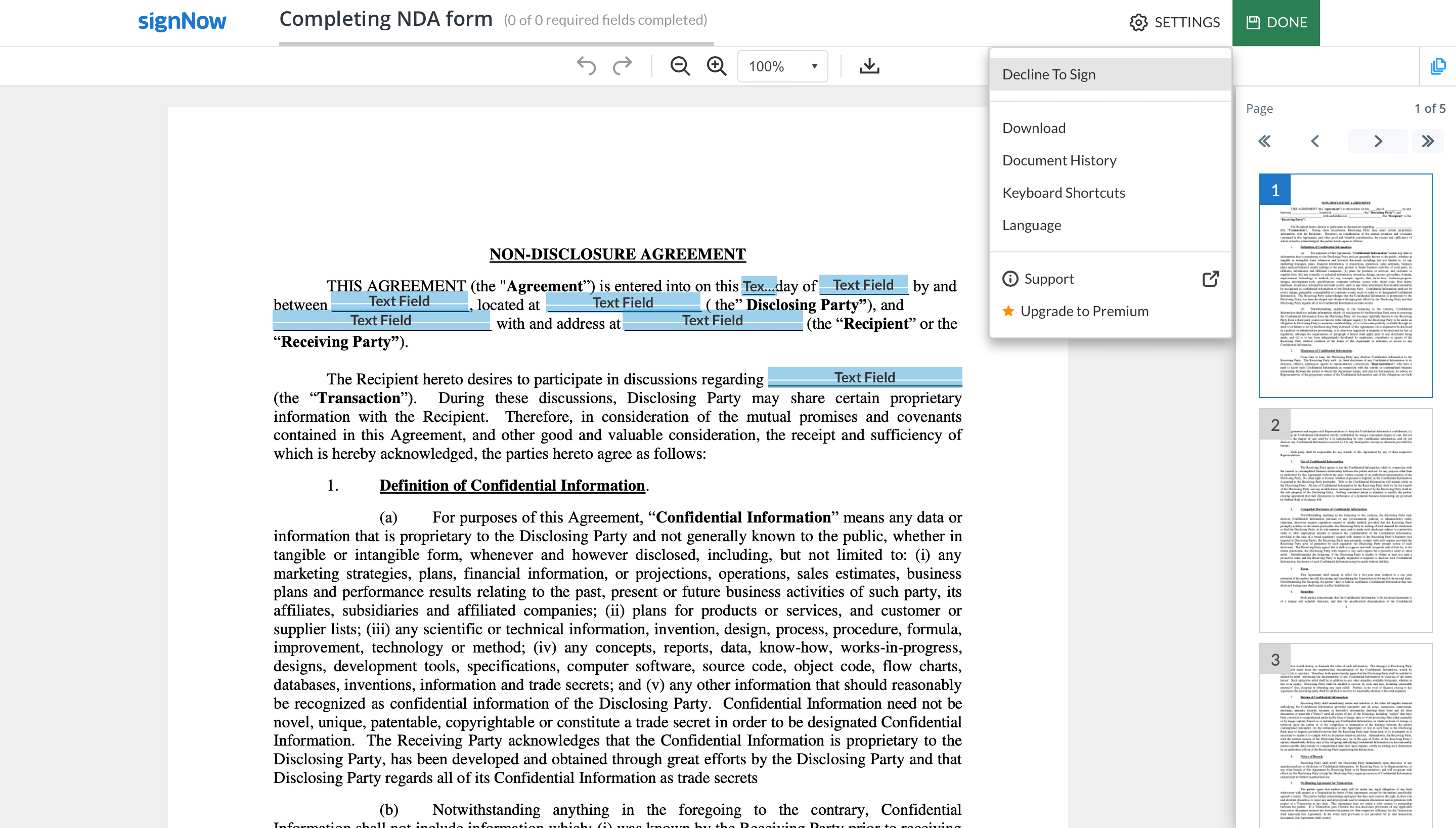
Once your recipient opens the document in the airSlate SignNow editor, they can click Settings toward the top right corner of the screen and then select Decline to Sign.
The recipient will be asked to provide reasons for not signing the document. After declining your invitation, the signer may still revisit the document and sign it anytime before it expires.
If a signer declines your invite, you will receive an instant email notification with the recipient’s reasons for declining. You can then make changes to the document and resend it.