Employee Warning Template for Effective Communication

Streamline your document management with airSlate SignNow's user-friendly eSigning solution. Save time and reduce costs while ensuring compliance and clarity in your employee communications.

Award-winning eSignature solution

What an employee warning template is and why it matters

An employee warning template is a standardized document used to record, communicate, and archive disciplinary actions, performance concerns, or policy violations. Using a consistent template helps organizations document facts, dates, expectations, and corrective steps while reducing ambiguity in HR records. When combined with an eSignature-capable platform that meets U.S. electronic signature laws such as ESIGN and UETA, the template becomes a legally defensible record. Proper templates speed approvals, support audit trails, and help protect employers and employees by ensuring consistent, documented communication of workplace concerns.

Why adopt a formal employee warning template

A formal template standardizes language, preserves evidence, and reduces disagreement about corrective expectations while simplifying HR review and compliance workflows.

Why adopt a formal employee warning template

Common challenges without a template

  • Inconsistent wording across incidents makes comparative review difficult and increases legal risk during disputes.
  • Missing dates or signatures can undermine the validity of disciplinary records in internal investigations.
  • Unclear corrective actions lead to repeated performance issues and weaken progressive discipline processes.
  • Paper-based storage limits searchability, increases physical storage costs, and complicates access for authorized reviewers.

Who prepares and signs these templates

Jamie Li HR

Jamie is a human resources manager responsible for initiating warnings, documenting incidents, and ensuring policy alignment. They draft the notice, review facts with relevant managers, and maintain the employee file in a compliant document repository for audit purposes.

Carlos Kim Supervisor

Carlos is a front-line supervisor who documents performance issues, requests signatures during review meetings, and follows the template guidance to set measurable corrective actions and timelines before returning the completed form to HR.

Teams that typically use employee warning templates

HR professionals, managers, and compliance officers rely on consistent templates to document incidents and next steps clearly.

  • Human Resources teams handling policy enforcement and personnel records management.
  • Line managers needing an auditable record of performance conversations and corrective actions.
  • Legal and compliance staff reviewing disciplinary patterns and supporting investigations.

Standard templates ensure clarity across stakeholders and make it easier to escalate, archive, or reference disciplinary records when needed.

Essential features for a practical employee warning template solution

Choose tools and template features that support clarity, auditability, and integration with HR operations.

Template Library

Centralized templates with role-based access and version control let HR maintain approved language and ensure managers use consistent documents.


Field validation

Required fields and dropdowns reduce incomplete forms and standardize incident descriptions and disciplinary categorizations.

eSignature

Legally recognized electronic signatures capture consent and acknowledgment with time-stamped verification compliant with ESIGN and UETA.

Audit trail

Immutable logs record each action, signer identity, IP details, and timestamps for reliable post-incident review.

Retention rules

Automated retention and disposal policies apply corporate and legal retention schedules to disciplinary records.

Access controls

Granular permissions let HR, managers, and legal see only appropriate information, reducing exposure of sensitive details.

be ready to get more

Choose a better solution

Integrations that make templates practical

Connect employee warning templates to common document and business systems to reduce data entry and keep records synchronized across platforms.

Google Docs

Two-way integration lets HR draft a warning in Google Docs and push the final document to an eSignature workflow while preserving the original file and version history for internal review.

CRM integration

Link templates to CRM records so sales or service managers can attach warnings to employee profiles and maintain action history alongside performance metrics.

Dropbox

Automated storage moves signed templates into designated Dropbox folders with consistent naming and retention labels, simplifying long-term archive and access control.

HRIS and Payroll

Integration with HRIS systems syncs employee identifiers, populates template fields automatically, and ensures disciplinary records are visible where authorized HR workflows require them.
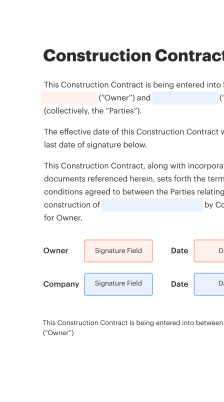
How digital signing streamlines the template workflow

A small sequence of actions moves a warning from draft to an auditable record when using an eSignature platform integrated with HR systems.

  • Create draft: Populate template fields with incident details.
  • Route for signatures: Assign signer roles and notification order.
  • Sign electronically: Employee and manager confirm via secure signature.
  • Save and audit: Record stored with timestamp and activity log.
Collect signatures
24x
faster
Reduce costs by
$30
per document
Save up to
40h
per employee / month

Quick setup: issuing an employee warning

Follow these four practical steps to prepare, present, and store a compliant employee warning using a digital template.

  • 01
    Gather facts: Collect dates, witnesses, and supporting evidence.
  • 02
    Complete template: Fill incident description, corrective action, and deadlines.
  • 03
    Obtain acknowledgement: Have employee and manager sign and date.
  • 04
    Archive record: Store in secure HR repository with retention rules.

Maintaining an audit-ready warning record

Follow these steps to ensure every issued warning creates a verifiable audit trail and remains retrievable for review.

01

Capture metadata:

Record incident date and reporter details.
02

Signatures:

Collect manager and employee signatures.
03

Timestamping:

Ensure recorded timestamps for all actions.
04

Access log:

Retain logs of document views and downloads.
05

Version history:

Keep prior drafts and edits archived.
06

Export options:

Enable secure PDF export for legal review.
be ready to get more

Why choose airSlate SignNow

  • Free 7-day trial. Choose the plan you need and try it risk-free.
  • Honest pricing for full-featured plans. airSlate SignNow offers subscription plans with no overages or hidden fees at renewal.
  • Enterprise-grade security. airSlate SignNow helps you comply with global security standards.
illustrations signature

Suggested workflow configuration for sending warning templates

These recommended settings streamline distribution, reminders, and recordkeeping when issuing an employee warning using an eSignature platform.

Feature Configuration
Signing order Sequential signer flow
Reminder Frequency 48 hours
Expiration window 14 days
Require ID verification Optional two-factor
Retention tag 7 years

Device and browser requirements for filling and signing templates

Employee warning templates should be accessible on modern devices to ensure signatures and acknowledgements can be gathered promptly.

  • Desktop browsers: Chrome, Edge, Safari supported
  • Mobile platforms: iOS and Android apps available
  • PDF viewers: Native and cloud viewers supported

Verify that all users have updated browsers or the provider’s mobile app installed; ensure corporate devices allow TLS connections and that single sign-on is configured for ease of access and proper authentication.

Security controls for warning templates

Encryption at rest: AES-256 encryption
Encryption in transit: TLS 1.2+ secure transport
Access controls: Role-based permissions
Authentication: Multi-factor options
Audit logs: Immutable activity records
Document retention: Configurable policies

Industry use cases for employee warning templates

Different sectors adapt templates to meet regulatory or operational needs; the structure remains useful across HR, healthcare, retail, and education environments.

Healthcare compliance

A hospital used a standardized warning template to document repeated timekeeping violations by a staff nurse.

  • Template captured dates, witness notes, and required corrective steps.
  • This ensured clear expectations and traceability for HR reviews.

Resulting in improved adherence and a documented record supporting later staffing decisions.

Retail performance

A retail chain applied a template for point-of-sale offenses affecting cash handling.

  • The template included incident details and required remedial training.
  • Managers could link follow-up actions to training completion.

Leading to measurable reduction in repeat incidents and clearer disciplinary pathways.

Best practices for accurate, defensible employee warning templates

Apply consistent processes and clear documentation to protect both the organization and the employee while ensuring the template supports fairness and compliance objectives.

Record objective facts and avoid opinions
Describe behaviors, dates, and outcomes rather than character judgments; include witness names and documented evidence to support each factual statement for transparency and legal defensibility.
Specify corrective actions with measurable timelines
Define improvement metrics, training requirements, and exact deadlines so employees and managers share a common understanding of expectations and next review dates.
Use version-controlled templates and approvals
Maintain a template library with change history and approval workflows so all warnings use the current policy language and historical changes are traceable for audits.
Protect confidentiality and limit access
Restrict access to disciplinary records to authorized HR and legal personnel, apply encryption, and log all access events to reduce risk of improper disclosure.

FAQs About employee warning template

Answers to common questions about preparing, signing, and storing employee warning templates using a compliant digital process.

Feature availability comparison: signNow and leading alternatives

A concise comparison of core capabilities relevant to issuing and managing employee warning templates across three providers.

Criteria signNow (Recommended) DocuSign Adobe Sign
ESIGN & UETA compliance
Audit trail detail Comprehensive Comprehensive Comprehensive
Bulk Send capability
HIPAA support options Available Available Available
be ready to get more

Get legally-binding signatures now!

Risks when templates or processes are inadequate

Evidence gaps: Weakened legal standing
Noncompliance exposure: Regulatory penalties possible
Inconsistent discipline: Claims of unfair treatment
Data breaches: Confidentiality loss
Retention errors: Policy violations
Operational delays: Slower resolution times

Pricing and deployment comparison across providers

High-level overview of deployment and pricing approaches to compare operational fit for HR teams managing employee warning templates.

Feature signNow (Recommended) DocuSign Adobe Sign PandaDoc Dropbox Sign
Deployment options Cloud and self-hosted enterprise Cloud with enterprise options Cloud and enterprise solutions Cloud-first with integrations Cloud with Dropbox integration
API access REST API with SDKs Comprehensive API and developer tools Robust APIs with Adobe integrations Developer API focused on sales workflows Simple API for document workflows
Templates and automation Template library and document merge tools Advanced templates and lifecycle workflows Template management integrated with Adobe tools Sales document automation and templates Basic templates plus Dropbox storage
Enterprise security SSO, SOC compliance, and configurable retention Enterprise-grade security and compliance controls Enterprise security with Adobe controls SSO and enterprise controls available SSO and standard enterprise protections
Typical customer fit Cost-effective for SMBs and mid-market legal/compliance needs Large enterprises with broad integrations Organizations using Adobe ecosystem Sales teams needing document automation Teams using Dropbox for content storage

Understanding the Employee Warning Template

An employee warning template serves as a formal document used by employers to address performance issues or behavioral concerns with an employee. This template outlines the specific issues, provides context, and sets expectations for improvement. Utilizing a structured template helps ensure consistency and clarity in communication, which is vital for maintaining a professional workplace environment.

Key Components of an Employee Warning Template

When creating an employee warning template, it is important to include several key components to ensure that the document is comprehensive and effective:

  • Employee Information: Include the employee's name, job title, and department to personalize the document.
  • Date of Warning: Clearly state the date when the warning is issued to establish a timeline.
  • Nature of the Warning: Specify the reason for the warning, whether it is related to performance, conduct, or attendance.
  • Specific Examples: Provide concrete examples of the behavior or performance issues to avoid ambiguity.
  • Expected Improvements: Outline clear expectations for improvement and any deadlines for achieving these goals.
  • Consequences of Non-Compliance: Explain the potential consequences if the issues are not resolved, which may include further disciplinary action.
  • Signatures: Include space for both the employee and supervisor to sign, acknowledging receipt of the warning.

How to Customize the Employee Warning Template

Customizing the employee warning template to fit specific situations can enhance its effectiveness. Here are some tips for tailoring the template:

  • Adjust Language: Use language that reflects the company culture while remaining professional and respectful.
  • Include Company Policies: Reference relevant company policies or procedures that relate to the warning to provide context.
  • Specify Support Resources: Offer information about resources available to the employee, such as training or counseling services.
  • Set Follow-Up Dates: Include a date for a follow-up meeting to discuss progress, reinforcing the commitment to improvement.

Utilizing the Employee Warning Template in Digital Workflows

Using an employee warning template within a digital document management system can streamline the process significantly. With airSlate SignNow, users can:

  • Prepare and Send: Quickly prepare the warning document and send it electronically for review and signature.
  • Edit and Sign: Make necessary edits to the template and enable eSigning to ensure a swift and secure process.
  • Store and Share: Safely store completed documents in the cloud, making them easily accessible for future reference.

Common Scenarios for Issuing an Employee Warning

There are several scenarios in which an employee warning may be appropriate. These include:

  • Poor Performance: When an employee consistently fails to meet performance standards despite feedback and support.
  • Inappropriate Behavior: Instances of unprofessional conduct that disrupt the workplace or violate company policies.
  • Excessive Absenteeism: When an employee has a pattern of unexcused absences that affects team productivity.
  • Failure to Follow Procedures: Situations where an employee does not adhere to established protocols, leading to operational issues.

Best Practices for Delivering an Employee Warning

Delivering an employee warning should be handled with care to maintain respect and professionalism. Consider these best practices:


  • Choose the Right Setting: Conduct the meeting in a private space to ensure confidentiality and minimize embarrassment.
  • Be Clear and Direct: Clearly communicate the issues at hand without being confrontational, focusing on facts rather than emotions.
  • Listen Actively: Allow the employee to express their perspective, showing that their input is valued.
  • Document the Discussion: Keep a record of the meeting and any agreements made for future reference.
walmart logo
exonMobil logo
apple logo
comcast logo
facebook logo
FedEx logo
be ready to get more

Get legally-binding signatures now!