Template Library
Reusable role-based templates let administrators bake delegation rules into standard documents, reducing configuration errors and ensuring required fields and constraints persist across repeated transactions.




Enable faster execution when recipients need to delegate signatures, reduce bottlenecks for distributed teams, and maintain control through configurable delegation rules and audit logs to preserve legal validity and accountability.

A procurement manager often initiates purchase orders and may delegate final signature to an authorized finance approver; delegation preserves approval intent while ensuring the designated signer meets spend authority limits and receives required fields.
Field agents gather on-site approvals and may assign signed documents to supervisors or regional managers; clear delegation rules ensure the replacing signer is authenticated and that location-specific fields are completed before finalization.
Teams with distributed responsibilities and role-based approvals commonly enable the let your addressee assign signer option to simplify workflow handoffs.
Organizations select this feature to balance flexibility with control, allowing delegation while preserving traceability and policy enforcement across signature processes.
Reusable role-based templates let administrators bake delegation rules into standard documents, reducing configuration errors and ensuring required fields and constraints persist across repeated transactions.
Configurable alerts inform senders and stakeholders when a recipient delegates, when a delegate signs, and when verification succeeds or fails, keeping the workflow transparent.
Granular role definitions let administrators map responsibilities and signing authority so delegated signers automatically inherit the correct field access and signing permissions.
Webhooks and API callbacks report delegation events to downstream systems for real-time tracking, integration with CRMs, and automated record updates.
Routing rules and conditional steps trigger additional approvals or verification when certain delegates are chosen, enforcing extra checks for sensitive transactions.
Built-in controls support common U.S. regulatory needs and preserve audit evidence to align with ESIGN, UETA, HIPAA, and sector-specific requirements when delegations occur.
Sender-configurable rules that restrict who a recipient may designate as signer, including role-based constraints, domain restrictions, and whitelist options to ensure only authorized individuals can be selected.
Assign signature and data fields to roles rather than named individuals so that delegated signers assume appropriate responsibility and fields remain properly mapped regardless of who ultimately signs.
A full, timestamped audit trail captures delegation requests, approvals, authentication events, and final signatures, preserving evidence of intent and every action taken during the delegation workflow.
Automatic routing rules trigger when recipients assign signers, allowing follow-up approvals, extra verification steps, or escalation paths based on the delegate chosen.
| Setting Name | Configuration |
|---|---|
| Delegate allowed | Enabled |
| Delegate restrictions | Domain whitelist |
| Reminder Frequency | 48 hours |
| Expiration Settings | 30 days |
| Authentication Level | Two-factor |
Delegation flows function across modern desktop and mobile environments but require up-to-date browsers or the vendor's mobile app for full feature parity.
For complex authentication or advanced delegation controls, using the vendor's native mobile app or a supported desktop browser ensures the best experience and access to multi-factor prompts, identity verification flows, and complete audit capture during the delegation process.
A clinical coordinator receives consent forms and designates an on-call physician to sign
Resulting in faster patient processing and preserved HIPAA-compliant audit trails.
A site manager receives a change order and assigns a regional project manager to authorize it
Leading to timely approvals with an auditable chain for contract records.
| Criteria | signNow (Recommended) | DocuSign | Adobe Sign |
|---|---|---|---|
| Recipient Delegation | Limited | ||
| Advanced Authentication | MFA options | MFA options | MFA options |
| Mobile Signing Support | |||
| Audit Trail Detail | Full event log | Full event log | Full event log |
| Plan | signNow (Recommended) | DocuSign | Adobe Sign | PandaDoc | HelloSign |
|---|---|---|---|---|---|
| Starting price per user | $8/user/month | $10/user/month | $9.99/user/month | $19/user/month | $15/user/month |
| Free plan available | No free tier | Trial only | Trial only | Free tier available | Trial available |
| API access included | Available on paid plans | Available paid | Available paid | Available paid | Available paid |
| Enterprise options | Custom enterprise plans | Enterprise plans | Enterprise plans | Enterprise plans | Enterprise plans |
| Support level | Email and phone support | Email support | Email and phone | Priority support | Email support |
PowerForms allows you to streamline the signing process by authorizing recipients to set signers for your document. PowerForms come in handy if you have a signing process with multiple signers and you must sign a document on the last step, as the final approver.
Common use case: A CFO needs to sign all supplier contracts. A CFO creates a PowerForm for a supplier contract and shares it with department sales managers. Sales managers review or sign the contract and send it to the suppliers. Once a supplier has signed the contract, it is sent to the CFO for final approval.
Note: PowerForms only works with templates and must have at least three assigned roles. To share a PowerForm, the sender generates a signing link to the document.
Choose the document you need to send and open it in the airSlate SignNow editor where you can prepare it for signing.
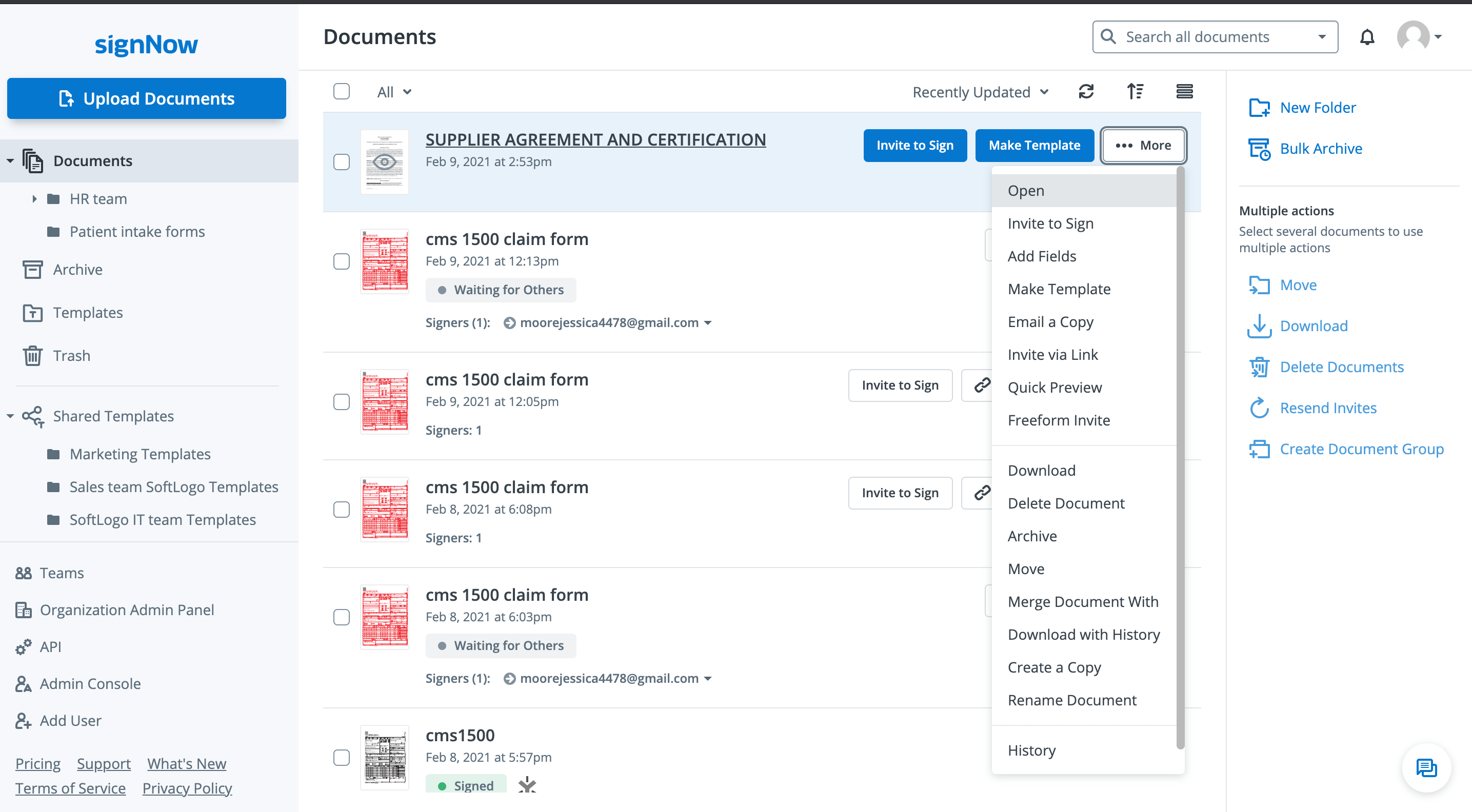
Click Edit Signers to create signing roles and set up a signing order. For the last signer, click the dropdown in the email field and check Signer is Sender. Leave email fields of other signers empty.
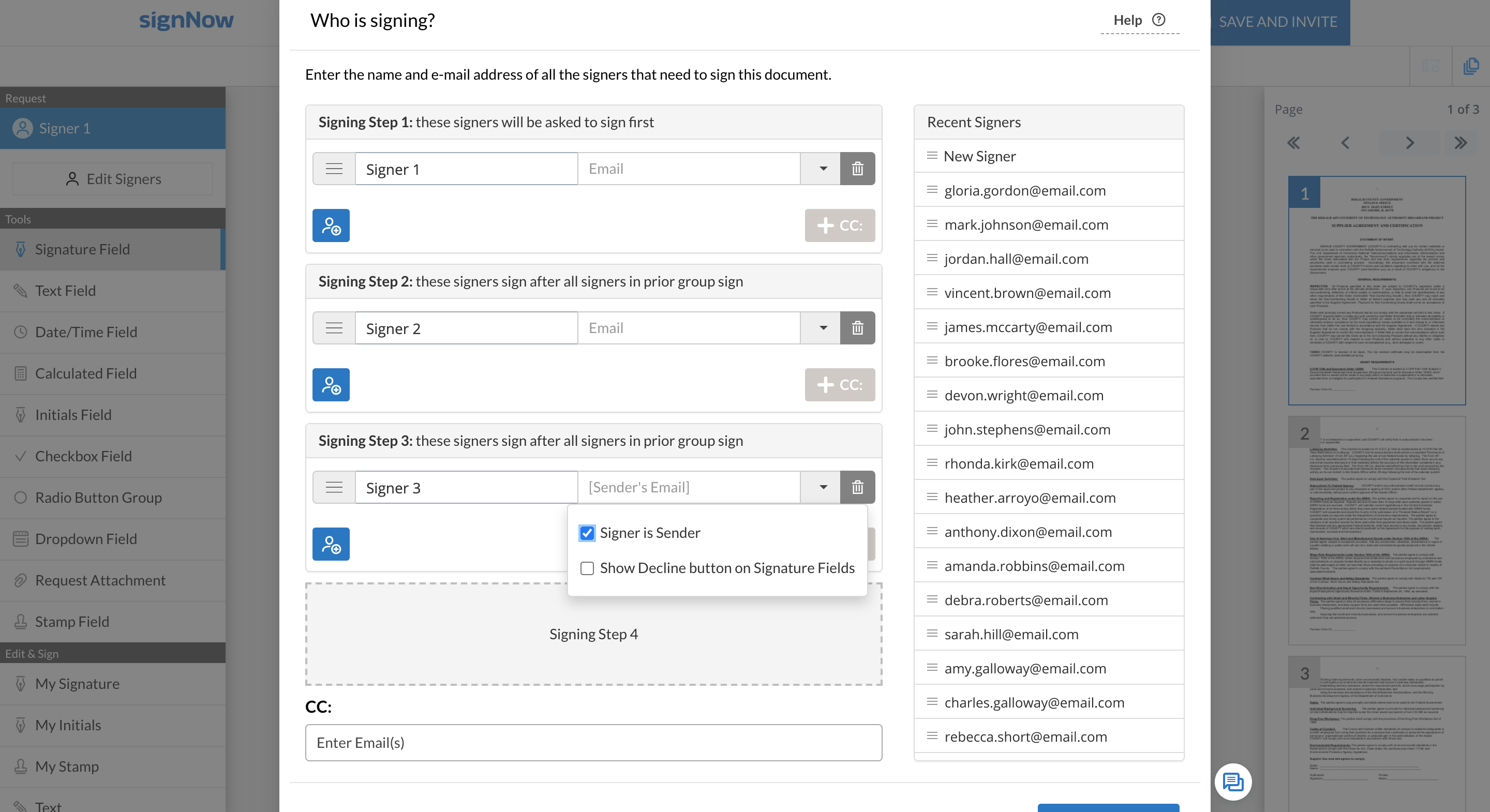
Add fillable fields to the document, assign fields to roles, set up conditions, etc. Make the signing process smooth and easy for recipients.
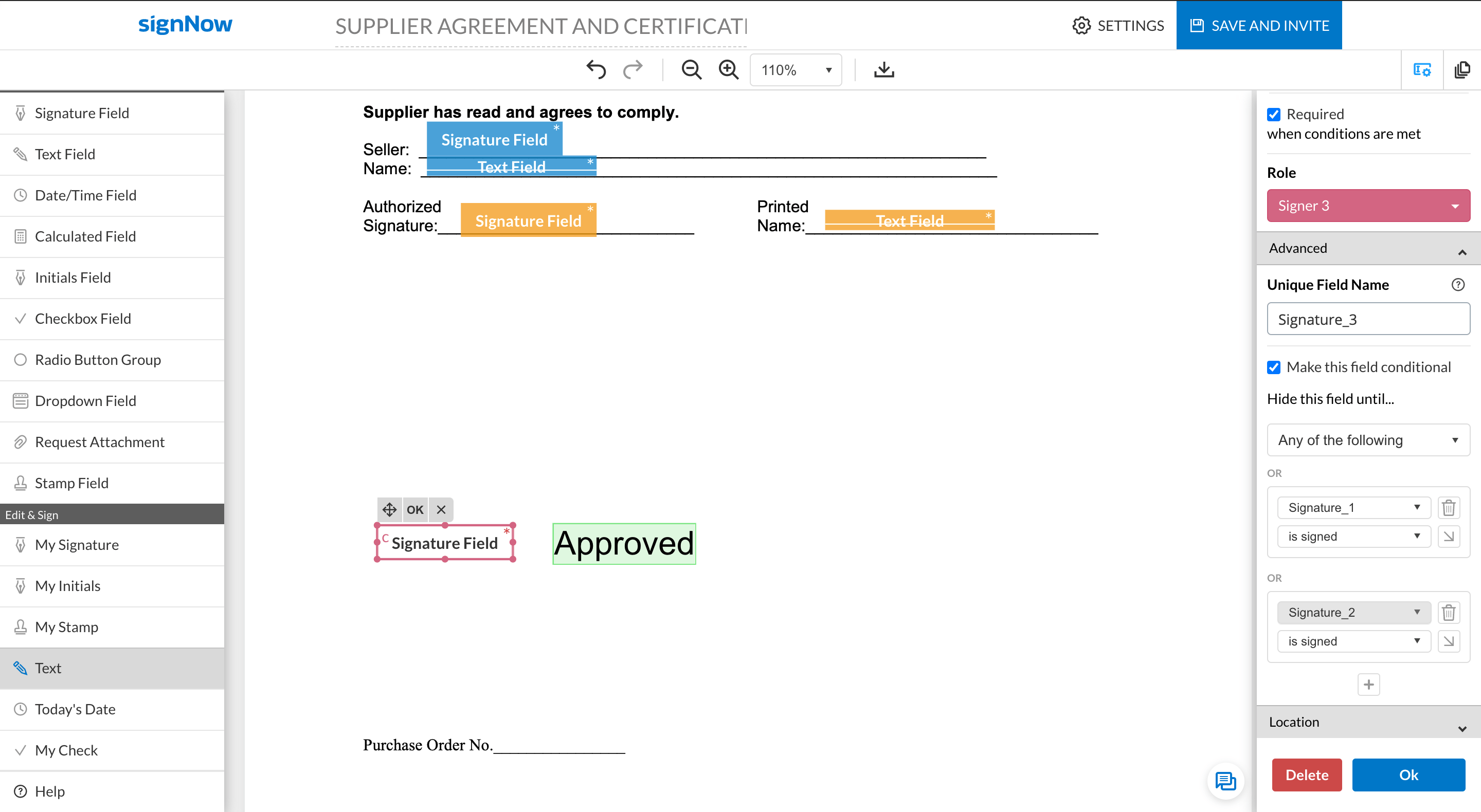
Click SAVE AND CLOSE to save changes to your document. Select the edited document and click Make Template.
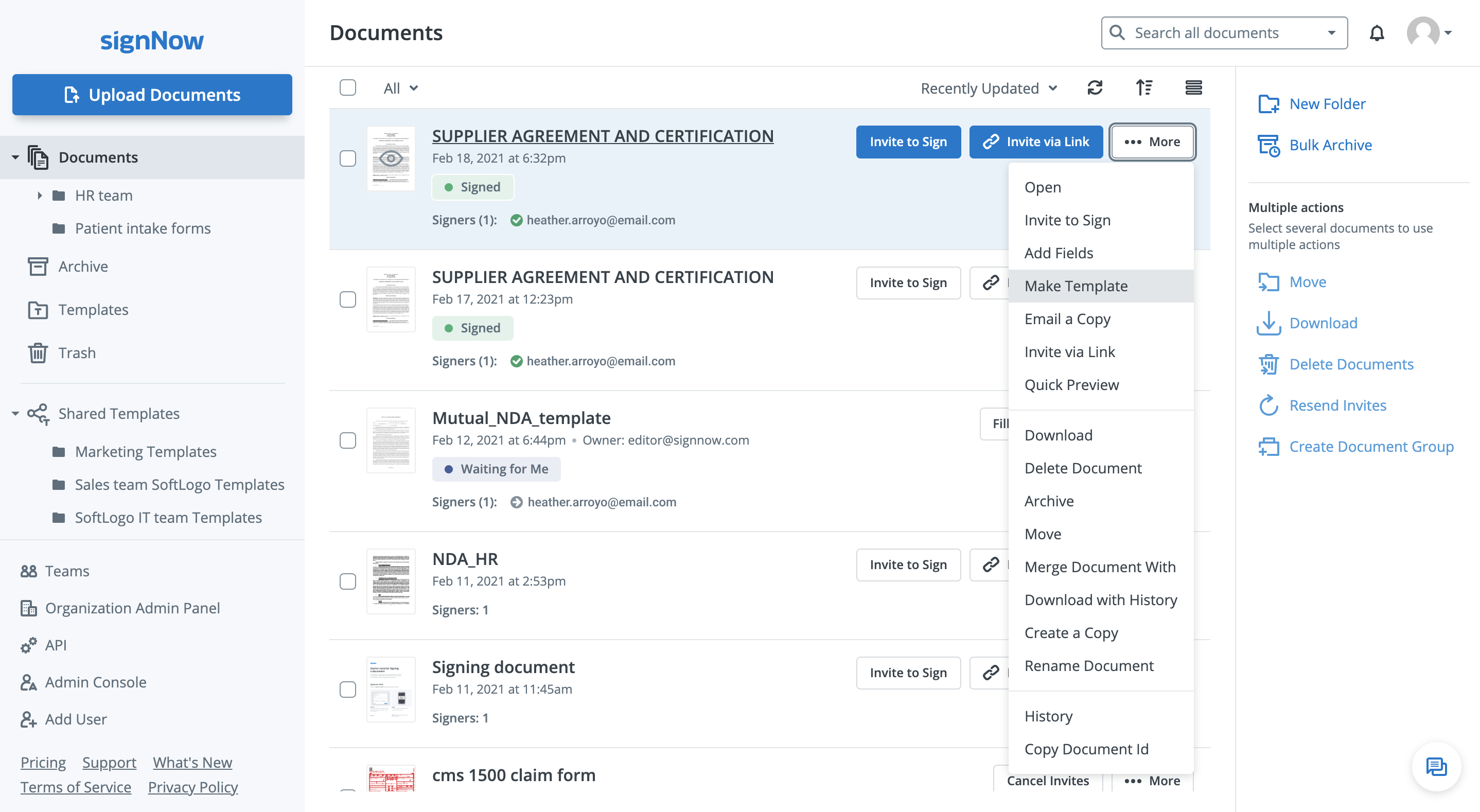
Select the newly created template and click Invite via Link to create a signing link to your document. Check Recipient will guest sign via signing step 1 to allow the first recipient to sign a document.
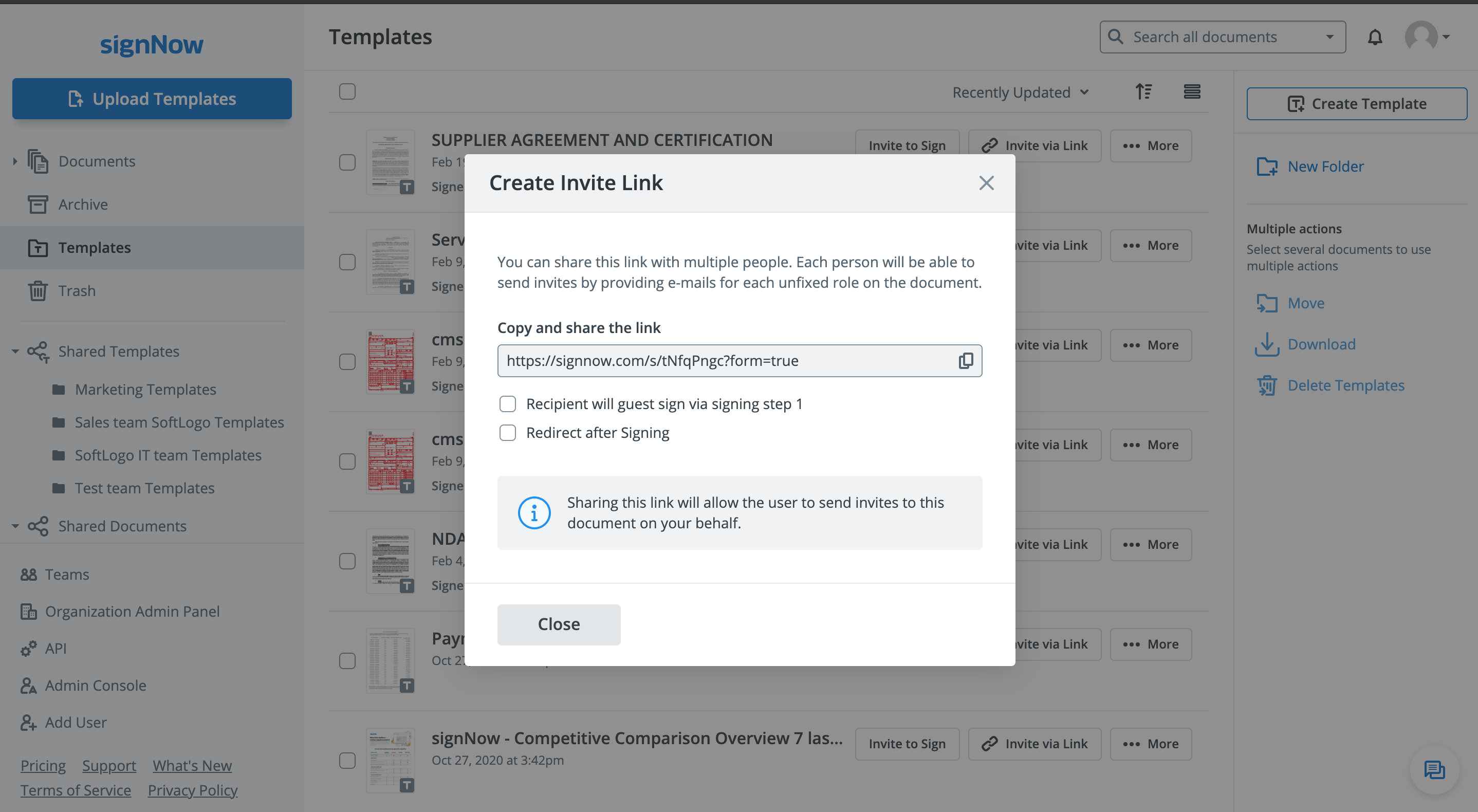
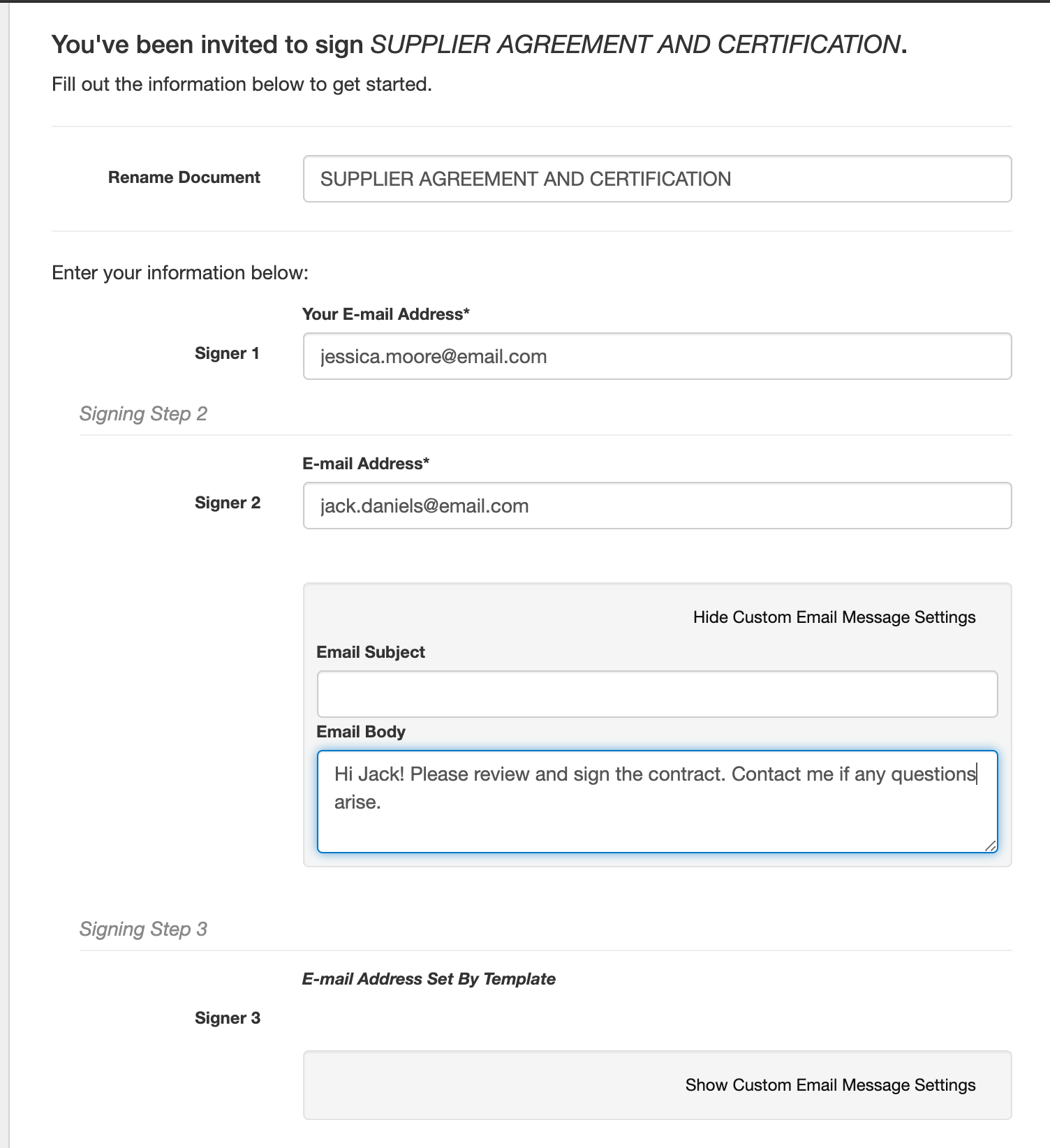
Share the link to your document with as many people as you need. They can easily customize the signature invite and add the emails of the next signers.
Once all signers have signed the document, the document sender can fill out and sign it right in their airSlate SignNow account.
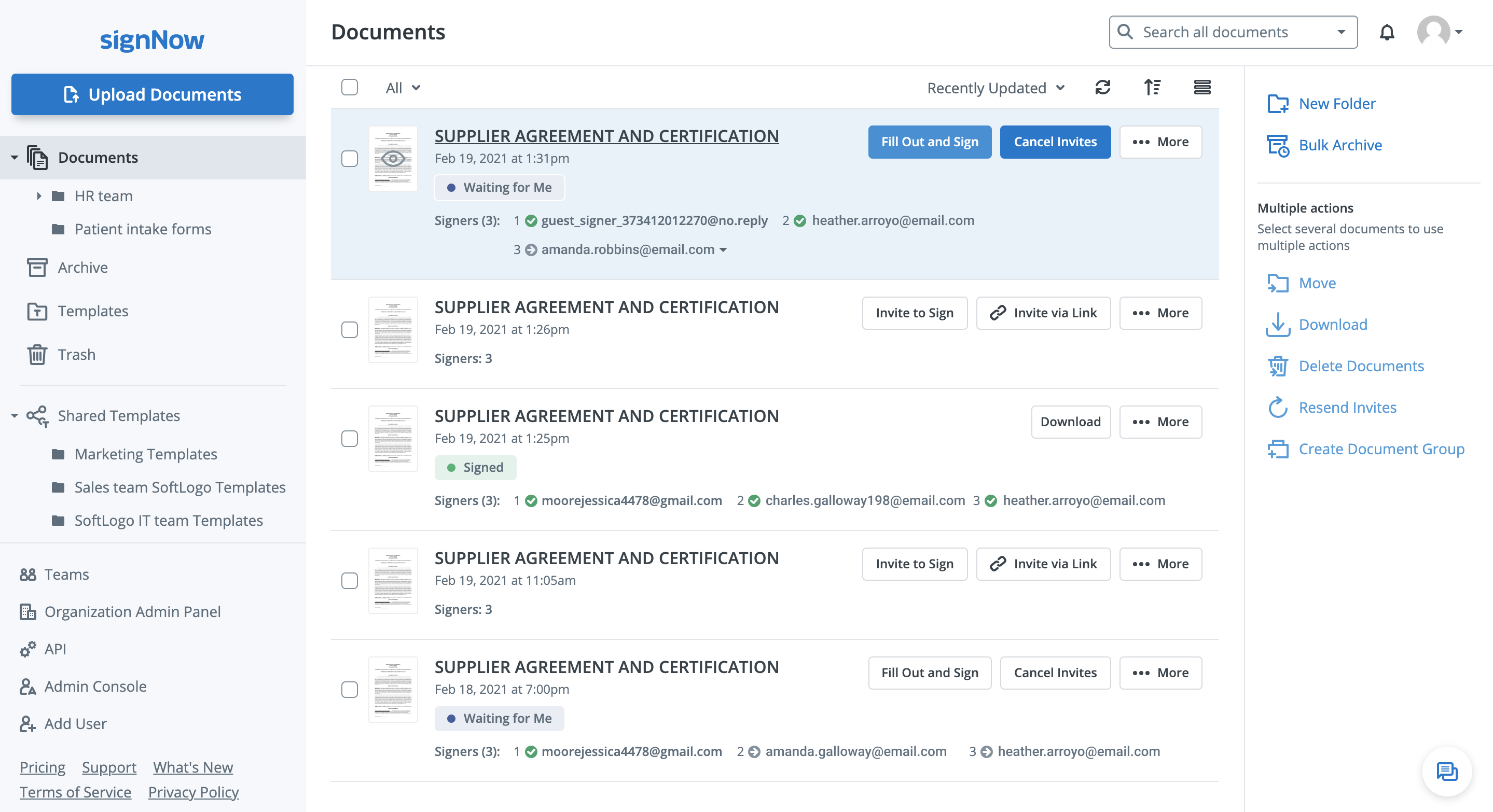
That’s it, your document will be signed and securely stored in your account.