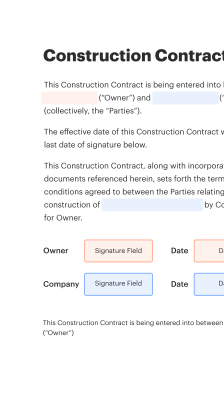
Scan E Signature with SignNow for Secure Compliance

Eliminate paper and improve digital document managing for increased productivity and countless opportunities. Discover the perfect strategy for doing business with airSlate SignNow.

Award-winning eSignature solution

What scan e signature means and how it works

A scan e signature is a digital representation of a handwritten signature captured from a scanned image or an electronic input and applied to a document to indicate approval. In practice, it can mean scanning a physical signature and converting it into an image or creating an electronic signature directly on a touchscreen or within an eSignature service. For many U.S. business and government uses, a scan e signature combined with proper intent and audit evidence is accepted for routine agreements under ESIGN and UETA, provided the signing process and records meet legal and organizational requirements.

Why scan e signature is useful for modern workflows

Scan e signature reduces turnaround time and paper handling while enabling remote approvals and consistent recordkeeping across teams and offices.

Why scan e signature is useful for modern workflows

Common challenges when adopting scan e signature

  • Ensuring the scanned signature image is clear and high resolution to avoid disputes or authentication issues later.
  • Linking the scanned signature to signer identity and intent in a legally defensible audit trail can require additional controls.
  • Managing version control when signed documents are edited post-signature can create validity and chain-of-custody concerns.
  • Complying with regulated-data requirements (HIPAA, FERPA) requires secure storage and role-based access across systems.

Typical user profiles for scan e signature

Small Business Owner

A small business owner often needs a simple, reliable method to capture signed agreements with vendors and clients remotely. They typically value straightforward templates, basic authentication, and clear audit records to demonstrate consent without complex IT support or enterprise integrations.

Compliance Officer

A compliance officer evaluates signature methods for legal sufficiency and data protection. They require auditable trails, configurable retention policies, access controls, and the ability to demonstrate adherence to ESIGN, UETA, and applicable sector regulations such as HIPAA or FERPA.

Organizations and roles that commonly use scan e signature

Many small businesses, healthcare providers, educational institutions, and enterprise teams use scan e signature to speed approvals and reduce paper handling.

  • Sales teams processing contracts and quotes across distributed customers and internal approvers.
  • HR departments collecting new-hire paperwork and internal acknowledgements from remote employees.
  • Healthcare administrators managing intake forms and provider agreements under privacy requirements.

Adoption is practical where electronic acceptance and reliable recordkeeping meet policy and regulatory obligations.

Six security and usability features relevant to scan e signature

These capabilities balance the convenience of scanned signatures with the controls needed for secure, auditable document processing.

Image hygiene

Automatic image normalization and compression that preserves legibility while removing extraneous background pixels and ensuring consistent rendering across file types and viewers.

Field locking

Lock signature fields after signing so the signature image cannot be moved or replaced without generating a new signed version and audit entry.

Metadata capture

Attach signer email, IP address, and timestamp metadata to the document to link the scanned signature to verifiable signing actions.

Optional digital seals

Combine scanned signatures with optional digital seals or certificates for higher-assurance transactions requiring cryptographic evidence of document integrity.

Access controls

Enforce role-based permissions and two-step approver flows to restrict who may upload or apply scanned signature images to official documents.

Compliance modes

Configurable settings to meet sector rules such as HIPAA or FERPA, including audit retention and restricted export options for protected records.

be ready to get more

Choose a better solution

Four useful tools to support scan e signature workflows

These features help teams use scanned signatures reliably while maintaining compliance and consistent document handling across platforms.

Template library

Centralized templates let teams insert signature images into predefined fields while preserving formatting and required metadata, reducing repetitive setup and ensuring consistent placement across contracting documents.

Bulk Send

Bulk Send enables the same signed document to be issued to many recipients with unique metadata for each recipient, streamlining mass agreements while maintaining individual audit records for compliance.

Role-based signing

Assign signer roles and access levels so scanned signatures are applied only by authorized users and each signed file includes an auditable link between signer identity and signature instance.

Audit history

Detailed logs capture signer email, IP address, timestamps, and actions taken during signing, supporting legal defensibility and internal review without exposing raw credential data.

Typical signing flow for a scan e signature

An overview of the common steps involved when a scanned signature is used in an electronic signing process.

  • Document upload: Upload file to the eSignature platform
  • Signature placement: Add scanned image or drawing field
  • Signer verification: Confirm identity via email or SMS
  • Execution record: Store audit trail and final PDF
Collect signatures
24x
faster
Reduce costs by
$30
per document
Save up to
40h
per employee / month

Quick setup: prepare a document for a scan e signature

Follow these basic steps to prepare and apply a scanned signature to a document while preserving clear records of the transaction.

  • 01
    Scan signature: Capture high-resolution signature image
  • 02
    Clean image: Crop and remove background artifacts
  • 03
    Insert image: Place signature image in document
  • 04
    Record details: Add signer metadata and timestamp

Audit trail checklist for scan e signature transactions

An audit trail should record essential elements that support legal validity and operational traceability for scanned signatures.

01

Signer identity:

Email address and verification
02

Timestamp:

Exact signing time
03

IP address:

Network origin
04

Document hash:

Integrity verification
05

Signature image:

Embedded image reference
06

Action log:

Uploads, edits, and exports
be ready to get more

Why choose airSlate SignNow

  • Free 7-day trial. Choose the plan you need and try it risk-free.
  • Honest pricing for full-featured plans. airSlate SignNow offers subscription plans with no overages or hidden fees at renewal.
  • Enterprise-grade security. airSlate SignNow helps you comply with global security standards.
illustrations signature

Configuration checklist for automated scan e signature workflows

Recommended workflow settings ensure repeatable behavior, security, and consistent records when scanned signatures are used across teams.

Feature Configuration
Reminder Frequency 48 hours
Signature Field Locking Enabled
Retention Policy 7 years
Authentication Mode Email + SMS
Export Format PDF/A for archival

Device and browser requirements for reliable scan e signature use

Ensure devices and browsers meet minimum standards for uploading, rendering, and securely storing documents with scanned signatures.

  • Desktop OS: Windows 10 or macOS 10.14+
  • Browsers: Recent Chrome, Edge, Safari, Firefox
  • Mobile devices: iOS 13+ or Android 9+

For mobile use, prefer native apps where available to streamline image capture, metadata collection, and secure uploads; ensure automatic backups and encryption are enabled to protect signed documents.

Security and authentication features to look for

Encryption: AES-256 at rest
Transport security: TLS encryption in transit
Access control: Role-based permissions
Authentication: Email and password
Advanced auth: SMS or knowledge-based
Audit records: Immutable logs

Practical examples of scan e signature in different sectors

These short case summaries illustrate common implementations of scan e signature across business functions and industries.

Real Estate Transactions

A regional brokerage scanned agent signatures into digital lease forms to enable remote execution and faster move-ins.

  • The platform applied standard identity checks and timestamps.
  • The process reduced turnaround time and centralised signed record storage.

Leading to faster resident onboarding and clearer audit trails for property managers.

University Enrollment Forms

An admissions office scanned counselor signatures for paper recommendation forms and imported them into the student record system.

  • The workflow attached metadata and signer email verification.
  • This maintained FERPA-conscious access controls while simplifying submission processing.

Resulting in consistent records and fewer lost or delayed applicant documents.

Best practices for accurate and secure scan e signature use

Adhering to consistent processes reduces disputes and improves legal standing for documents signed with scanned signatures.

Capture clear signature images
Use high-resolution scans, crop tightly, and remove background noise so the image is clearly attributable and readable when placed on different document templates.
Link signatures to signer identity and intent
Combine the scanned signature with an authentication step, visible signing events, and recorded consent language so the record shows both identity verification and explicit agreement.
Preserve original files and audit logs
Retain unaltered originals and system-generated audit trails in secure storage to provide evidence in disputes or compliance reviews while meeting retention policies.
Limit use for high-risk documents
For transactions requiring higher assurance, supplement scanned signatures with digital certificates or stronger authentication methods to meet regulatory or business risk requirements.

FAQs About scan e signature

Common questions and answers about practical, legal, and technical aspects of using scanned signatures in U.S. workflows.

Quick feature comparison for scan e signature support

A concise comparison of key capabilities across major eSignature providers relevant to scanned signatures.

Criteria signNow (Recommended) DocuSign Adobe Sign
Legal validity in U.S.
Bulk Send capability
API access REST API REST API REST API
HIPAA support option Yes, BAA available Enterprise only Enterprise only
be ready to get more

Get legally-binding signatures now!

Retention and archival timelines to configure

Set clear retention and archival schedules to meet legal, tax, and regulatory requirements when using scanned signatures.

Standard document retention:

7 years typical for many agreements

Health records retention:

Follow HIPAA requirements for medical records

Student records:

Maintain FERPA-compliant timelines

Tax documents:

Retain for IRS-required periods

Archived access window:

Define read-only periods and export options

Legal and operational risks tied to improper use

Invalid consent: Disputed signatures
Data breach: Exposure fines
Noncompliance: Regulatory penalties
Lost records: Evidence gaps
Forgery risk: Authentication failure
Contract disputes: Legal costs

Plans and packaging: how providers structure offerings

An overview of plan names and common packaging features to compare baseline offerings for scanned signature workflows.

Pricing & Offerings signNow (Recommended) DocuSign Adobe Sign HelloSign PandaDoc
Starter plan name Business; Business Premium Personal, Standard Individual Free, Pro Free eSign, Essentials
Free eSignature tier Limited free tier available Free trial only Free trial only Basic free tier Free eSign available
API availability API plans available with paid tiers API on business plans API with paid plans API with business plans API with paid tiers
Team & enterprise options Dedicated plans and enterprise support Enterprise and global support Enterprise SLAs available Business plans with support Enterprise plans available
Document storage policies Cloud storage with export options Storage varies by plan Storage included, limits apply Basic storage included Storage quotas by plan

Simplify challenging workflows

Generate, deliver, and control workflows of any difficulty, electronically from virtually anywhere. Scalable eSignature functionality enable you to exchange contracts with the right people in the proper order and set up roles for every recipient. Perform document workflows faster and simpler than ever before.

Automate document flow

Optimize complex signing processes with airSlate SignNow�s effective features to improve your business. Control your automatic signature workflows to guarantee they're running at top efficiency with fast notifications and reminders.

Enhance in team communication

Join teammates together in a safe, shared workplace. Handle documents, use form templates and notifications to produce more effective cross-company interaction. Relieve your staff from having to hang out on recurring routines so that they can give attention to valuable, business-vital tasks.

Integrate into your existing network

Manage your assignments with market-leading integration. Capture Salesforce, Microsoft Teams, and SharePoint in multi functional business thread. Link your applications to a single environment for unlimited possibilities and more performance.

Remain compliant with best-in-class data safety

Feel confident knowing that your data remains secure by the most recent in encryption security. airSlate SignNow is GDPR and eIDAS compliant and gives you exposure into your signing procedure with court-admissible audit trails. Configure user authorization and roles to control who has access to what.


walmart logo
exonMobil logo
apple logo
comcast logo
facebook logo
FedEx logo
be ready to get more

Get legally-binding signatures now!