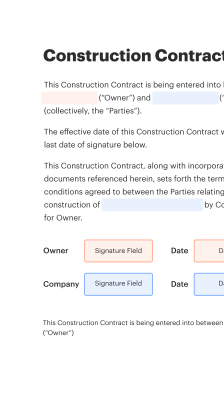
Assigned Signature Block for Secure eSignatures

Get rid of paper and automate digital document managing for more productivity and limitless opportunities. Enjoy the perfect strategy for doing business with airSlate SignNow.

Award-winning eSignature solution

What an assigned signature block means in eSigning

An assigned signature block is a document field explicitly tied to a named signer or role that reserves space for a signature, initials, or other required inputs. In electronic workflows the block ensures the signing obligation is routed to the correct participant, prevents accidental or duplicate signing by others, and can enforce signing order and authentication requirements. Within signNow the assigned signature block maps to a recipient record and audit trail entry, providing a clear connection between the signer identity, the completed signature artifact, and the document metadata recorded for compliance and recordkeeping.

Why assign signature blocks in your documents

Assigning signature blocks reduces signing errors, clarifies signer responsibility, and improves downstream document validity while fitting standard eSignature workflows and audit needs.

Why assign signature blocks in your documents

Common challenges when using assigned signature blocks

  • Incorrect recipient assignment can delay approvals and require document reissuance, disrupting workflows and tracking.
  • Missing or poorly placed blocks may force manual edits or produce unsigned sections that invalidate the agreement.
  • Conflicting signature order settings can cause deadlock when roles are not sequenced properly or parallel signing expected.
  • Insufficient authentication for high-risk signatures increases legal exposure and may fail internal or regulatory audits.

Representative users and roles

Contract Manager

A contract manager creates templates with assigned signature blocks tied to specific roles, maintains signing order, and reviews completed documents for compliance. They use audit trails to verify signers and retain signed records in the company repository for legal and operational purposes.

HR Administrator

An HR administrator assigns signature blocks for onboarding and policy acknowledgments, applies access controls, and configures reminders. They ensure that the correct employee signs and that records meet retention and privacy rules under applicable U.S. regulations.

Who typically needs assigned signature blocks

Legal, HR, procurement, and sales teams commonly require assigned signature blocks for role-based signing and compliance tracking.

  • Legal teams ensuring contractual signatory identity and sign-off consistency across documents.
  • HR departments collecting employee acknowledgments, offer letters, and benefits elections requiring clear signer assignment.
  • Procurement and finance validating approvals from authorized approvers for purchase orders and vendor contracts.

Organizations of any size use assigned signature blocks to enforce signer responsibility and improve auditability across business processes.

Six advanced controls for assigned signature block workflows

Advanced controls allow administrators to tailor signature block behavior to enterprise security and process requirements.

Conditional fields

Show or hide signature blocks based on answers elsewhere in the document, enabling dynamic forms and preventing unnecessary signer actions.

Delegation rules

Allow recipients to delegate signing to authorized alternates under defined conditions while recording delegation events in the audit trail.

Document locking

Automatically lock the document once all assigned blocks are completed to preserve the executed record and prevent post-signing edits.

Custom authentication

Configure OTP, knowledge-based verification, or digital certificates for assigned signers depending on regulatory or corporate requirements.

Conditional routing

Route documents to different signers or approvers based on field inputs, reducing manual routing and ensuring correct recipients sign assigned blocks.

Template inheritance

Standardize assigned signature blocks across templates to ensure consistent role mapping and reduce setup time for repeat processes.

be ready to get more

Choose a better solution

Four practical features that improve assigned signature block use

These features support precise signer assignment, enforce business rules, and maintain compliance-ready records for signed documents.

Recipient binding

Bind signature blocks to specific recipients or roles so only authorized signers can complete the field, preventing accidental or unauthorized signing while preserving the signer-to-field relationship in the audit record.

Signing order

Define sequential or parallel signing flows to control when each assigned signature block becomes active, enabling complex approval chains and ensuring required approvals occur in the correct order.

Field locking

Lock fields after signing to prevent changes to signed content and preserve document integrity, reducing risk during audits and supporting non-repudiation of the executed agreement.

Notifications

Automated reminders and status updates keep assigned signers informed, reduce delays, and provide a clear timeline of who has yet to sign and when actions were completed.

How assigned signature blocks work in a typical workflow

A typical workflow routes a document through defined recipients, enforcing assignment, authentication, and completion tracking for each signature block.

  • Create: Prepare document and add assigned blocks.
  • Route: Send to named recipients in sequence or parallel.
  • Authenticate: Confirm signer identity per settings.
  • Complete: System records signature and finalizes document.
Collect signatures
24x
faster
Reduce costs by
$30
per document
Save up to
40h
per employee / month

Quick setup: adding an assigned signature block

Follow these concise steps to place and bind an assigned signature block within a document template for consistent signer assignment.

  • 01
    Prepare document: Upload or open the template file.
  • 02
    Add signature field: Drag a signature block to the appropriate location.
  • 03
    Assign recipient: Select or enter the recipient role or name.
  • 04
    Save template: Lock fields and save the template.

Completing an assigned signature block: signer steps

These steps describe what a named signer typically does when receiving a document with an assigned signature block.

01

Open:

Access the document from email or the application.
02

Verify identity:

Complete required authentication steps.
03

Locate block:

Find the assigned signature area.
04

Sign:

Apply signature or initials as requested.
05

Review:

Confirm document content and attachments.
06

Finish:

Submit document to finalize signing.
be ready to get more

Why choose airSlate SignNow

  • Free 7-day trial. Choose the plan you need and try it risk-free.
  • Honest pricing for full-featured plans. airSlate SignNow offers subscription plans with no overages or hidden fees at renewal.
  • Enterprise-grade security. airSlate SignNow helps you comply with global security standards.
illustrations signature

Typical workflow settings for assigned signature blocks

These configuration settings help administrators standardize how assigned signature blocks behave in automated or manual signing workflows.

Setting Name Configuration
Signing Order and Routing Rules Sequential or parallel
Reminder Frequency 48 hours
Authentication Level Email or SMS
Field Locking Policy Lock on complete
Document Retention Setting Per policy

Supported platforms and device considerations

Assigned signature blocks function across modern desktop browsers, mobile browsers, and native apps, but device configuration affects the signing experience.

  • Desktop browsers: Chrome, Edge, Safari
  • Mobile platforms: iOS and Android supported
  • Native apps: App-based signing available

Ensure users have up-to-date browsers or app versions and that authentication methods (SMS, email) are available on the device used to sign to avoid access and verification issues.

Security and verification features for assigned blocks

Field binding: Locking fields to recipients
Access controls: Role-based permissions
Multi-factor auth: SMS or email codes
Document encryption: At-rest and in transit
Audit logging: Comprehensive action records
Tamper protection: Signature hash validation

Industry examples using assigned signature blocks

Assigned signature blocks are used across industries to allocate signing responsibility, enforce order, and capture signer identity consistently.

Healthcare consent forms

A hospital digitized patient consent documents and assigned signature blocks to clinicians and patients to avoid misattribution of signatures

  • Clinicians sign clinical sections
  • Patients sign consent lines

Ensures accurate signer records and reduces processing time, resulting in clearer liability allocation and better patient file integrity.

Vendor onboarding

A procurement team configured vendor onboarding templates with assigned signature blocks for vendor reps and internal approvers

  • Vendor representative signature required
  • Internal approver countersignature required

Leading to faster vendor activation, consistent audit trails, and reduced manual follow-ups.

Best practices for secure and accurate assigned signature blocks

Adopt consistent template design, clear recipient naming, and appropriate authentication to maximize the reliability of assigned signature blocks.

Use role-based names and titles
Name recipients by role and include titles or department identifiers to avoid confusion. Consistent naming across templates prevents misassignment and speeds routing for repeat processes.
Place blocks logically and clearly
Position signature blocks adjacent to the relevant text they validate, and avoid overlapping fields. Clear placement reduces signer error and ensures each block corresponds to the intended clause.
Select appropriate authentication
Match authentication strength to transaction risk; use email for low-risk, SMS or knowledge-based auth for higher-risk or regulated transactions to maintain evidentiary value.
Maintain templates and version control
Keep templates under version control, update assigned blocks when processes change, and document template owners to ensure accurate, auditable use of assigned signature fields.

FAQs and troubleshooting for assigned signature blocks

This FAQ addresses frequent issues with assigned signature blocks and practical troubleshooting steps for administrators and signers.

Feature comparison: assigned signature block support

A concise feature comparison shows how leading eSignature providers support assigned signature blocks and related capabilities in U.S. contexts.

US eSignature Vendor Feature Comparison signNow (Recommended) DocuSign
Assigned Signature Block Support
Role-based recipient binding
Conditional field logic
Built-in SMS authentication
be ready to get more

Get legally-binding signatures now!

Timing and retention considerations for assigned signature blocks

Set clear deadlines and retention rules for documents with assigned signature blocks to support compliance and record management policies.

Signature response deadline:

7–14 days typical

Reminder schedule:

48 hours, then weekly

Finalization window:

Document locked after signature

Retention period:

Per policy (e.g., seven years)

Destruction schedule:

Secure deletion after retention

Risks from improper assigned signature block use

Contract disputes: Ambiguous signers
Regulatory noncompliance: Missing verification
Data breaches: Weak access controls
Operational delays: Incorrect routing
Invalid agreements: Unsigned sections
Financial loss: Rework costs

Price comparison for entry-level plans and common features

This table provides indicative starting prices and feature notes for entry-level plans; enterprise pricing typically requires vendor quotes and varies by contract.

Starting Monthly Price (per user) $8 per user $10 per user $9.99 per user $15 per user Contact sales
Assigned block in templates Included Included Included Included Included
API access availability Available Available Available Available Available
SMS authentication option Included Add-on Included Add-on Add-on
Business-grade retention Included Included Included Included Contact sales
Enterprise support level Standard; upgrade available Standard; upgrade available Standard; upgrade available Standard; upgrade available Enterprise-focused

Simplify complicated workflows

Generate, perform, and maintain workflows of any complexity, electronically from near any place. Scalable electronic signature capabilities ensure you can exchange contracts with the right people in the correct order and define roles for every receiver. Stream document workflows faster and simpler than ever before.

Automate document managing

Optimize sophisticated signing processes with airSlate SignNow�s effective tools to boost your business. Manage your automatic signature workflows to ensure they're running at maximum functionality with immediate notices and alerts.

Optimize in team collaboration

Bring teams together in a safe, shared workplace. Manage documents, use form templates and notifications to produce better cross-organization communication. Free your staff from having to spend time on repetitive activities so that they can give attention to beneficial, business-critical activities.

Integrate into your existing network

Run your tasks with market-leading integration. Collect Salesforce, Microsoft Teams, and SharePoint in one business stream. Hook up your software to a single environment for countless possibilities and more performance.

Remain compliant with best-in-class data safety

Feel confident knowing that your data remains secure by the most recent in encryption security. airSlate SignNow is GDPR and eIDAS compliant and offers you awareness into your signing experience with court-admissible audit trails. Set up user authorization and roles to control who has access to what.


walmart logo
exonMobil logo
apple logo
comcast logo
facebook logo
FedEx logo
be ready to get more

Get legally-binding signatures now!